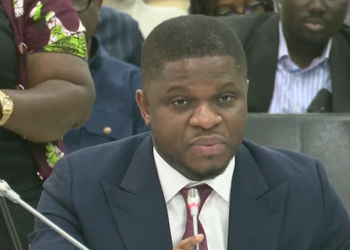



























Mr. Agyekum tells department heads job creation is now a whole-of-government mandate, not just his ministry’s burden.
The newly sworn-in Minister for Labour, Employment and Job Creation, Emmanuel Kwadwo Agyekum, has thrown down a challenge to his colleagues across government; no budget goes to Cabinet without a jobs plan attached.
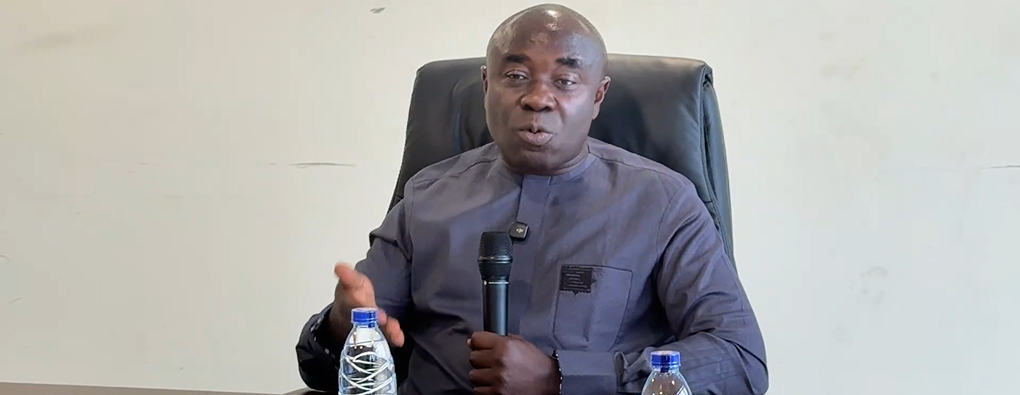
Addressing heads of department and ministry management for the first time since officially assuming office, Agyekum said he had already directed the Director to prepare a paper for Cabinet requiring every ministry to justify its budget submissions in terms of employment impact.
“I’ve also asked the director to give us a paper to cabinet that each and every one, all the ministries, if you are submitting your budget, at least your budget should be able to create jobs,” he told staff.
The minister said the ministry was working out concrete strategies for job creation across sectors, alongside a broader push to industrialize the country. “We have things in mind that we are going to at least figure out how we will create jobs in different areas. How are we going to industrialize as a country as well? And these are key things we have to think about,” he said.
He framed the ministry’s role as one of coordination and helping other ministries translate policy into employment outcomes. “We should think about to be able to help other ministries as well, so they can at least come out with a plan, come out with a roadmap that will create jobs in this country,” Agyekum said. “And this is what I want an input from you. Very important.”
Striking a notably humble tone for a first address to staff, Agyekum was quick to distance himself from any suggestion that he alone held the answers to Ghana’s unemployment challenge.
“In fact, I’m not the smartest guy, whatever that you can meet, but together we’ll be able to do something,” he said. He singled out the ministry’s Director for praise, telling staff: “You have so much, the director has a lot of experience. You guys have got a lot of experience. We can share together, especially the young ones as well.”
The minister directed staff to study international case studies on tackling unemployment, arguing that Ghana’s predicament is far from unique.
“Go and do a research as to how we can create jobs. There are case studies all over the world. We are not the only country that is struggling with unemployment. How were people able to solve it?” he said.
But he was equally emphatic that imported solutions must be adapted to local realities. “How can we solve our case? If our case specific in Ghana, how can we solve this unemployment issue that we have in this country?” he asked. “And these are some of the things that we’ll be dealing with as a ministry.”
Closing his remarks, Agyekum made clear that results; not talking points would be the measure of success under his leadership.
“So please, I need your support. I want you to help. I want you to come up with ideas,” he said. “Don’t come and be telling me anything out of this. Tell me what will bring productivity.”