

















At least 64 people have died after two high-speed trains collided in central Spain, according to a Reuters report published on Wednesday, October 28, 2026, as emergency crews continue searching the wreckage for victims and survivors.
The collision occurred near Urda in Toledo province on the high-speed railway connecting Madrid with Spain’s southern Andalusia region. The crash involved trains operated by Spain’s state-owned Renfe and private rail company Iryo.
The death toll has risen as rescue operations have continued, with earlier reports placing the number of fatalities lower. The full number of casualties remains subject to updates from authorities.
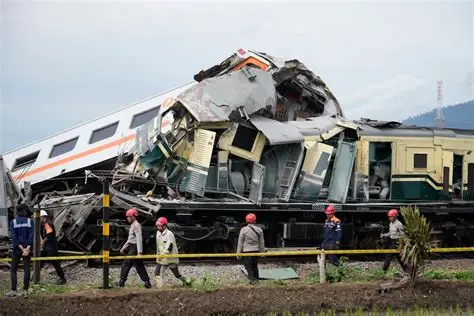
According to Reuters, the collision left several carriages derailed, with at least three plunging down an embankment. Images from the scene showed damaged train cars, twisted metal and debris scattered below the railway line.
Hundreds of passengers were travelling on the two trains when the crash occurred.
Authorities in Castilla-La Mancha, the region where the accident happened, activated emergency response measures to coordinate rescue operations and provide medical assistance to those affected.
The regional government confirmed that police officers, firefighters, civil protection personnel and medical teams had been dispatched to the scene.
An advanced medical post was also being established to assess injured passengers, provide initial treatment and arrange transfers to hospitals.
The regional authorities activated their emergency plan to coordinate the response and mobilise the necessary resources. Support arrangements were also made for affected passengers and their families.
Rail services between Madrid and Andalusia were suspended following the collision, disrupting travel along one of Spain’s major high-speed railway corridors.
The precise cause of the crash remains under investigation.
Initial accounts indicated that one train struck another that had stopped on the tracks. Reuters reported that a person briefed on the incident said the Iryo train had stopped following a signal fault before the Renfe train collided with it.
Renfe said its train had been authorised to continue its journey before the collision occurred, while noting that the exact circumstances remained unclear.
“The exact sequence of events, the traffic conditions and the circumstances of the impact will have to be established by the investigation,” the company said.
Investigators will need to establish why the train stopped, how the other train approached it and whether signalling, operational or other factors contributed to the crash.
Reports suggesting a signalling fault or possible human error should therefore be treated as preliminary information rather than established findings.
The crash has renewed concerns about railway safety in Spain, which suffered another deadly rail accident earlier this year.
Prime Minister Pedro Sánchez expressed shock over the latest incident and conveyed solidarity with the victims and their families, according to Sky News.
The government and emergency services are expected to provide further information as rescue efforts continue and investigators establish the circumstances surrounding the collision.
For now, the priority remains locating victims, treating survivors and identifying those affected, while authorities work to determine what caused one of Spain’s deadliest recent railway disasters.