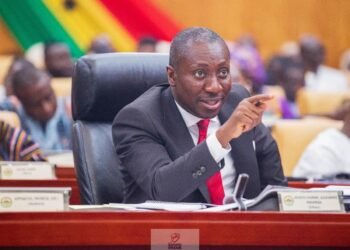




























The Deputy Director of Communications of the National Democratic Congress (NDC), Julius Kwame Anthony, has rejected suggestions that the party uses the previous New Patriotic Party (NPP) administration as a benchmark for assessing its economic performance.
He explained that references to the previous government were intended to provide context, correct the public record and highlight differences in how the two administrations had responded to similar economic challenges.
Speaking on the issue, Anthony said the NDC’s comparisons with the NPP were not an attempt to measure its performance solely against that of its predecessor.
“The NPP cannot be a yardstick for the NDC, and let me deal with it for you,” he said.
He added; “Some of the issues that we make reference to the NPP administration for is for purposes of setting records straight. It’s not necessarily because we are saying that the NPP is a yardstick for us.”
Anthony cited fuel prices as an example, arguing that discussions about rising petroleum costs often require comparisons with conditions under the previous administration to help the public understand the factors behind the changes.
He explained that when the NPP criticises the current government over increases in fuel prices, the NDC is compelled to examine the circumstances that existed during comparable periods under the previous administration.
“If you take fuel, for example, the NPP comes and says that, well, fuel prices are rising now, so it means you are doing poorly,” he said.
“You are forced to show the counterfactuals under the reign of the New Patriotic Party.”
According to Anthony, such comparisons help explain the economic conditions confronting each administration and the policy choices made in response.
He maintained that the NDC’s position is that its economic management should be assessed based on its own policies and outcomes, rather than treating the NPP’s record as the standard against which its performance must be measured.
Anthony also referred to the Russia-Ukraine war, which began in February 2022, to illustrate how external shocks and domestic economic conditions can influence fuel prices.
He argued that the depreciation of the cedi was a major factor behind increases in petroleum prices during the period under the previous administration.
“You would observe a pattern that the most effective factor that was driving the cost up was our exchange rates, because the cedi was depreciating at that period, at an increasing rate,” he said.
Comparing that period with the current situation, Anthony pointed to the international crude oil market as a major factor influencing recent fuel price movements.
He said the differences between the two periods demonstrated why fuel prices should be examined alongside exchange rates, international crude oil prices and government-imposed taxes and margins.
Anthony maintained that the NDC’s comparisons were intended to explain these economic factors and demonstrate its approach to managing the economy, rather than portray the previous administration as its benchmark.
He concluded that the government’s economic management should be judged by its policies and their effects on the daily lives of Ghanaians.