















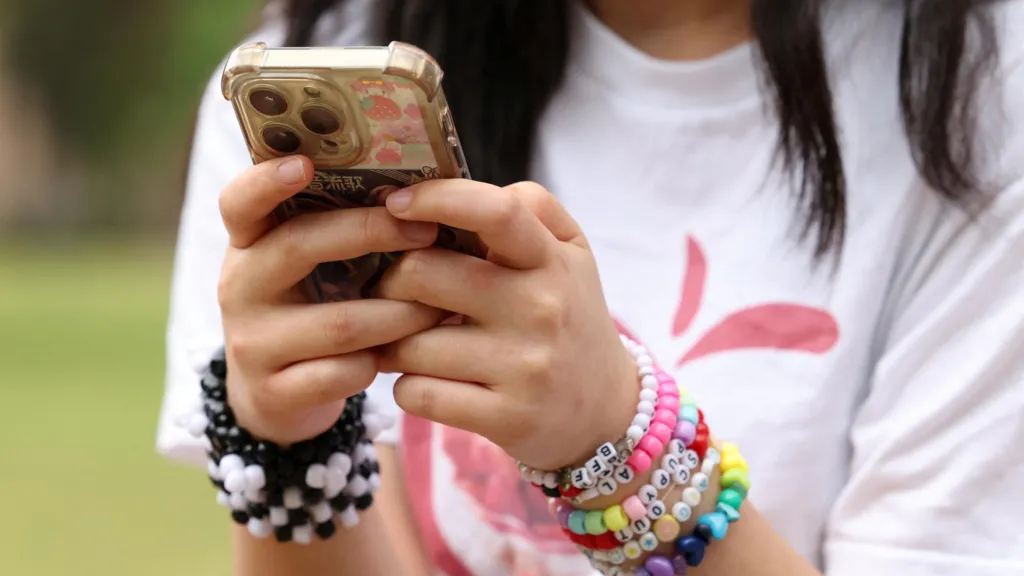
MPs have rejected an Australia-style ban on social media for under-16s and have instead backed flexible ministerial powers.
A ban on sites like Tiktok, Instagram, and Snapchat was brought in for children in Australia at the end of last year – the first country to impose a ban – and similar plans were backed by peers in the House of Lords in January.
Supporters include actor Hugh Grant, but critics such as children’s charity the National Society for the Prevention of Cruelty to Children (NSPCC) warned of young people being driven to dark corners of the internet as a result.
The Conservatives said there was an “emergency” and ministers should legislate to protect children.
Responding to the result, the Liberal Democrats said failure to commit to a ban was “simply not good enough”.
Opponents also include the father of Molly Russell, who took her own life at 14 after viewing harmful content online, who said the government should focus on robust enforcement of existing laws.
Plans for a ban were put forward as suggested changes to the Children’s Wellbeing and Schools Bill.
But in the Commons on Monday, education minister Olivia Bailey urged MPs to dismiss the change and support more flexible restrictions.
“Many parents and campaign groups have called for an outright ban on social media for under-16s,” she said.
“Others, including children’s charities, have warned that a blanket ban could drive children towards less regulated corners of the internet or leave teenagers unprepared when they do come online.
“That is why last week, the government launched a consultation to seek views to help shape our next steps and ensure children can grow up with a safer, healthier and more enriching relationship with the online world.”
The consultation will look at whether social media platforms should come with a minimum age requirement and whether platforms should switch off addictive features such as autoplay.
Bailey’s alternative plan will give Science Secretary Liz Kendall powers to “restrict or ban children of certain ages from accessing social media services and chat bots”.
Kendall will also have the option to limit access to “specific features that are harmful or addictive” on social media, as well as the ability to “restrict or limit children’s Virtual Private Network (VPN) use and change the age of digital consent in the UK”.
Conservative shadow education secretary Laura Trott pressed the government to put an age limit on social media access and introduce a ban on phones in schools.
She said polling shows “40% of children are shown explicit content during the school day”, adding: “That’s happening right now. This is an emergency. No more guidance, no more consultations. Legislate, do something about it.”
MPs voted 307 to 173 against the Lords proposal for an outright ban, and supported Bailey’s bid, which left the door to a ban of some sort open.
But more than 100 Labour MPs abstained, including North Somerset’s Sadik Al-Hassan, who said if social media was a drug, it would be banned.
During the debate, he said: “Parents like me are locked in a daily battle that they simply cannot win alone, fighting platforms that have been specifically designed to keep children hooked.
“As a pharmacist, I know if a drug were causing such measurable harm for 78%, it would be withdrawn, reformulated or placed behind a counter with strict controls on who could access it.
“We would act, because that is what the evidence demanded. The same logic must apply here.
“We have an identifiable source, we have overwhelming evidence of harm, and we have the power to act.”
Conservative former education minister Lord Nash, who tabled the amendment in the Lords to prevent under-16s from accessing social media, described the vote result in the Commons as “deeply disappointing”.
He said MPs had “chosen to gamble on a process which may lead to half measures”, adding he will work with peers to “do all that we can” to revive the amendment.
Liberal Democrat education spokesperson Munira Wilson accused the government of failing to grasp the issue.
She said: “The government’s failure to commit to a ban on harmful social media is simply not good enough – families need concrete assurances now.
“We need the government to confirm that their consultation will not result in yet more dither and delay.”