



















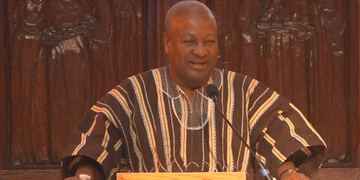






Former Local Government Minister and National Democratic Congress (NDC) stalwart, Akwasi Opong-Fosu, has proposed a sweeping blueprint to reset the party’s internal operations, calling for a total shift away from personality-driven politics.
In a follow-up interview following his recent appearance on Pan African Television’s Talk Time with Kwesi Pratt Jnr, Opong-Fosu warned that relying on the clout of individual power brokers leaves the party on “quicksand”. He argued that the NDC must urgently build resilient, institutional systems from the grassroots up to ensure long-term stability and fairness.
Defining Structure and Systems
To avoid ambiguity, Opong-Fosu carefully deconstructed the core pillars of his proposed reorganization strategy, defining both “structure” and “system” as distinct but codependent necessities for a political party.
“First, a structure is the framework—the architecture we build from the branch to the national-level bodies—that gives the NDC a hierarchy with well-defined roles and responsibilities,” he explained.
“Second, a system is how that framework provides rules and processes that make the various parts work together successfully for the collective good of the NDC.”
According to him, the survival of any serious political institution depends on these systems outlasting the individuals who temporarily manage them. “A bad system will render a good leader ineffective,” he cautioned, adding that relying on individuals creates an inherently volatile foundation.
The Danger of Personality Politics
Opong-Fosu laid bare the systemic failures currently plaguing political organizations where heavy reliance is placed on “power brokers” and influential political figures. He pointed out that a personality-driven culture breeds a toxic environment of dependency, anxiety, and deep-seated internal divisions.
“When a political party is built around personalities, a dangerous culture of dependency and fear is built,” Opong-Fosu noted. “People are freed to split into antagonistic factions because they are terrified that if the ‘other camp’ wins power, their own contributions will not be rewarded.”
He reminded party members of an inevitable reality: “Personalities change, personalities drift, and personalities die or go away. But a system endures and wins automatically.”
By prioritizing robust and strictly enforced institutional rules over individual whims, the NDC can reset its culture to an equal opportunity political party for which it was previously known for. “When we focus on building strong systems that apply the rules fairly, we choose equal opportunity over dependency and unsustainable handouts,” he stated. Appointees carry the blame even as they are over-burdened. But, the real flaw lies with a broken system that needs to be fixed.
Ending Factionalism and ‘Political Godfatherism’
Addressing a common grievance within the party’s grassroots—where appointees are frequently accused of neglecting the party base and ignoring calls once they attain power—Opong-Fosu attributed the disconnect squarely to the lack of institutional systems.
Without objective structures, appointments, rewards, and recognition are left entirely to the personal discretion of influential individuals, allowing nepotism and favoritism to thrive.
To bridge the gulf between the leadership at the top and the executives at the base, Opong-Fosu proposed the implementation of a comprehensive party database designed to objectively track, recognize, and reward the contributions of all members, including branch, polling station, constituency, and regional executives, as well as cadres and former party executives.
“This way, recognition and reward will not be based on what has come to be known as ‘political godfatherism’, which has created dissatisfaction and disconnect between the top and the base,” he affirmed.
By replacing the toxic patronage network with a transparent, merit-based system, Opong-Fosu believes the NDC can successfully neutralize internal factionalism, eliminate the culture of isolation, and foster a unified front focused on collective, long-term success.