








President John Dramani Mahama has urged Ghanaians to appreciate the country’s peace and stability as it prepares to mark 70 years of independence in 2027, despite the political upheavals that have shaped its history.
He said Ghana’s journey since independence has seen significant political and economic changes, including military coups, periods of civilian administration, and revolutionary rule, but the country has remained relatively peaceful and secure.
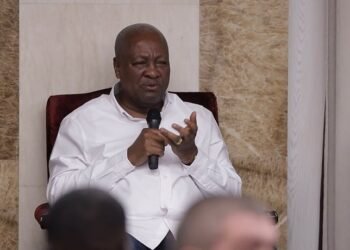
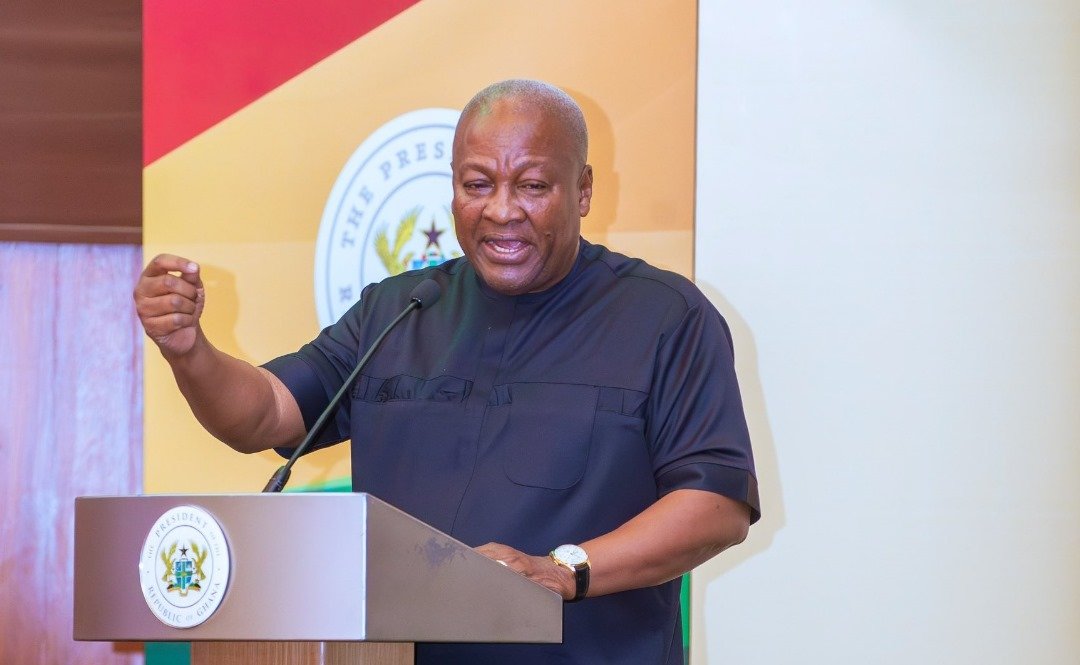
Speaking at a meeting with members of the Ghanaian diaspora in Russia during the Russia-Africa Summit in Moscow, President Mahama said the country had much to be thankful for as it reflected on its post-independence experiences.
“We remember Kwame Nkrumah’s spirit. After that, we had a series of coup d’etats with successes, Operation Feed Yourself. The country did well to a point, and then it unravelled again,” he said.
He also recalled the Third Republic and the revolutionary period, describing these experiences as important parts of Ghana’s 70-year history.
“So I believe that all those experiences are part of our 70-year history. And next year, we’ll be celebrating 70 years,” he added.
President Mahama said Ghana’s continued peace was particularly significant when compared with countries experiencing civil wars and insecurity.
“And at least I tell Ghanaians that we have something to be grateful about. I mean, not many countries have been lucky to still be in one piece,” he said.
“There are many countries in which civil wars are taking place, and they don’t have peace. There’s no safety. There’s no security. Luckily for Ghana, our country is safe and secure.”
He further noted that Ghanaians continued to go about their daily activities and contribute to the country’s economic development.
“People are going about their business by trying to build our economy. And the economy is responding appropriately,” he said.
Ghana gained independence from British colonial rule on March 6, 1957, under the leadership of its first President, Dr Kwame Nkrumah.
However, the country’s early post-independence history was marked by political instability. Nkrumah’s government was overthrown in a military coup on February 24, 1966, bringing the First Republic to an end.
The country subsequently experienced alternating periods of civilian and military rule. In 1972, the military government led by General Ignatius Kutu Acheampong introduced the Operation Feed Yourself programme to promote domestic food production.
The Third Republic began in 1979 under President Hilla Limann but was terminated by another military coup on December 31, 1981.
Ghana eventually returned to constitutional democratic rule in January 1993 under the Fourth Republic, which has continued to date.
The country will mark 70 years of independence on March 6, 2027.