




















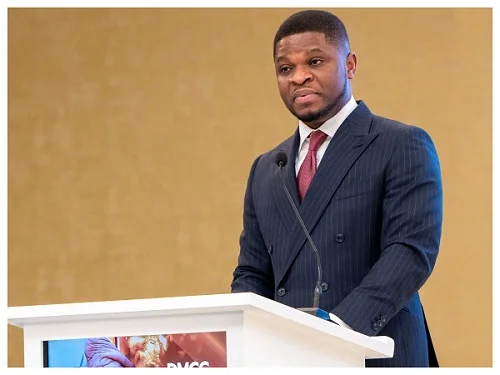
The Centre for Mining Research and Policy has commended Ghana Gold Board (GoldBod) Chief Executive Officer, Sammy Gyamfi, for prioritising long-term environmental recovery through the Board’s GH¢35 million restoration initiative in the Tano-Nimiri Forest Reserve.
The Centre said Gyamfi’s leadership had helped extend GoldBod’s contribution to national development beyond the management of gold resources to addressing the environmental damage caused by illegal mining.
It particularly praised the Board’s ten-year commitment to environmental restoration and monitoring, which includes approximately GH¢7.2 million earmarked for reforestation and sustained ecological management.
According to the Centre in a statement, the commitment is crucial to ensuring that the reclamation works translate into lasting environmental recovery rather than short-term improvements to the degraded landscape.
It said, “Of particular importance is GoldBod’s ten-year commitment to environmental restoration and monitoring, including approximately GH¢7.2 million earmarked for reforestation and sustained ecological management.”
The Centre noted that the Forestry Commission would undertake reforestation activities to support biodiversity recovery, improve ecological resilience and restore natural habitats destroyed by illegal mining.
It also said the long-term programme would help preserve the gains made through the reclamation exercise and support the gradual recovery of the forest reserve.
The Centre described the intervention under Mr. Gyamfi’s leadership as evidence that responsible mineral resource governance must include environmental protection and the restoration of damaged ecosystems.
It added that the initiative could provide a model for rehabilitating other degraded mining landscapes across Ghana.
GoldBod has already reclaimed 50 hectares of the Tano-Nimiri Forest Reserve under the first phase of the project and plans to restore an additional 100 hectares in 2027.
The Centre said, “Its enduring significance will be measured not only by the hectares reclaimed, but by the recovery of forests, restoration of ecosystems and preservation of Ghana’s natural heritage for future generations.”