










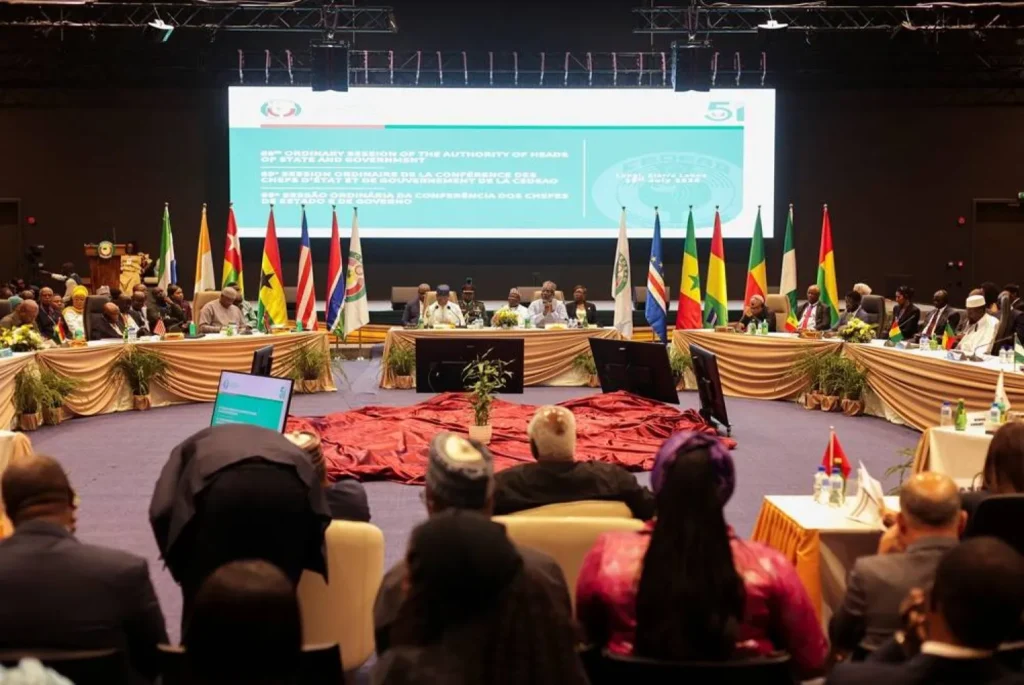
West African leaders have approved the Nigeria-Morocco Gas Pipeline (NMGP) project following the signing of a landmark agreement at the Economic Community of West African States (ECOWAS) summit held in Freetown, Sierra Leone.
The proposed pipeline, spanning approximately 6,000 kilometres, is expected to transport natural gas from Nigeria through 13 countries along Africa’s Atlantic coastline to Morocco, where it will connect with the Maghreb-Europe Gas Pipeline to facilitate access to regional and European energy markets.
ECOWAS Chairman and President of Sierra Leone, Julius Maada Bio, described the agreement as a significant step towards strengthening regional energy integration and cooperation among African countries.
The project is being developed through collaboration between Morocco’s National Office of Hydrocarbons and Mines (ONHYM) and the Nigerian National Petroleum Company (NNPC), with both institutions highlighting its potential to transform Africa’s energy landscape.
According to the two organisations, the pipeline will create a major development corridor linking West Africa, the Sahel, Morocco and Europe while improving energy security and supporting economic growth across participating countries.
The next phase of the project will involve the establishment of a project company in Casablanca, Morocco, and the creation of a governing authority in Abuja, Nigeria, after which efforts will focus on attracting investors and reaching a final investment decision.
Construction of the estimated US$27 billion project is expected to begin in 2028, with the first gas deliveries projected for 2031.
The Nigeria-Morocco Gas Pipeline was first proposed in 2016 during a visit by Morocco’s King Mohammed VI to Nigeria.
The initiative has gained renewed attention in recent years following diplomatic tensions between Morocco and Algeria, which led to the suspension of Algerian gas supplies to Spain through Moroccan territory in 2022.
The project is expected to play a key role in expanding Africa’s energy infrastructure and strengthening economic cooperation between countries along the continent’s western corridor.