





















The World Health Organization (WHO) has commended the Ghana Medical Trust Fund for the progress it has made in its first year, describing the initiative as an important intervention in reducing the financial burden on Ghanaians living with chronic and high-cost diseases.
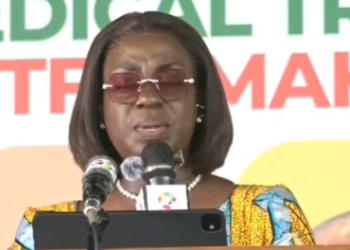
Speaking at the Fund’s first anniversary, WHO Country Representative to Ghana, Dr Fiona Braka, congratulated the government, the leadership of the Fund and the people of Ghana for what she described as significant progress since its establishment.
Dr Braka particularly acknowledged President John Dramani Mahama for the vision behind the initiative, saying the Fund was helping vulnerable patients access essential treatment without being overwhelmed by the cost of care.
She said the Fund complemented other government health interventions, including the Free Primary Healthcare Initiative and the National Health Insurance Scheme (NHIS), with each initiative playing a role in expanding access to healthcare.
“Ultimately, the aim is to ensure that everyone accesses services regardless of where they are and what they are suffering from,” she said.
Dr Braka said the Fund had brought renewed hope to patients who previously struggled to afford treatment for chronic and high-cost conditions.
She identified cancer, diabetes, chronic kidney disease, cardiovascular diseases and stroke among conditions that could impose significant financial pressure on patients and their families.
Beyond direct patient support, she said, the Fund was also contributing to the broader health system through investments in infrastructure, medical equipment, health workforce development and research.
“This fund is not just looking at patient support, but it’s also looking at medical equipment, it’s looking at the infrastructure, it’s looking at the human resources or workforce capacities, and there’s also the aspect of research,” she said.
According to Dr Braka, building a strong specialist healthcare system required adequately trained doctors, nurses and other health professionals capable of managing complex and chronic conditions.
The WHO representative also highlighted what she described as an emerging pathway linking Ghana’s various healthcare reforms.
She explained that the model would allow patients to benefit from free primary healthcare at the primary level, access services through the NHIS at the next level, and receive specialised care through the Mahama CARES initiative, including the Ghana Medical Trust Fund, where necessary.
Dr Braka said clearly defining the pathway was important to ensure that patients could move seamlessly between different levels of care according to their medical needs.
She cited the cardiac centre at the Korle- Bu Teaching Hospital as an example of the Fund’s emerging impact, recalling WHO’s participation in its launch.
“It was a moment of pride for everyone to see that we are actually seeing it coming to bear,” she said.
Looking ahead, Dr Braka urged stakeholders to establish sustainable financing arrangements to protect the gains made by the Fund during its first year.
She called for the institutionalisation of funding arrangements, including protected budget lines, to ensure predictable and sustainable financing for the initiative.
“The sustainable component is extremely important,” she stressed.
She also advocated expanding the Fund’s coverage to reach more patients and eventually include additional disease conditions beyond those initially prioritised.
Dr Braka said such expansion should remain integrated with Ghana’s broader healthcare reforms.
The WHO representative expressed hope that Ghana’s experience with the Ghana Medical Trust Fund could provide useful lessons for other countries seeking innovative approaches to healthcare financing and universal health coverage.
She said effective implementation, transparent data and evidence of the Fund’s impact would be important in determining whether the initiative was reaching more people and reducing financial hardship.
“We know that we are all working towards universal health coverage, and Ghana is leading in many ways,” she said.
Dr Braka said Ghana could demonstrate to the African region and the wider world how innovative financing mechanisms could help close healthcare financing gaps and advance universal health coverage.
She reaffirmed WHO’s commitment to supporting the initiative, noting that the organisation had been involved from its inception and would continue working with the government to help translate its vision into tangible benefits for Ghanaians.
“As WHO, we congratulate the Government of Ghana on this one-year milestone,” Dr Braka said, adding that the organisation remained committed to helping make the Fund sustainable and beneficial to more citizens.