


























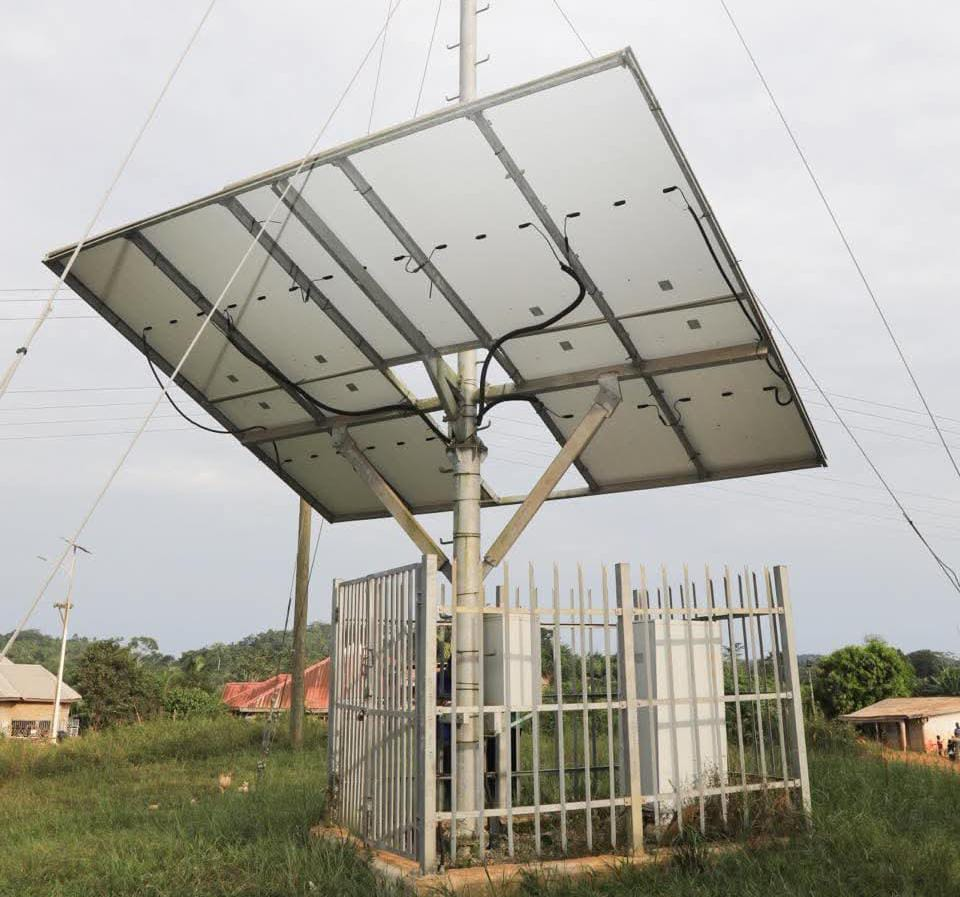
The New Patriotic Party (NPP) has challenged the government’s account of the country’s rural telephony programme, insisting that the record does not support claims of neglect of rural connectivity over the past decade.
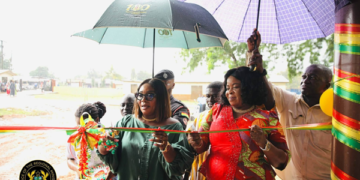
The party said it had taken note of comments by the Minister for Communication, Digital Technology and Innovations during the Government Accountability Series press conference at the Jubilee House on Monday, September 7, 2026, as well as remarks he made during an inspection of Rural Telephony Project sites in the Eastern Region on September 4.
In a statement signed by the Chairman of the NPP Policy Co-ordination Committee, Kojo Oppong Nkrumah, the party welcomed efforts to improve data affordability, fixed broadband pricing and rural connectivity.
However, it disputed the Minister’s characterisation of the previous administration’s record on rural telephony.
NPP says project was launched in 2020
According to the NPP, the Ghana Rural Telephony and Digital Inclusion Project was launched in 2020, rather than 2022.
The party said the project was established under the Ghana Investment Fund for Electronic Communications (GIFEC) and financed through a €155 million facility from China EXIM Bank, with Huawei and the China National Technical Import and Export Corporation involved in its implementation.
It said the original design targeted 2,016 sites intended to provide connectivity to between three and four million people in unserved and underserved communities.
The first site, the party said, was inaugurated in November 2020.
The NPP further stated that the project built on an earlier phase during which 430 rural sites were constructed and activated between 2017 and 2018, connecting about 700,000 previously unserved and underserved residents.
It said the Akufo-Addo/Bawumia administration had expanded the rural telephony infrastructure to 1,961 constructed sites by the time it handed over power in January 2025, with equipment available to deploy an additional 400 sites.
The party also rejected suggestions that some sites deployed in 2024 were located in areas that could not technically be connected.
It cited a satellite hub at the Kofi Annan Centre of Excellence in ICT, which it said had been upgraded, tested and prepared to provide backhaul connectivity to 46 hard-to-reach communities.
According to the NPP, the 46 communities are technically reachable but remain unconnected because the contracted satellite hub service has not been activated and paid for.
It argued that the situation was therefore a commercial and administrative issue rather than a technical limitation.
The NPP further claimed that no new rural telephony site was constructed in 2025, despite equipment for approximately 400 additional sites being handed over to the current administration.
It also said the pace of deployment suggested the remaining sites would not all be completed in 2026.
The party alleged that a greater proportion of previously constructed and activated sites were now non-operational than at the time of the January 2025 handover.
It called on the Ministry to correct the record with data if those claims were inaccurate.
The NPP said it did not oppose the government’s plan to upgrade rural telephony sites to a minimum of 4G, describing the objective as legitimate and necessary in the long term.
However, it urged the government to prioritise communities without any connectivity before undertaking a broad upgrade programme.
The party said the rural telephony infrastructure it deployed was designed to be upgradeable to 4G as part of a future phase.
It argued that the immediate priority should be to connect already-constructed sites, deploy equipment currently in stock and restore services at sites where connectivity had been disrupted.
The NPP has consequently called on the Ministry of Communication, Digital Technology and Innovations and GIFEC to publish a comprehensive status report on the project within 30 days.
The report, it said, should provide details by region and district on the number of sites constructed, connected, operational and built but not yet in service.
It also wants government to publish the deployment schedule and locations for the approximately 400 sites for which equipment was handed over, together with their completion or planned completion dates.
The party is also demanding details on the contractual and operational status of the satellite hub at the Kofi Annan Centre of Excellence in ICT and a decision on when the 46 sites designed to use the hub will be connected.
Additionally, it wants the government to publish the sequencing, cost and financing arrangements for the proposed 4G upgrade and explain how the programme will be implemented without delaying outstanding rural connectivity projects.
The NPP further called for a briefing to the Parliamentary Select Committee on Communications to allow the status of the project to be examined using official data.
The party said its interest was in ensuring that rural communities receive reliable telecommunications services and that residents are given clear information on when connectivity would be available.
“Ghanaians living in the communities concerned are entitled to service, and to a clear account of when they will receive it,” the statement said.