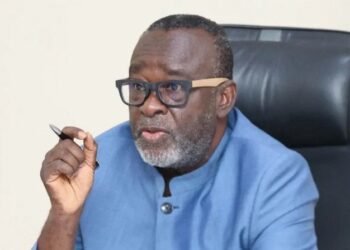




















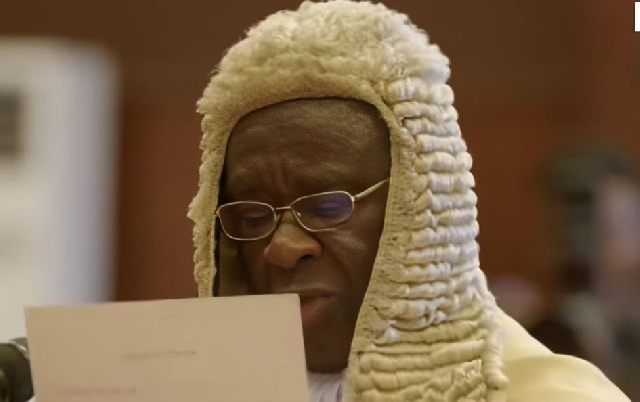
The Judicial Service has defended recent comments by Chief Justice Paul Baffoe-Bonnie on the performance of State-Owned Enterprises (SOEs), saying the remarks were made in good faith and were not intended to undermine the independence of the Judiciary.
In a statement signed by the Judiciary Secretary, Musah Ahmed, and issued on Friday, September 4, the Judicial Service acknowledged the “mixed public reaction” to observations made by the Chief Justice during an outreach engagement with state institutions.
According to the Service, the comments were made in good faith and were not intended to serve any purpose inimical to judicial independence.
“The observations were made in good faith, and were not intended to serve a purpose inimical to judicial independence,” the statement said.
The Judicial Service further stressed that the Chief Justice remains committed to his constitutional responsibilities, including protecting the integrity and independence of the Judiciary and promoting justice and equality before the law.
The clarification follows remarks made by Chief Justice Baffoe-Bonnie during visits to the Social Security and National Insurance Trust (SSNIT) and the Minerals Income Investment Fund (MIIF) on Wednesday, September 2.
During his visit to MIIF, the Chief Justice commended the institution for its performance and also referenced improvements at other public institutions.
He expressed surprise at what he described as the progress being recorded by some state institutions, prompting questions about Ghana’s performance in previous years.
At SSNIT, the Chief Justice similarly drew attention to the institution’s current operations in relation to earlier proposals to dispose of some of its assets, including the Labadi Beach Hotel.
His comments subsequently generated public debate over whether they constituted political commentary and whether such statements could affect perceptions of the Judiciary’s neutrality.
The opposition New Patriotic Party (NPP) has been among the strongest critics of the remarks, accusing the Chief Justice of entering the political arena and calling for his resignation.
The NPP argued that the comments could be interpreted as favourable to the governing National Democratic Congress (NDC).
Manhyia South MP Nana Adjei Baffour Awuah described the remarks as an “unfortunate indiscretion,” while the Ghana Center for Democratic Development (CDD-Ghana) urged the Chief Justice to exercise greater restraint and discretion during public engagements.
CDD-Ghana argued that the concern was not necessarily whether the head of the Judiciary could hold views on the performance of state institutions, but how such public commentary might affect perceptions of judicial independence.
Political activist and physician Dr Arthur Kobina Kennedy also criticised the remarks, describing them as inappropriate for the head of the Judiciary.
However, others have rejected the suggestion that the Chief Justice’s comments amounted to political intervention.
President of IMANI Africa, Franklin Cudjoe, argued that assessing the performance of state institutions based on available data should not automatically be considered political commentary.
“Is it not the truth that some of these state institutions are performing better? Come on, just look at the data. Did he lie?” he questioned.
NDC Deputy General Secretary Mustapha Gbande also rejected calls for the Chief Justice’s resignation, while NDC lawyer Hamza Suhuyini defended the Chief Justice’s engagements with state institutions as falling within the broader responsibilities of his office.
The Judicial Service, meanwhile, maintained that the Chief Justice remains focused on upholding the constitutional mandate of the Judiciary despite the controversy surrounding his recent remarks.