















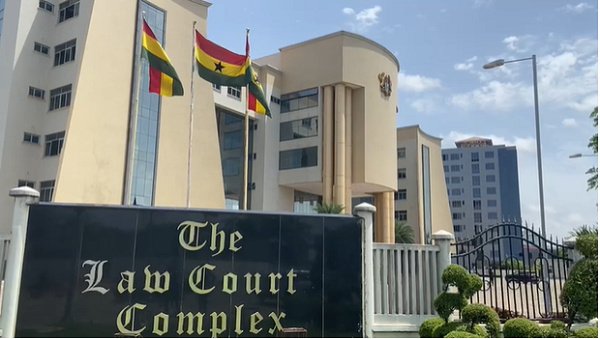
The Judicial Service Staff Association of Ghana (JUSAG) has threatened to embark on an indefinite strike from Monday, November 2, 2026, if the government fails to approve and pay its members’ reviewed salaries and allowances.
The association has given the government until the end of October to approve the Judicial Council’s recommendations on the 2026 salary review, with payment expected in November, including arrears covering January to October.
In a notification of industrial action addressed to the National Labour Commission, JUSAG said its National Executive Council (NEC) had resolved to withdraw its members’ services if the outstanding demands were not met by Sunday, November 1, 2026.
The notice was also copied to the Office of the President, the Judicial Service, the Attorney-General and Minister for Justice, the Ministry of Finance, and the Ministry of Jobs, Labour and Employment Relations.
According to the association, the government must satisfy two key demands to prevent the planned industrial action.
The first is the approval of the Judicial Council’s recommendations on the 2026 salary review by October 31, while the second is the payment of the revised salaries in November, together with the outstanding arrears for the first ten months of the year.
JUSAG stated in its notice that the NEC had resolved that, “if the demands are not met by Sunday, 1st November, 2026, JUSAG shall declare an indefinite strike commencing on Monday, 2nd November, 2026, and the strike shall remain in force until the demands are met.”
The association said the decision followed months of unsuccessful efforts to secure approval of the salary recommendations and payment to its members.
JUSAG explained that the salary review process followed the expiry of the previous review in December 2025.
It said it subsequently petitioned the Judicial Council to initiate the 2026 review, after which the council completed its work and submitted its recommendations to the President for determination.
However, the association said the process had experienced prolonged delays despite repeated appeals to the relevant authorities.
In a letter dated January 19, 2026, referenced JUSAG/HQ/NP/215/25, the association asked the Judicial Council to expedite the process.
It later sent another reminder to management on September 10, 2026, under reference number JUSAG/NP/089/2026.
JUSAG said it had also raised the issue at several public engagements, including its Second Quadrennial Delegates’ Conference in Tamale in August, the 45th AMJG Conference in Accra in September, and the Chief Justice’s Staff Durbar in Tamale, also in September.
Despite those efforts, the association said it had received assurances without seeing concrete progress towards approval and payment.
“These appeals have been met with only assurance,” the notice stated.
“We are yet to see any concrete step by the Government towards approving the recommendations of the Judicial Council and paying the reviewed salaries to staff of the Judicial Service.”
The association said the delay had increased frustration among its members, particularly because other public-sector workers had received approval and payment of their 2026 salaries earlier in the year.
“It is instructive to note that our colleagues elsewhere in the public sector had their new salaries for 2026 approved and paid in January, 2026,” JUSAG stated.
It added; “We are now in the tenth month of the year, and our members are still waiting patiently, but no longer quietly.”
According to the association, the situation has heightened tension and weakened morale among Judicial Service staff.
JUSAG further noted that organised labour was already negotiating base pay for 2027 while its members were still awaiting the revised salaries and allowances for 2026.
Despite its decision to issue the ultimatum, JUSAG said it had previously exercised restraint because of the possible consequences of industrial action for the administration of justice.
The association said it was conscious of the wider implications of a strike by Judicial Service staff.
“Mindful of the consequences of industrial action for justice delivery and, by extension, national security, we have consistently prevailed upon our aggrieved members to exercise restraint while we work with Management towards the prompt approval and payment of the reviewed salaries,” the notice said.
However, JUSAG maintained that the hardship faced by its members had become increasingly difficult to sustain.
“My Lord, the hardship among our members is real, and their patience is exhausted,” the association stated.
The planned November 2 strike will proceed if the government fails to meet the stated deadlines, according to the notification.
The National Labour Commission and the government authorities copied in the notice are among the institutions being formally notified of the intended industrial action.
As of the information contained in the notice, JUSAG’s position is that approval must be secured by the end of October and payment made in November to avert the strike.