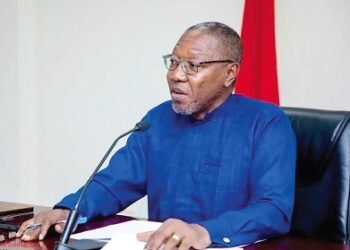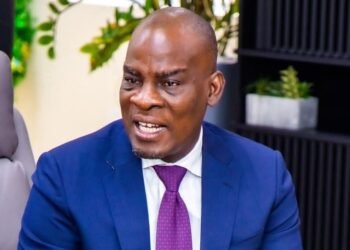












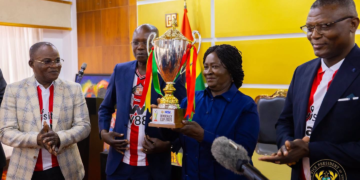





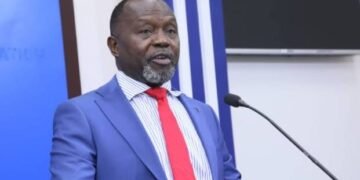





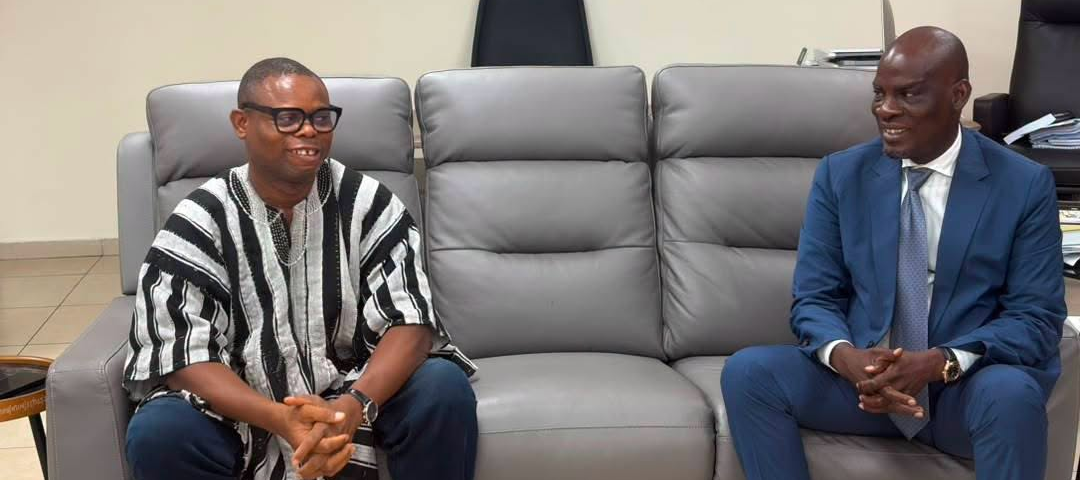
The IMANI Center for Policy & Education has held a policy engagement with the Ministry of Education to discuss challenges confronting Ghana’s education sector, with Education Minister Haruna Iddrisu calling for greater attention to basic education.
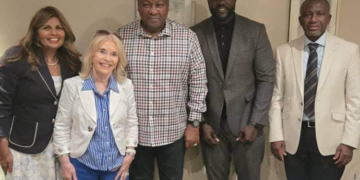
The engagement, held on Wednesday, August 19, 2026, was led by IMANI’s Founding President and Chief Executive Officer, Franklin Cudjoe.
He was accompanied by Writer and Associate Kay Codjoe and Digital Transformation Specialist and Associate John Sitsofe Mensah.
The delegation was received by Mr. Iddrisu and his Deputy, Dr. Clement Abas Apaak.
A major concern raised during the meeting was Ghana’s basic school infrastructure deficit, with the Minister stressing that the physical conditions in which children learn must receive the same urgency given to access and feeding programmes.
According to the 2025 Auditor-General’s report, 10,730 public basic schools across 13 regions had no classroom blocks, affecting 3,050,808 pupils.
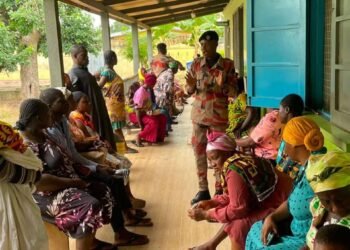
The report noted that teaching and learning in some of these schools were taking place under trees, in sheds, churches and other temporary structures.
Mr. Iddrisu argued that while programmes such as Free Senior High School and school feeding remained important, greater balance was needed in the allocation of attention and resources across the education system.
He emphasised that basic education forms the foundation of the entire education system, warning that weaknesses in literacy, numeracy, infrastructure and learning conditions at the kindergarten, primary and junior high school levels could eventually affect students at the secondary level.
The meeting also focused on teacher recruitment and deployment.
The Minister stressed that the challenge was not only the number of teachers employed but also whether they were being deployed to schools and communities where shortages were most severe.
The discussion called for school-level data to guide teacher deployment, particularly in underserved communities and areas facing shortages in critical subjects.
Sanitation and other basic school facilities also featured in the engagement.
Participants noted that classrooms alone were not sufficient, stressing the need for adequate water, toilets, electricity, furniture and accessible facilities as part of efforts to improve the learning environment.
Discipline within schools was another issue discussed, with the Minister advocating a shared responsibility among students, teachers, parents and community leaders.
He argued that improving discipline required accountability from all stakeholders rather than placing responsibility solely on students or teachers.
The administration of scholarships also came under review. With the establishment of the Ghana Scholarships Authority under the Ghana Scholarships Authority Act, 2024 (Act 1149), the Minister called for greater coordination and harmonisation of publicly funded scholarship schemes.
He said a more coherent system would help ensure that scholarships were properly prioritised, monitored and accounted for, while taking into consideration merit, financial need, disability and the developmental needs of the country.
The meeting further highlighted the need for stronger investment in special and inclusive education, including specialist teachers, accessible infrastructure and assistive technologies.
The Minister suggested that the Ghana Education Trust Fund (GETFund) should dedicate meaningful resources to special needs education and training to ensure that learners with disabilities receive appropriate support.
The role and working conditions of domestic bursars and matrons in schools were also discussed, with calls for a review of their responsibilities and institutional support, given their contribution to food safety, sanitation, stock management and student welfare.
The engagement underscored the need for a comprehensive education strategy that strengthens basic education while sustaining gains made at the secondary level.
The discussions also highlighted the importance of linking education financing to measurable outcomes, including improved school infrastructure, equitable teacher deployment, better sanitation, stronger institutional discipline, accountable scholarship administration and increased support for inclusive education.