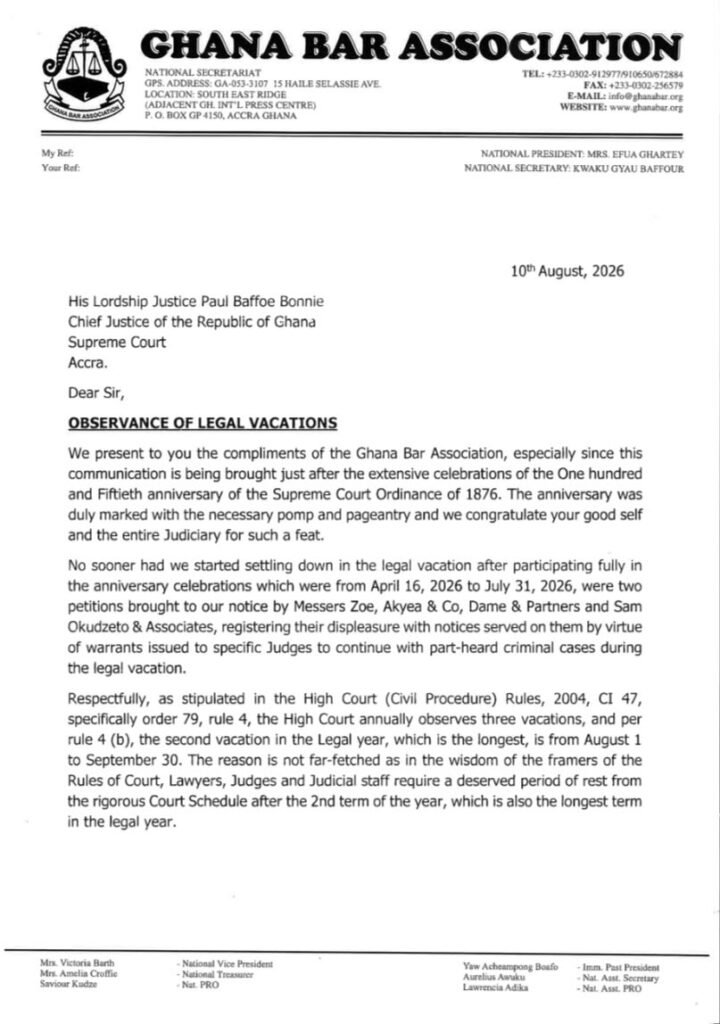



























The Ghana Bar Association (GBA) has asked the Judiciary to stop the continuation of part-heard criminal trials during the ongoing legal vacation, arguing that the practice departs from the established rules and conventions governing the annual break.
The intervention follows petitions from Zoe, Akyea & Co, Dame & Partners, and Sam Okudzeto & Associates, whose lawyers received notices requiring them to appear before designated judges to continue some criminal cases during the vacation.
Under Order 79, Rule 4 of the High Court (Civil Procedure) Rules, 2004 (C.I. 47), the High Court observes three vacations each legal year. The second and longest runs from August 1 to September 30, providing a period of respite for judges, lawyers and judicial staff after the demanding second term.
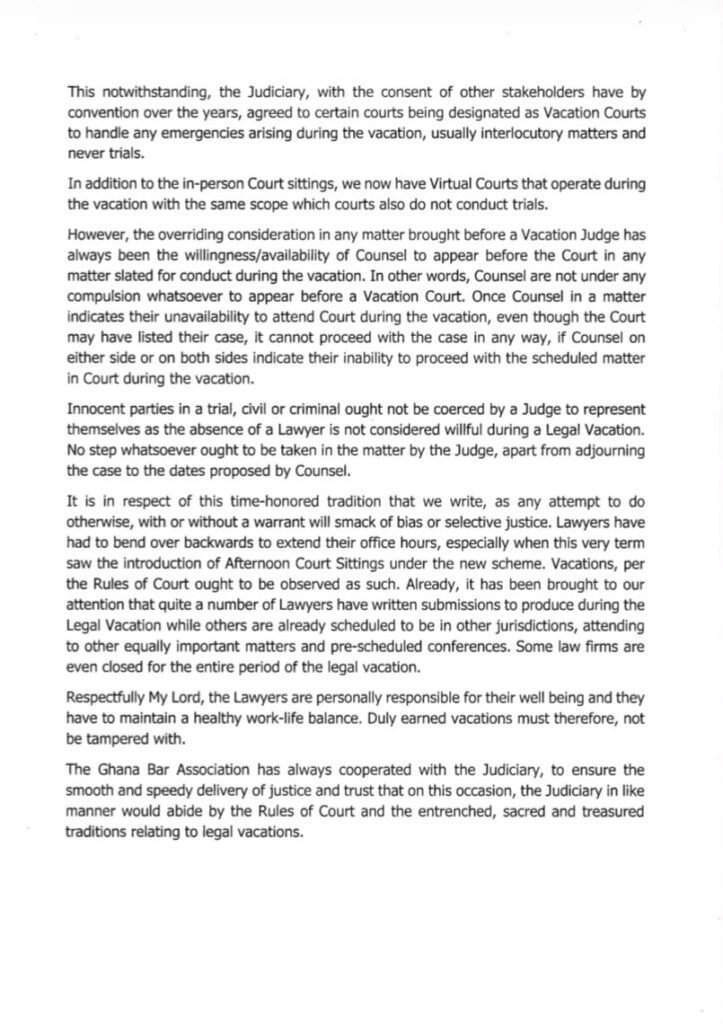
Over the years, the Judiciary and other stakeholders have agreed to maintain selected vacation courts to deal with urgent matters that cannot reasonably wait until the regular court term resumes. The GBA says these courts have traditionally handled interlocutory and emergency applications rather than trials.
The Association noted that the same principle applies to virtual courts operating during the vacation, which are also not intended to conduct trials.
According to the GBA, the availability of counsel has always been a key consideration when matters are listed during the vacation. It argues that where a lawyer informs the court that they are unavailable, proceedings should not continue in their absence.
The Association further cautioned that an accused or other party should not be forced to represent themselves simply because their lawyer is unavailable during the legal break.
The GBA said the issue is particularly significant after lawyers endured an intensive legal term that included the introduction of afternoon court sittings. It added that some practitioners have professional commitments, written submissions and engagements outside their jurisdictions during the vacation, while some law firms close for the entire period.
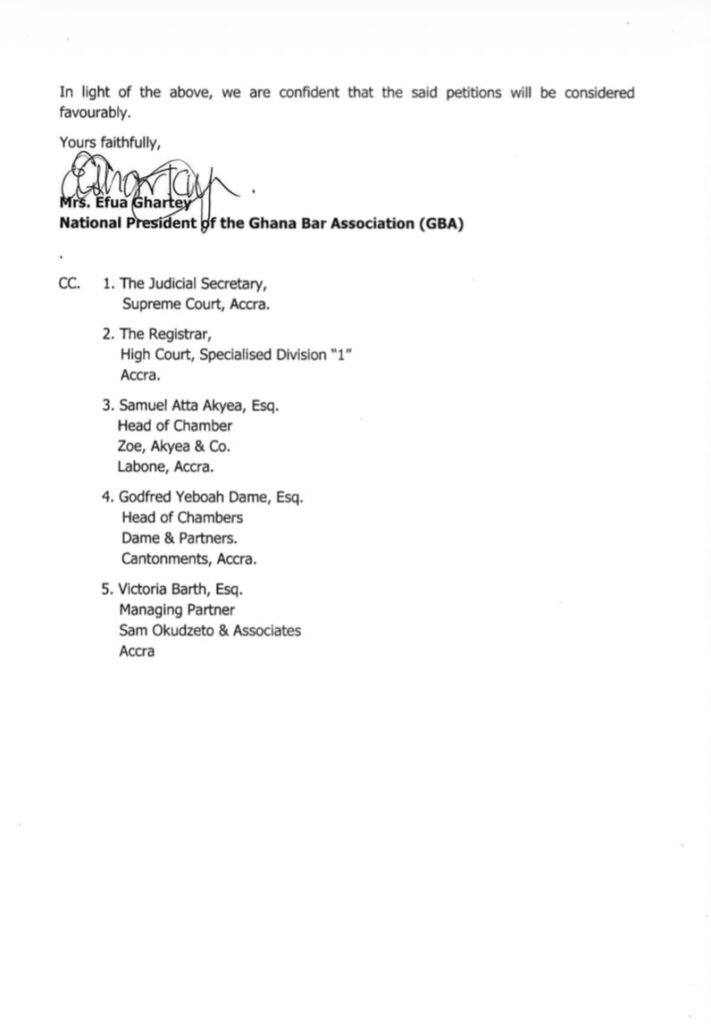
The Association is therefore urging the Judiciary to respect the established practice and reconsider the directives requiring lawyers to participate in the part-heard trials.
It warned that departing from the convention could raise concerns about fairness, stressing that “any attempt to do otherwise, with or without a warrant will smack of bias or selective justice.”
The GBA said it remains committed to working with the Judiciary to ensure the efficient administration of justice but expects the established rules and traditions governing legal vacations to be upheld.
Read the staement below: