





















The Ministry of Fisheries and Aquaculture Development has unveiled an ambitious reform agenda aimed at revitalising Ghana’s fisheries sector through strengthened regulation, enhanced enforcement, expanded aquaculture and the implementation of a national Blue Economy strategy.
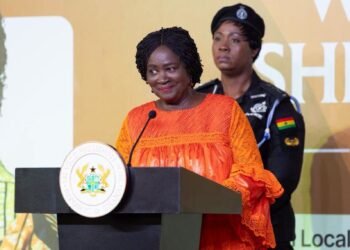
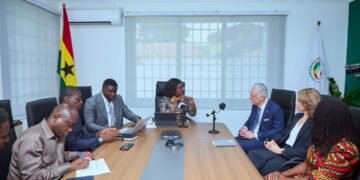
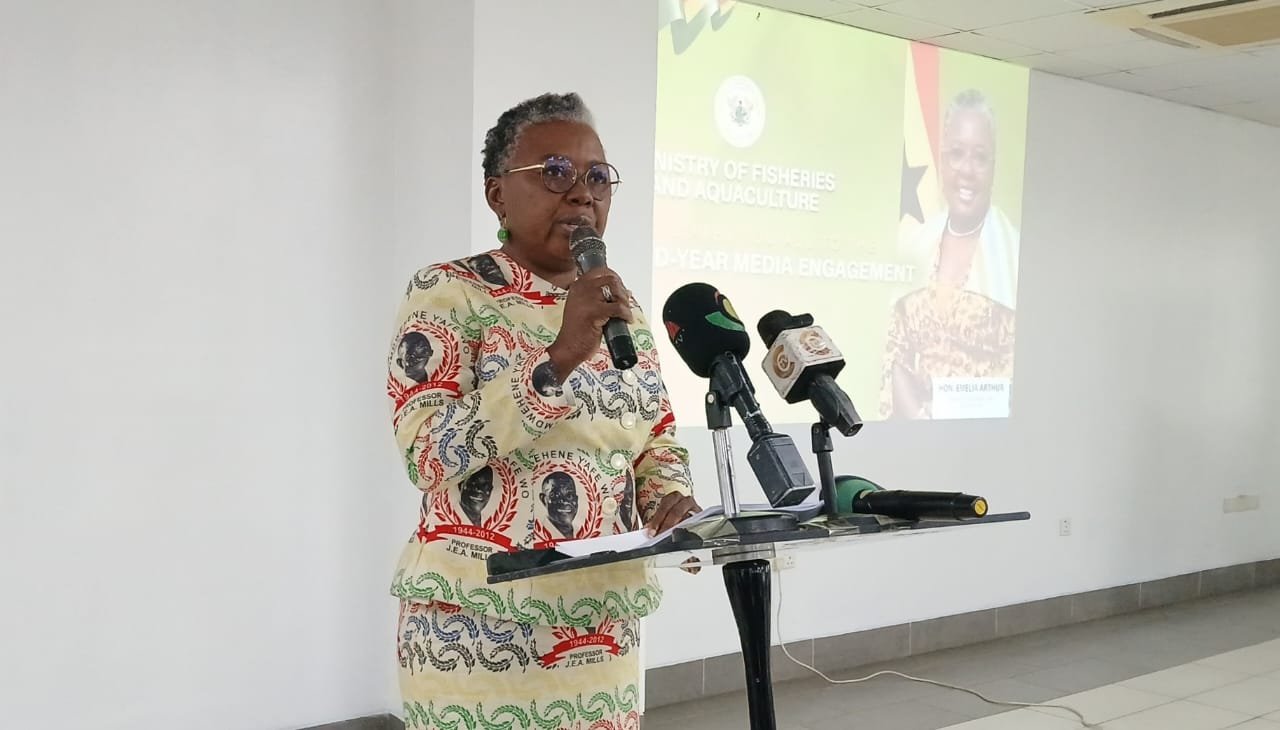
Speaking at a mid-year media engagement in Accra, the Minister for Fisheries and Aquaculture Development, Emelia Arthur, said the reforms are designed to restore declining fish stocks, create jobs, improve governance and safeguard the livelihoods of more than three million Ghanaians who depend directly or indirectly on the fisheries industry.
The Minister noted that when the government assumed office in January 2025, the sector was grappling with declining fish stocks, rising fish imports, persistent Illegal, Unreported and Unregulated (IUU) fishing, and weak regulatory oversight.
A key component of the reforms is the implementation of the Fisheries and Aquaculture Act, 2025 (Act 1146), which replaces the Fisheries Act of 2002.
According to the Minister, the new legislation strengthens the Fisheries Commission, establishes a Fisheries Enforcement Unit and a Fisheries Development Fund, creates aquaculture development zones and introduces tougher measures to combat illegal fishing.
The law also extends the Inshore Exclusion Zone from six to 12 nautical miles to better protect artisanal fishers from industrial fishing activities.
She further disclosed that the Ghana Fisheries Institute at Anomabo, currently about 70 percent complete, will serve as the country’s premier centre for fisheries training and research.
Government has also inaugurated the Ghana Fisheries Transparency Initiative Multi-Stakeholder Group to promote accountability within the sector.
As part of efforts to restore marine ecosystems, Cabinet in April 2026 approved Ghana’s first Marine Protected Area, the Greater Cape Three Points Marine Protected Area.
The 704-square-kilometre conservation zone stretches from Ampatano to Domunli and is expected to benefit 21 coastal communities by protecting biodiversity, rebuilding fish stocks and strengthening climate resilience.
The Ministry also successfully implemented the 2025 closed fishing season for industrial, semi-industrial and inshore fleets while exempting artisanal fishers.
The Minister said enforcement capacity has been strengthened through additional logistics, patrol vehicles and electronic monitoring systems, warning that illegal mining activities near Cape Three Points continue to threaten conservation efforts
The Ministry also announced significant improvements in premix fuel distribution following reforms aimed at enhancing transparency and accountability.
Between January and June 2026, approximately 22.41 million litres of premix fuel were distributed, representing a 58 percent increase over the same period in 2025.
Audits conducted on Community Development Funds covering GHS4.98 million across 42 districts identified management weaknesses, prompting the Ministry to roll out financial management training for Landing Beach Committees.
Out of 157 planned automated premix fuel stations nationwide, 138 have been completed, with 74 currently operational. Government is also expanding a pilot programme involving LPG-powered outboard motors.
With Ghana’s annual fish demand estimated at 1.2 million metric tonnes, government is prioritising aquaculture to bridge the supply gap.
The Komfueku Aquaculture Project is converting abandoned mining pits into commercial fish farms, while a new community-based commercial aquaculture programme will support cooperatives with technical assistance and market access.
In another first for the country, Ghana has issued a provisional licence for offshore mariculture targeting high-value fish species, including cobia, red snapper and pompano, to attract investment and reduce pressure on wild fish stocks.
The Ministry also announced that Ghana’s Blue Economy Strategy and Policy Framework has been completed, with legislation expected to be submitted to Cabinet.
The strategy seeks to harness the economic potential of Ghana’s 550-kilometre coastline and inland water bodies, including Lake Volta, to promote investment, tourism, renewable energy and job creation.
The Minister emphasised that fish remains Ghana’s most important source of animal protein, accounting for approximately 60 percent of national animal protein consumption, with the average Ghanaian consuming about 25 kilogrammes annually.
She stressed that the reforms extend beyond fisheries management, describing them as essential to improving food security, creating employment opportunities and protecting national resources.
Looking ahead, the Ministry said its priorities for the remainder of 2026 include the full implementation of the new Fisheries and Aquaculture Act, intensified enforcement against illegal fishing, scientific fisheries management, infrastructure development and increased investment in the Blue Economy.
The Minister called on fishers, processors, investors, traditional authorities, development partners and the media to support government’s efforts to ensure the sustainable management of Ghana’s fisheries resources for future generations.