








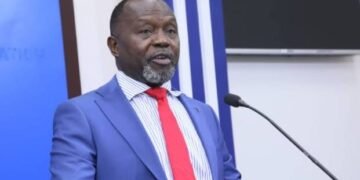










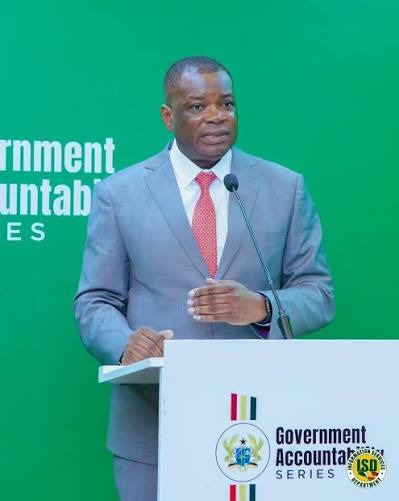
The Minister for Roads and Highways, Kwame Governs Agbodza, has justified the government’s use of sole sourcing under the Big Push infrastructure programme, citing urgency, funding constraints, and inherited projects as key factors behind the decision.
His remarks come amid scrutiny from The Fourth Estate, which raised concerns about procurement practices and possible cost inflation within the programme.
Addressing Parliament, Agbodza explained that delays associated with traditional procurement processes would have stalled critical projects for years.
“Mr. Speaker, with dedicated funding already secured under the Big Push Programme, it was both prudent and necessary to proceed swiftly to ensure value for money and avoid cost overruns associated with prolonged procurement and implementation timelines,” he said.
He added that without adopting faster procurement methods, several major projects would not have commenced.
“Mr. Speaker, most of the projects would not have started till date if we had not adopted the faster, more efficient route,” he stated.
The Minister highlighted that 23 major road projects, valued at GHS 14.88 billion, were inherited from the previous administration after being abandoned due to lack of funding.
These include key projects such as the Suame Interchange, Ofankor–Nsawam Road, and Adenta–Dodowa Road.
“These projects were novated with a new funding source,” he explained, stressing that they were not re-awarded but continued under the Big Push framework.
Agbodza further noted that sole sourcing is an accepted procurement method globally, particularly in situations requiring urgency or continuity of ongoing works.
“Mr. Speaker, it is globally acceptable to use sole sourcing even in situations where there is the need to extend the implementation of works which were previously competitively procured to speed up completion,” he said.
To ensure value for money, the Minister revealed that the Ministry undertook its own surveys, designs, and costing before inviting contractors to submit proposals, which were then subjected to independent evaluation.
“Contrary to the practice under the previous regime, under the Big Push, our agencies did their own survey, design and costing, saving billions of Ghana Cedis,” he said.
He maintained that all processes were lawful and transparent, reiterating the government’s commitment to accountability despite public scrutiny.