






















Ghana’s drive to modernise its agricultural sector is gaining traction, with large-scale private investments beginning to transform traditional farming into a more integrated and commercially viable industry.
A leading example is Nobi Agriculture, a rapidly expanding farming enterprise in the Afram Plains led by Ghanaian entrepreneur Kwame Awuah-Darko.
The project, which is expected to span 21,000 acres, is being developed as a fully integrated agricultural system combining irrigation, research, processing and storage. Currently, about 7,000 acres are under active cultivation as part of its first phase.
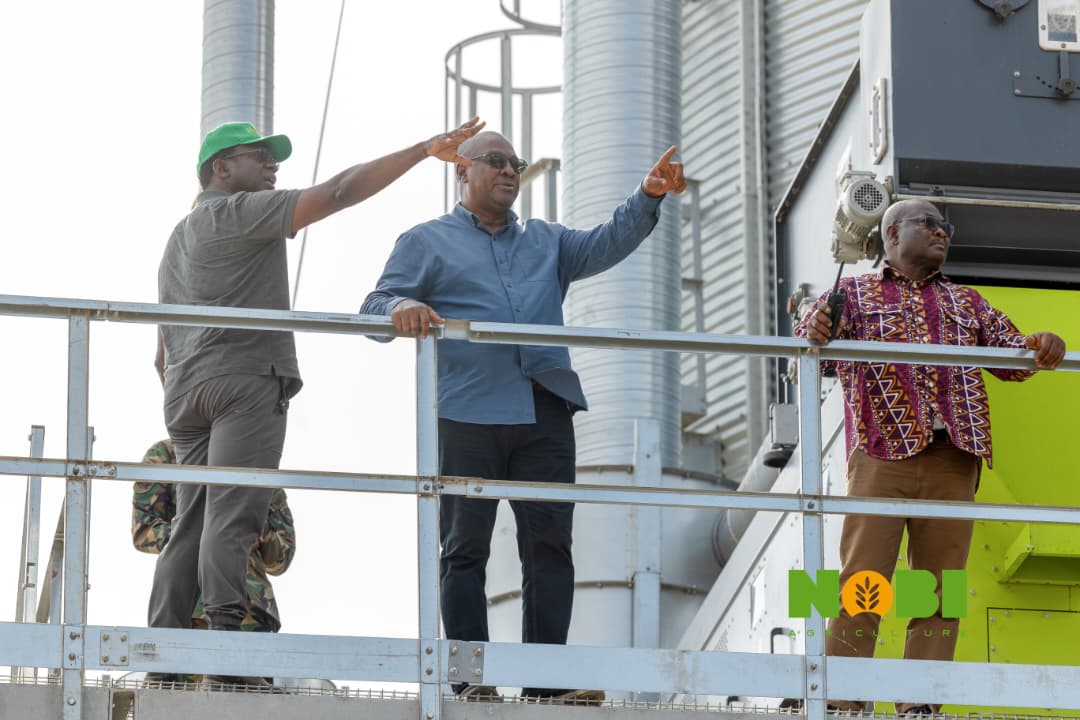
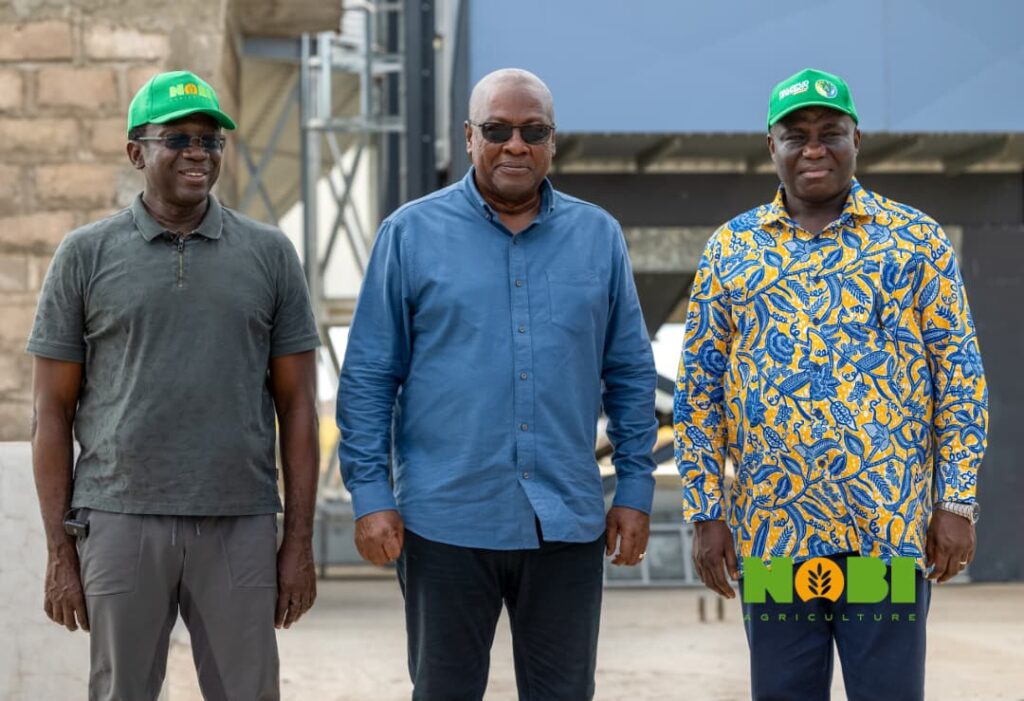
The significance of the initiative drew national attention on March 21, 2026, when President John Dramani Mahama visited the Sikasu farm in the Afram Plains with the Minister for Food and Agriculture, Eric Opoku.
The visit underscored growing government interest in private-sector-led agricultural transformation.
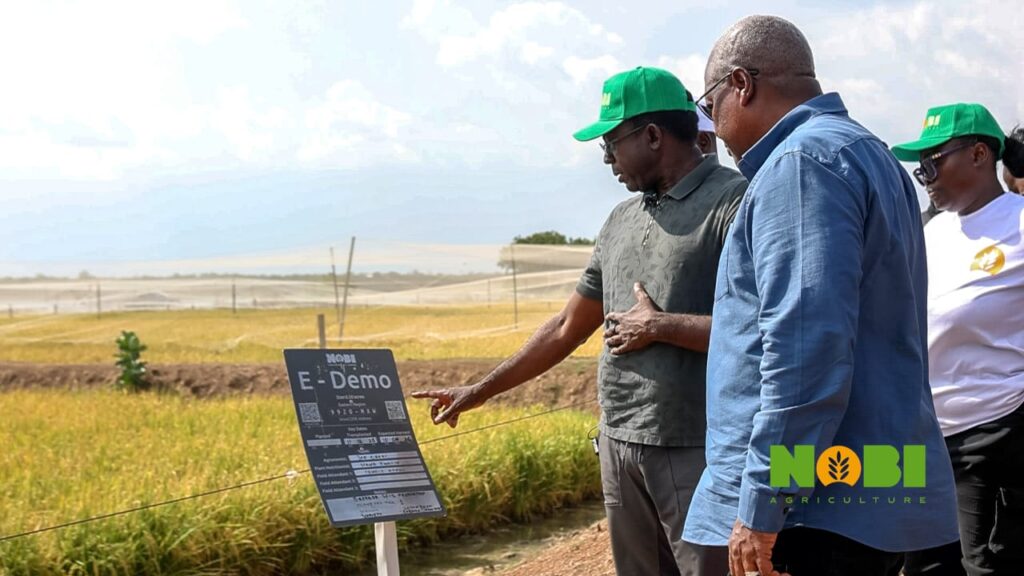
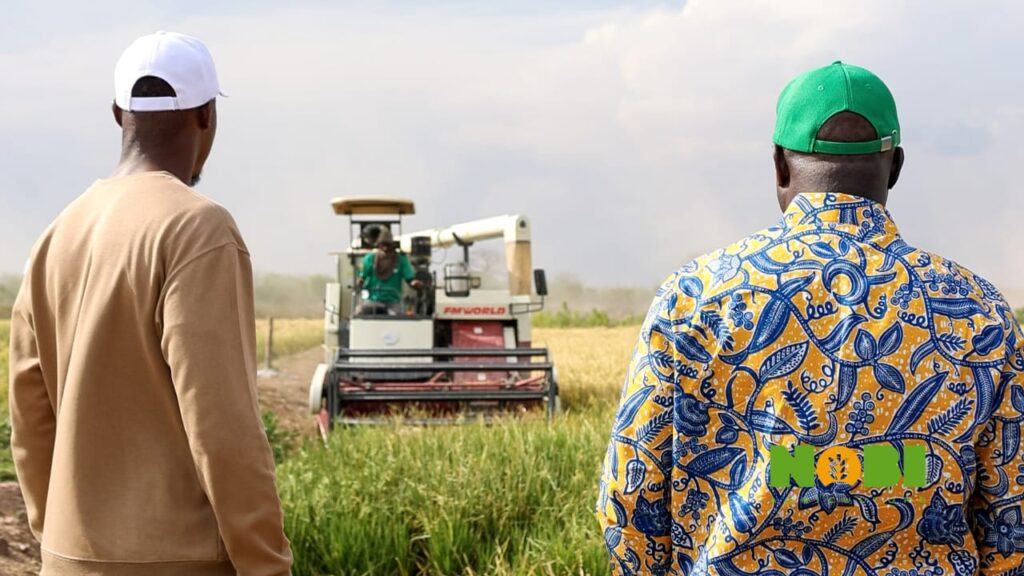
During the tour, the delegation inspected several key components of the project, including irrigation infrastructure, rice fields, research facilities, warehouses, silos and processing units. The visit provided a closer look at how coordinated investment is reshaping farming practices in Ghana.
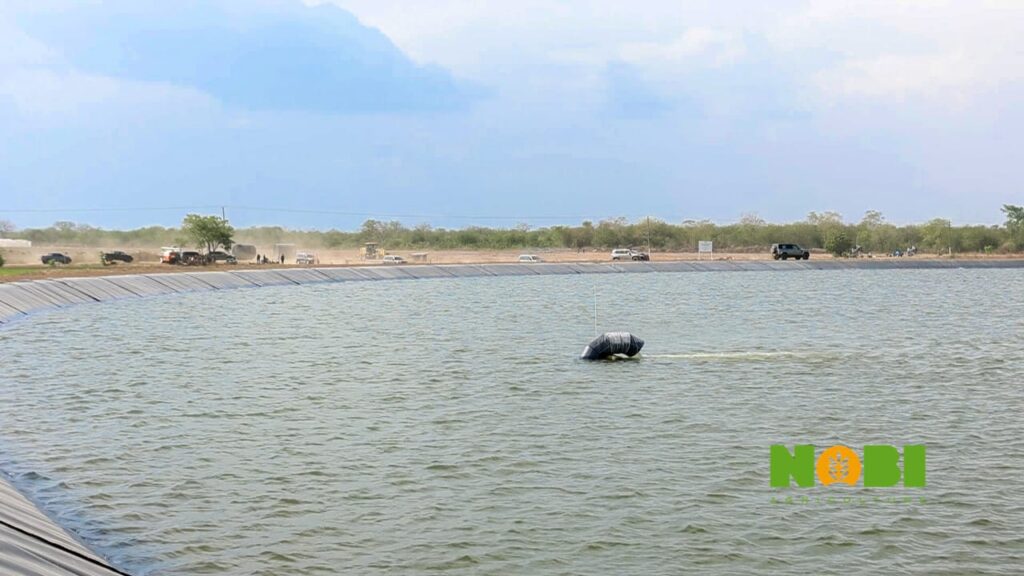
A major feature of the project is its investment in irrigation infrastructure. A 23-acre reservoir with a storage capacity of 1.2 million cubic metres of water supports year-round farming, helping to address the long-standing challenge of erratic rainfall in the region.
Nobi Agriculture has also prioritised post-harvest management, with a processing complex that includes a rice mill capable of producing three tonnes per hour.
This is supported by drying facilities, modern warehousing and silo storage with a capacity of 1,300 metric tonnes, significantly reducing post-harvest losses while improving value addition.
The impact of these interventions is already visible, with average rice yields reaching about 3.5 tonnes per acre—an improvement driven by irrigation, improved seed selection and modern farming techniques.
Innovation remains central to the project’s long-term vision. A rice research institute established on the farm is working to develop indigenous seed varieties suited to Ghana’s climate and soil conditions, with the aim of reducing reliance on imported seeds.
Beyond production, the initiative is also contributing to local economic development, creating over 150 direct jobs for Ghanaian youth while equipping them with practical skills in modern agriculture.
The project aligns with broader national development goals, including the government’s 24-Hour Economy policy and the Volta Economic Corridor initiative, both of which prioritise productivity, industrialisation and job creation.
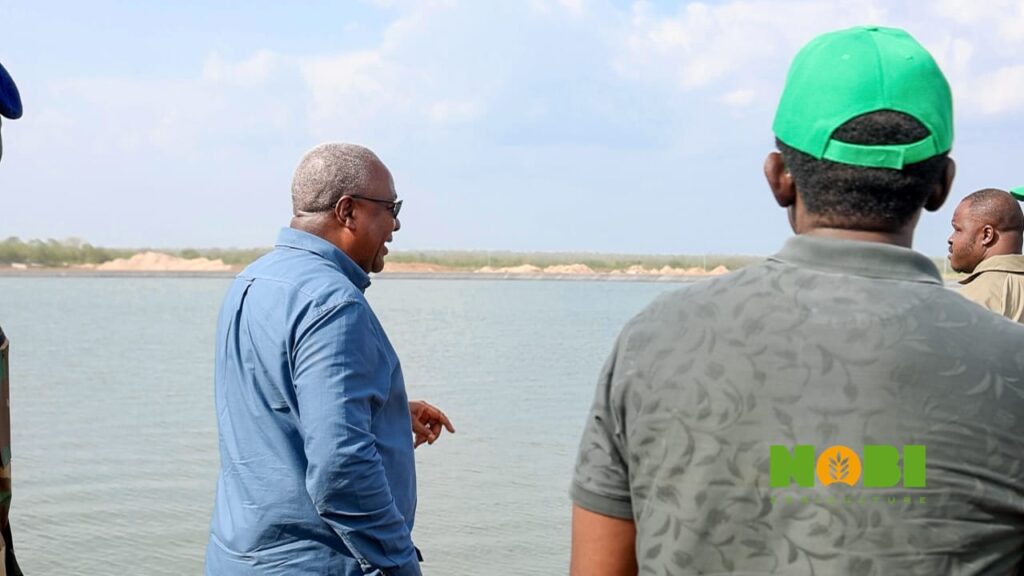
The visit by President Mahama and Minister Opoku highlighted official recognition of the project’s potential, with both leaders expressing admiration for the scale of investment and the model being developed under Awuah-Darko’s leadership.