




















Ghana is set to refine up to one metric tonne of gold locally every week starting February 1, 2026, in a move aimed at shifting from raw mineral exports to value-added gold products.
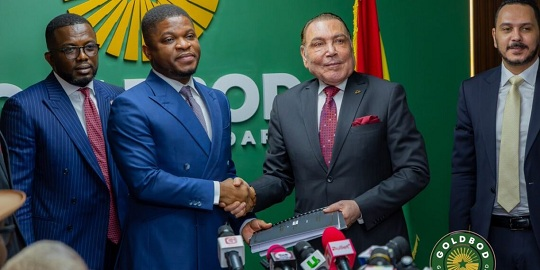
The announcement follows a landmark agreement between the Ghana Gold Board and Gold Coast Refinery Limited, with technical support from Rand Refinery, Africa’s only LBMA-accredited refinery.
Ghana Gold Board CEO Sammy Gyamfi, addressing the media on Tuesday, January 20, 2026, described the deal as “a groundbreaking landmark” in the management of the country’s gold resources.
“One of the key things [the President] instructed us to do was to ensure that we move Ghana away from abstraction to full value optimisation, true value addition,” he said.
Mr. Gyamfi highlighted that nearly all gold exported from Ghana had previously left the country unrefined.
“Yet 99.9% of all the gold we export out of our country… is exported in its raw form,” he said, adding that the state’s stake in Gold Coast Refinery gives Ghana a 15% free carried interest.
The agreement ensures weekly local refining of up to 1,000 kilograms of gold, with plans to scale up total local refining.
The refined gold will meet a minimum purity of 99.5%, with higher international standards possible, and each bar will bear hallmarks of the Ghana Gold Board, Gold Coast Refinery, Ghana Standards Authority, and the Bank of Ghana.
Mr.Gyamfi also highlighted the economic benefits – keeping refining fees within Ghana, creating jobs through 24-hour refinery operations, generating tax and dividend revenue, and preventing historical undervaluation of exported gold.
“At Gold Coast Refinery we’ll be doing fire assay, the gold standard of assay, before and after refining,” he said, ensuring accurate determination of gold purity and value.
He concluded by reaffirming the Board’s commitment. “Effective 1st February, you’ll be getting a minimum of a tonne of gold every week,” he said.