

























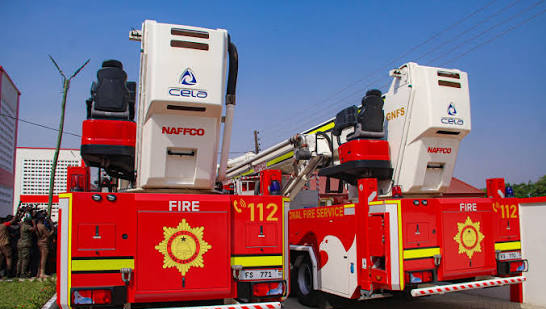
The Ghana National Fire Service (GNFS) is expected to receive 40 new fire tenders by the end of December 2026 as part of government efforts to strengthen the Service’s operational capacity.
The Minister for the Interior, Muntaka Mohammed-Mubarak, disclosed that procurement processes for the first batch had been completed following an allocation of GH¢150 million in the 2026 Budget.
He also announced that an additional GH¢150 million had been earmarked in the 2027 Budget to procure a second batch of fire tenders.
Speaking during the debate on the 2027 Budget in Parliament on Thursday, November 26, the Minister said the acquisition was intended to replace the GNFS’s ageing fleet and improve its ability to respond to emergencies.
According to him, some of the fire tenders currently in operation have been in service for between 15 and 20 years, making them increasingly unreliable.
“Mr Speaker, in the 2026 Budget that this House approved, you made a provision of GH¢150 million for fire tenders.
I’m happy to announce to the House that every process has gone through, and the first 40 fire tenders are to arrive by the close of December this year,” he said.
Mr Mubarak noted that the last fire tender was purchased in 2014, leaving the Service with outdated equipment that could affect its operational effectiveness.
He reiterated that the procurement process for the first batch had been completed and that the country would begin receiving the vehicles before the end of the year.
The Interior Minister also appealed to the public to refrain from attacking firefighters or throwing stones at them when they arrive at emergency scenes, particularly when there are delays in responding to distress calls.
He said firefighters were sometimes subjected to such attacks despite working with obsolete equipment that affected their ability to respond promptly to emergencies.
“Mr Speaker, this is where I want to make a passionate appeal to the citizens.
When we call for the Fire Service, and they come late, we tend to beat them and throw stones at them. The gadgets that we’ve given them are almost all obsolete,” he said.
Mr Mubarak explained that some of the fire tenders had exceeded their expected service lifespan, adding that such equipment should ideally be replaced after about five years.
He questioned how firefighters could be expected to deliver their best under the circumstances.
The planned acquisition of the two batches of fire tenders is expected to support the replacement of ageing equipment and improve the GNFS’s capacity to protect lives and property.