























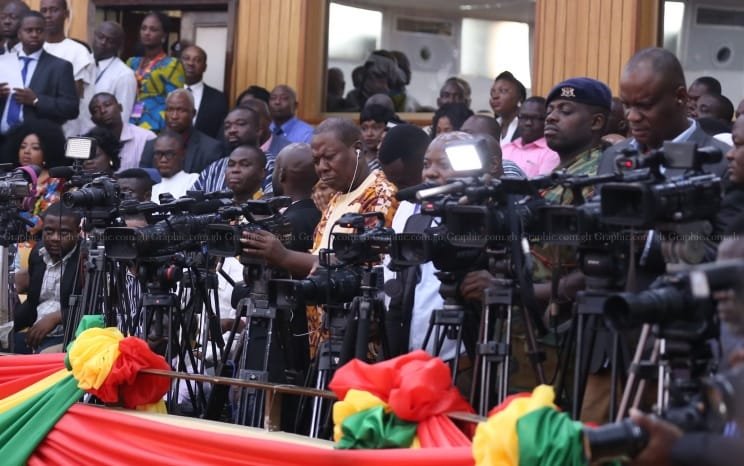
The Cyber Security Authority (CSA) has described the media as a critical partner in Ghana’s national security efforts, while urging journalists to balance press freedom with professional responsibility.
Speaking at the close of a two-day national security workshop for media practitioners, the Authority said the country’s security challenges could no longer be addressed by security agencies alone.
“National security is not the exclusive responsibility of the security agencies. It is a shared national duty. The media is not a spectator in that effort. It is a strategic partner.”
The Authority, however, stressed that the partnership should not compromise the independence of the media.
“That partnership does not require the media to surrender its independence, suppress legitimate criticism, or become an extension of government,” it said.
Instead, it said an independent and professional press could contribute significantly to national security by exposing wrongdoing, countering misinformation and holding public institutions accountable.
“On the contrary, a professional, independent, and courageous press strengthens national security by exposing wrongdoing, countering falsehoods, informing the public, and holding institutions accountable.”
The Authority cautioned journalists against the publication of unverified information, particularly during security incidents, communal conflicts and public emergencies.
It warned that “a misleading headline can spread across the country in minutes,” while an unverified video could “trigger fear, inflame communal tensions, or damage public confidence.”
At the same time, the Authority acknowledged that responsible journalism can help contain crises.
“Conversely, one carefully verified report can stop misinformation, protect the public, and help institutions respond effectively.”
It therefore proposed five practical commitments for media organisations: verifying information before amplifying it, protecting sensitive operations and people, building cyber-resilient newsrooms, correcting misinformation quickly and strengthening structured engagement with security institutions.
The CSA also called on PRINPAG to develop a newsroom protocol covering national security and cyber incident reporting.
For its part, the Authority urged security institutions to improve their communication with the media, arguing that journalists cannot report responsibly when credible information is unnecessarily delayed or communication is inconsistent.
“Trust is built before a crisis, not during one,” it said.
The Authority concluded by calling for a renewed relationship between both sides in which security institutions engage the media openly and respectfully, while journalists exercise their freedom with professionalism and responsibility.