
























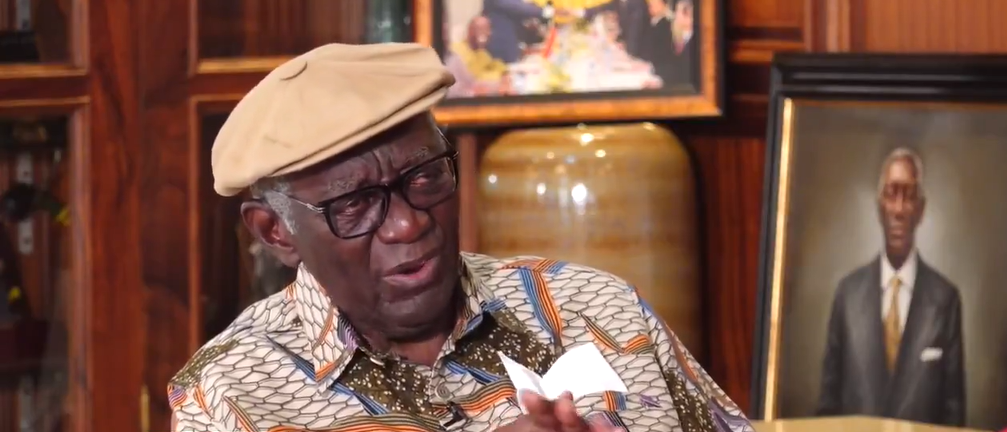
Former President John Agyekum Kufuor has called for Ghana to consider extending its presidential term from four to five years, arguing that the existing arrangement does not give governments enough time to implement policies and demonstrate tangible results.
Kufuor said a four-year mandate was often too short for a developing country such as Ghana, particularly when newly appointed ministers needed time to understand the machinery of government before implementing their programmes.
“Four years tended to be too short for a young nation that is trying to develop,” the former president said.
Explaining his position, Kufuor outlined the lengthy process involved in appointing ministers, familiarising them with their ministries, formulating policies and securing the necessary legislative approvals before implementation could begin.
He argued that these processes could consume a significant portion of a government’s first term, leaving little time for citizens to assess its performance before the next election.
According to Kufuor, the first year of a new administration is often dominated by ministerial appointments, institutional orientation and policy development.
He noted that governments could take more than six months to appoint ministers and heads of agencies, delaying the commencement of substantive work.
“The government would take sometimes longer than six months to even appoint the ministers, which means the first year is gone,” he said.
Kufuor explained that after appointments, ministers must understand the institutions they are expected to manage and develop policies that may require approval by Cabinet and Parliament.
“By the time you’ve formulated the policy, which would go to cabinet and then to parliament to become laws and that sort of thing, you’re already in your second year,” he stated.
He said the remaining years could become a race against time, as governments would have to implement their policies while preparing to face voters again.
Under the existing four-year arrangement, Kufuor argued, citizens might only begin to see the effects of government policies when the administration is already approaching another election.
The former president also criticised the disruption that election campaigns can bring to governance, saying the fourth year of a presidential term is often dominated by political activities and promises.
“Fourth year is then, it’s election year. Election year anywhere on earth is mad year,” Kufuor said.
He added that politicians typically spend the period campaigning and attempting to convince voters to renew their mandate.
“Everybody’s going around promising and talking. And then the election is on,” he said.
Kufuor believes an additional year would give governments more time to demonstrate progress in key sectors, including agriculture, healthcare, education, roads and water supply.
He said a five-year term would allow citizens to make a more informed assessment of a government’s performance before deciding whether to retain it in office.
“So I said, look, let’s add just a year to this process,” he stated.
Under his proposed arrangement, the fifth year would serve as the election year, following a longer period for policy implementation and assessment.
Kufuor also pushed back against arguments that Ghana should retain its four-year presidential term because the United States operates under a similar arrangement.
He argued that Ghana’s developmental circumstances and institutional capacity should be considered when determining the appropriate length of a presidential mandate.
“America is the foremost, developed country in the whole world,” he said, making the case that Ghana should not automatically adopt the same arrangement without considering its own circumstances.
The former president added that developing countries need realistic governance arrangements that allow enough time for policies to produce measurable results.
“I say you are not being realistic enough,” he said.
Kufuor acknowledged that his position on extending the presidential term had not received universal support within his political party.
He said the New Patriotic Party (NPP) had issued a position paper rejecting the proposal, but maintained that disagreements were part of the political process.
“And on that score, finally on that, the NPP issued a position paper and they rejected it,” he said.
Kufuor nevertheless defended the importance of leaders being prepared to advance ideas they believe could benefit the country, even when their colleagues initially disagree.
Reflecting on his experience with the Highly Indebted Poor Countries (HIPC) initiative, he recalled facing resistance from some of his own ministers before they eventually supported his position.
“I told you of HIPC when even my ministers were not agreeing,” he said.
“Fortunately, I happened to be present so I fought my way, say I’m taking the risk. If it doesn’t work, it’s me.”
He concluded by reaffirming his support for a five-year presidential term while acknowledging that his party might hold a different view.
“So now I talk five years. For whatever reason, if my party says no, that’s their viewpoint,” Kufuor said.