











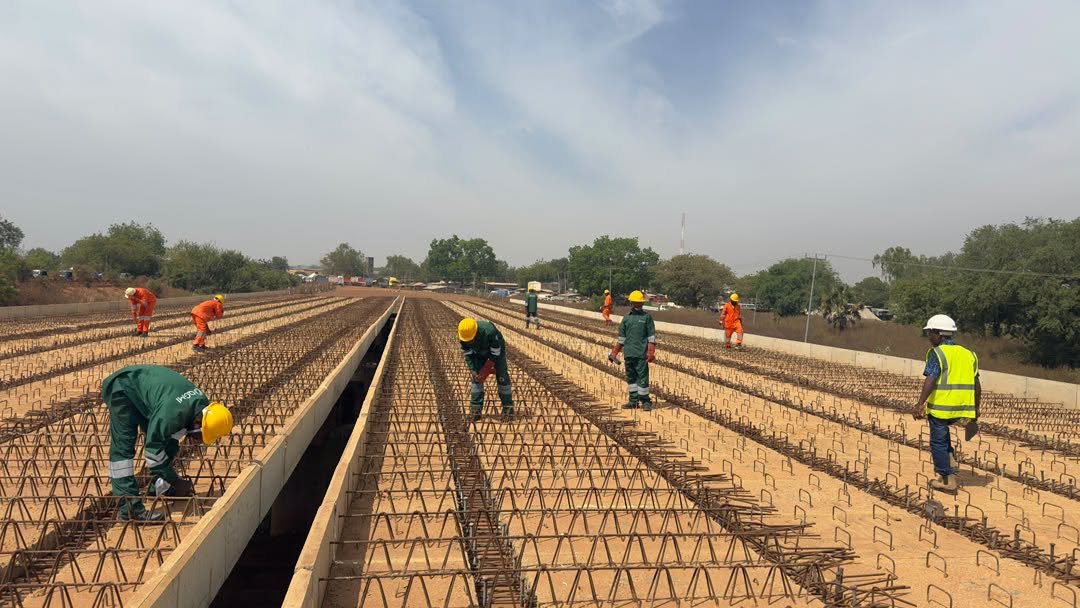
Construction has fully resumed on the Bolgatanga-Bawku-Polimakom road in the Upper East Region, raising hopes for the completion of a project delayed for several years.
The project team has reaffirmed its commitment to completing the major infrastructure project. The work is expected to improve transport links and boost economic activity across the region.
The road project, which began in December 2016, covers approximately 116.1 kilometres. It was initially expected to be completed in June 2019.
However, financial challenges and unpaid contractor bills disrupted progress. Work was suspended, leaving several sections unfinished.
In September 2026, the Roads and Highways Minister, Governs Kwame Agbodza, disclosed that government owed the contractor about €28 million in outstanding payments.
President John Dramani Mahama later announced that government would finance the remaining works with domestic resources.
“As of now, we are not continuing with the loan. The loan has been terminated, and so we are financing the project from our own resources,” he said.
The President also assured the contractor of timely payments to prevent further interruptions.
QGMI, formerly known as Queiroz Galvão, remains the main contractor for the Bolgatanga-Bawku-Polimakom road project.
Rango Construction Limited is also involved in emergency remedial works on a 1.1-kilometre stretch near the Kulaa Bridge.
The company’s Chief Executive Officer, Dr Theodore Nsoe Adimazoya, clarified that Rango had not replaced QGMI.
“For the record, QGMI Construction UK Ltd (formerly QUEIROZ GALVAO) remains the Contractor for the Bolgatanga-Bawku-Polimakom Project road project. Rango Construction Ltd is different from QGMI Construction UK Ltd,” he stated.
The project includes three bridges at Bolgatanga, Tilli and Bazua. It also features a six-kilometre bypass around Bawku.
Its completion is expected to improve road safety and reduce travel time for motorists.
The road will also make the movement of goods and services easier. This could support trade and create new economic opportunities for communities in the Upper East Region.
Residents and motorists have previously raised concerns about poor road conditions, dust and safety risks along unfinished sections.