

















Ghana’s public debt stock has increased by GH¢23.5 billion in three months, reaching GH¢759.3 billion at the end of October 2026, according to the latest data from the Bank of Ghana (BoG).
The figures, contained in the central bank’s November 2026 Summary of Economic and Financial Data released on Tuesday, November 17, show that the country’s debt stock has continued to rise despite ongoing efforts to strengthen public finances.
The latest debt figure represents 47.5 per cent of Ghana’s Gross Domestic Product (GDP), compared with 46.1 per cent recorded at the end of July, when the debt stood at GH¢735.8 billion.
The data further show that the debt stock increased from GH¢756.8 billion in September to GH¢759.3 billion in October, representing an additional GH¢2.5 billion within the month.
Domestic debt accounted for the larger share of the total, reaching GH¢427.9 billion, equivalent to 26.8 per cent of GDP. External debt, on the other hand, stood at GH¢331.4 billion, representing 20.7 per cent of GDP.
In dollar terms, Ghana’s total public debt was estimated at US$65.3 billion, including US$28.5 billion in external obligations.
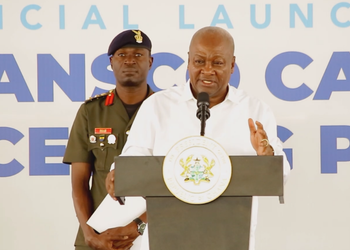
The figures are consistent with those presented by Finance Minister Dr. Cassiel Ato Forson during the presentation of the 2027 Budget Statement and Economic Policy to Parliament on November 12.
“Mr. Speaker, provisional public debt stood at GH¢759.3 billion at end-October 2026.” Dr. Forson stated
He further explained the composition of the country’s debt, saying: “At the end of October 2026, domestic debt accounted for 56.4 percent of the total public debt stock, while external debt accounted for the remaining 43.6 percent.”
The Bank of Ghana cautioned that the figures contained in its latest data pack could still be revised, as they are compiled from information provided by the Ministry of Finance, the central bank and the Ghana Statistical Service.
The Finance Minister also outlined the government’s approach to managing the country’s debt exposure, particularly its reliance on foreign borrowing.
“Mr. Speaker, our strategy is to reduce our external debt exposure, so that movements in the exchange rate do less damage to our total debt,” he told Parliament.