








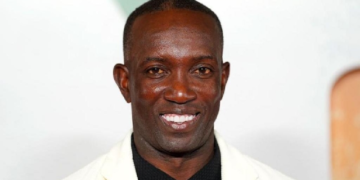



















Professor George M. Bob-Milliar of the Kwame Nkrumah University of Science and Technology (KNUST) says Ghana has increasingly incorporated political vigilantism into its democratic politics, warning that violence within the democratic system signals deeper challenges that must be addressed.
Speaking as a panellist during a National Policy Dialogue organised by Election Watch Ghana on Tuesday, August 25, 2026, Prof. Bob-Milliar said Ghana, despite being regarded as a model democracy, is not immune to the global decline in democratic standards and the growing phenomenon of democratic backsliding.
The National Policy Dialogue focused on assessing the implementation of the Vigilantism and Related Offences Act, 2019 (Act 999), and its implications for national security and democratic governance.
According to him, Ghana must protect the democratic gains it has made over the past three decades rather than allow political violence to become embedded in its democratic culture.
“But globally, democracy is in decline because of democratic decline, we talk of democratic backsliding. And for us, what we are having now today in the brass, yes, Ghana is not immune,” he said.
His comments come against the backdrop of Ghana’s long-running struggle with political vigilantism and election-related violence, which intensified around several elections and by-elections under the Fourth Republic.
The January 31, 2019 Ayawaso West Wuogon by-election violence became a major turning point in the national conversation. The violence generated widespread public condemnation and prompted then-President Nana Akufo-Addo to establish a Commission of Inquiry.
The government subsequently introduced the Vigilantism and Related Offences Bill, which Parliament passed as Act 999 in August 2019.
Parliament’s memorandum on the Bill specifically cited violence at several previous by-elections, including Ayawaso West Wuogon, and said the incidents had contributed to the formation and proliferation of political party vigilante groups.
Act 999, which was assented to on August 23, 2019, sought to disband political party vigilante groups and land guards and proscribe acts of vigilantism.
It is against this history that Prof. Bob-Milliar argued that the country must critically examine whether the law has addressed the deeper political conditions that continue to produce violence.
He said Ghana’s democratic journey, particularly its adoption of multiparty politics in the early 1990s, should have established the peaceful acceptance of political power as a normal part of the political process.
“But violence with democratic state is not the norm. It signals that something is not right,” he said.
Prof. Bob-Milliar called for sustained dialogue among political leaders, academics and political parties to address the factors driving political violence and vigilantism.
“And that is where we as political leaders, as academics, as political parties, we need to have this dialogue framework,” he stated.
He also questioned whether Act 999 had adequately addressed the underlying factors responsible for political violence, arguing that the passage of legislation alone could not resolve the problem.
“So the Act is a bad. Is an outcome of party politics. And the lying factors that build the government violence were not addressed,” he said.
According to the professor, political parties are fully aware of the existence of Act 999 and should therefore take responsibility for how they mobilise their supporters.
“All political parties know the existence of this law. Right? So if they are going to mobilize in support of a party, they are mindful of what is likely to happen in interest party,” he said.
He maintained that Ghana’s democratic institutions and political actors must continue examining the effectiveness of Act 999 and identify ways to make the law more effective.
“But having these discussions about how we can make this law very effective, is relevant,” Prof. Bob-Milliar said.