























The committee investigating the August 6, 2025, military helicopter crash has dismissed claims that the aircraft exploded midair, clarifying that the explosion occurred only after it struck the ground.
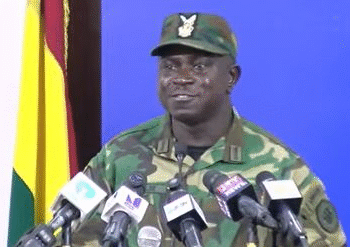
At a public briefing on Tuesday, November 11, Captain (Rtd) Paul Forjoe, a member of the investigative team, explained that the aircraft’s fuel tank ignited upon impact — not before.
“In terms of the explosion, there was no explosion before. The Z-9 helicopter’s fuel tank is under where the passengers sit. It had been fuelled up well, so it was on impact that the explosion took place,” Captain Forjoe stated.
The retired officer added that the Harbin Z-9EH helicopter (tail number GHF 631) was mechanically sound before takeoff and had been declared airworthy by the pilot. However, it lacked some avionic safety enhancements.
“If you have all these other enhancements, the Air Force would be happy to have them because they know what it would help them do, and it will make our dignitaries much safer when they fly,” he said. “But it doesn’t mean that because those enhancements were not there, that is why the accident happened; it would be wrong to say so.”
The aircraft, which was on an anti-illegal mining mission from Accra to Obuasi, crashed in the Adansi Akrofuom District of the Ashanti Region, killing all eight people on board.
Among the victims were Defence Minister Dr. Edward Omane Boamah, Environment Minister Dr. Ibrahim Murtala Mohammed, Acting Deputy National Security Coordinator Limuna Muniru, NDC Vice Chairman Samuel Sarpong, NADMO Deputy Director-General Samuel Aboagye, and three crew members.
The committee’s final report attributed the crash to a sudden downdraft that caused a loss of altitude and lift over high terrain — not a mechanical or explosive failure.