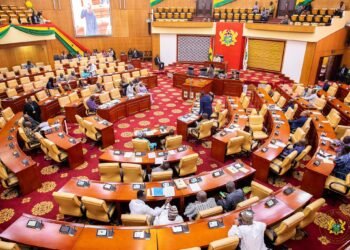


























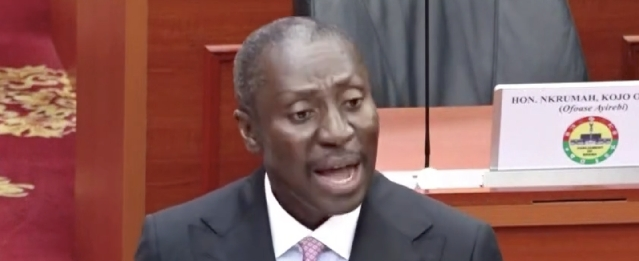
The Minority Caucus in Parliament has expressed disappointment with the Speaker’s ruling rejecting its request for the establishment of a committee to investigate the cocaine-related matter.
Speaking after the ruling, Minority Leader and Member of Parliament for Effutu, Alexander Afenyo-Markin, accused the Majority of using its numerical strength, with the support of the Speaker, to weaken Parliament’s oversight role.
“The Majority has used its Majority superpower with the help of the Speaker of Parliament to weaken parliamentary oversight,” Mr Afenyo-Markin said.
He also questioned the Speaker’s reliance on the fact that aspects of the matter are currently before the courts, arguing that this did not, in the Minority’s view, address broader institutional questions arising from the case.
“The Speaker’s assertion of the matter being in court does not provide a clear understanding of the institutions and individuals involved in the case,” he stated.
Mr Afenyo-Markin further accused the governing National Democratic Congress (NDC) of being unwilling to confront what he described as its own failures, insisting that Parliament had a responsibility to scrutinise matters of public interest.
“The NDC is afraid of its own failures,” he said.
The Minority Leader also criticised the ruling on accountability grounds, arguing that it did not meet the standard the caucus expected of Parliament in exercising its constitutional oversight responsibilities.
“The Speaker’s ruling has failed the integrity test required by Parliament to discharge its duties,” he added.
The Minority had requested the establishment of a parliamentary committee to examine the circumstances surrounding the cocaine-related cases, including the roles of relevant state institutions and individuals.
The caucus maintains that a parliamentary inquiry could help clarify the circumstances surrounding the matter and strengthen institutional accountability, even as related criminal proceedings continue before the courts.