




















The Bank of Ghana (BoG) is proposing the use of mobile money transactions, utility bills and supplier records to help small businesses access loans.
The initiative targets micro, small and medium-sized enterprises (MSMEs) that struggle to secure credit because they lack formal financial records, credit histories or collateral.
The central bank believes these alternative records can help lenders assess businesses that are often excluded from the formal credit system.
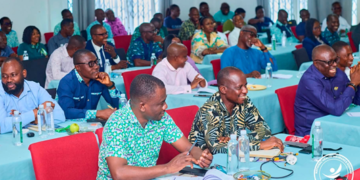
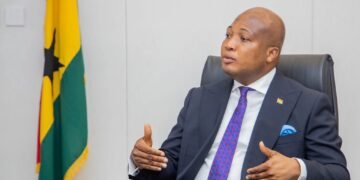
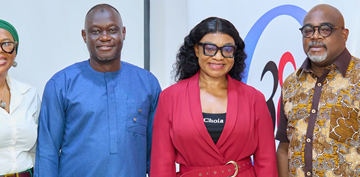
Speaking at the Ghana Credit Data Providers Conference, Dr Settor Kwabla Amediku, Special Aide to the Governor on Financial Stability, said many small businesses carry out regular transactions but remain invisible to traditional credit assessment systems.
He represented the Second Deputy Governor of the Bank of Ghana, Mrs Matilda Asante-Asiedu, at the conference.
“Their economic activities are real. Their transactions are recorded. Their potential is considerable. We can see them in our markets. They are visible on our digital platforms and visible in our communities. Yet, they remain invisible to the formal credit system,” he said.
Under the proposed approach, financial institutions could use mobile money histories, utility payments and supplier records to assess loan applications.
They could also consider sales patterns and regular inventory purchases. These records may help traders and other small business owners demonstrate their ability to repay loans.
This would offer an alternative to the conventional requirements for audited accounts, established borrowing histories and traditional collateral.
Dr Amediku stressed that the proposal was not intended to weaken lending standards. Instead, he said, it would improve the information available to lenders when assessing borrowers.
“We are not asking financial institutions to lower their credit standards. We are asking them to raise the quality of information which they use to assess borrowers,” he said.
He also called for safeguards to protect customers’ privacy and ensure that the information used is accurate, transparent and fair.
Additionally, he urged banks, credit bureaus, telecommunications companies, utility providers and fintech firms to work together to establish standards for sharing and using alternative data.
The proposal comes as many small businesses continue to face difficulties securing affordable financing.
Although MSMEs play a significant role in Ghana’s economy and employment, several operate outside the formal financial system. This makes it difficult for lenders to assess their creditworthiness using conventional methods.
The Bank of Ghana believes that expanding credit access will require more than increasing the number of people covered by credit bureaus. Financial institutions must also consider reliable information that reflects the everyday activities of businesses.
Ghana’s growing mobile money industry could provide an important source of such information.
In October 2026, the country recorded 1.093 billion mobile money transactions valued at GH¢552.1 billion. The volume of transactions highlights the potential of digital financial records to support alternative credit assessments.
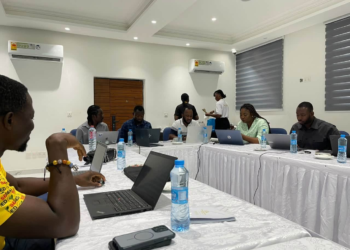
The two-day Ghana Credit Data Providers Conference was organised by the Bank of Ghana with support from the International Finance Corporation (IFC) and Switzerland’s State Secretariat for Economic Affairs (SECO).
The conference is expected to strengthen cooperation among stakeholders in the credit reporting industry.