























Ghana has launched a National Menstrual Hygiene Taskforce to address menstrual health challenges, tackle period stigma and improve access to proper menstrual hygiene management, particularly among schoolgirls.
The initiative was officially launched by Deputy Minister for Education, Hon. Dr. Clement Abas Apaak, on Wednesday, November 25, 2026, at the Ange Hill Hotel in East Legon, Accra.
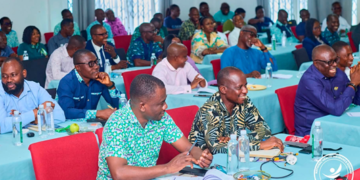
The Taskforce brings together relevant government institutions, development partners, civil society organisations, academia and private sector actors to coordinate national efforts towards improving menstrual health and hygiene.
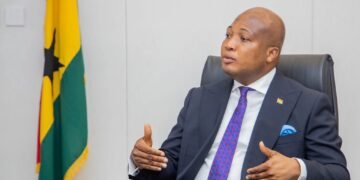
Speaking at the launch, Apaak described menstrual hygiene as a critical national development issue requiring coordinated action across multiple sectors.
“Your presence shows a shared recognition that menstrual health is not the responsibility of one institution alone. It is a national development issue that requires coordinated action,” he said.
He observed that despite menstruation being a natural biological process, many girls in Ghana continue to face challenges that undermine their education, health, confidence and general well-being.
Among the challenges identified were inadequate access to sanitary products, poor water and sanitation facilities, misinformation and cultural stigma surrounding menstruation.
According to the Deputy Minister, these barriers contribute to school absenteeism, reduced participation in classroom activities and, in some cases, increased risks of dropping out.
“As a nation committed to inclusive and equitable quality education, we cannot allow menstruation to become a barrier to learning,” he stressed.
Apaak said the Ministry of Education recognises menstrual health management as an important component of education, gender equality and human rights.
He emphasised that every girl must have the opportunity to attend school consistently and participate fully in academic and social activities without fear, embarrassment or disadvantage because of her menstrual cycle.
Beyond the provision of sanitary pads, he said effective menstrual hygiene management requires comprehensive education, access to clean water, private sanitation facilities, community engagement and supportive school environments.
The Deputy Minister explained that the newly established Taskforce would provide a common platform for stakeholders to coordinate interventions, strengthen partnerships, improve policy implementation and ensure accountability.
He urged members to prioritise practical results rather than limiting their efforts to discussions and advocacy.
“Let us move beyond conversation to action. Let us ensure that policies become real improvements in schools and communities. And let us listen to the voices of girls and young women and place their needs at the centre of our work,” he stated.
Apaak also called for an end to the stigma surrounding menstruation, advocating an environment where girls can openly discuss menstrual health and manage their periods safely and with dignity.
He said the initiative aligns with Ghana’s commitments under the Sustainable Development Goals, particularly those relating to quality education, good health and well-being, gender equality, clean water and sanitation, and reduced inequalities.
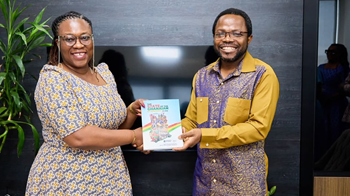
The launch was supported by the United Nations Population Fund (UNFPA), alongside other development partners and stakeholder institutions.
Apaak expressed confidence that the Taskforce would accelerate Ghana’s efforts towards menstrual equity, educational inclusion and gender equality.
He subsequently declared the National Menstrual Hygiene Taskforce officially launched.