



















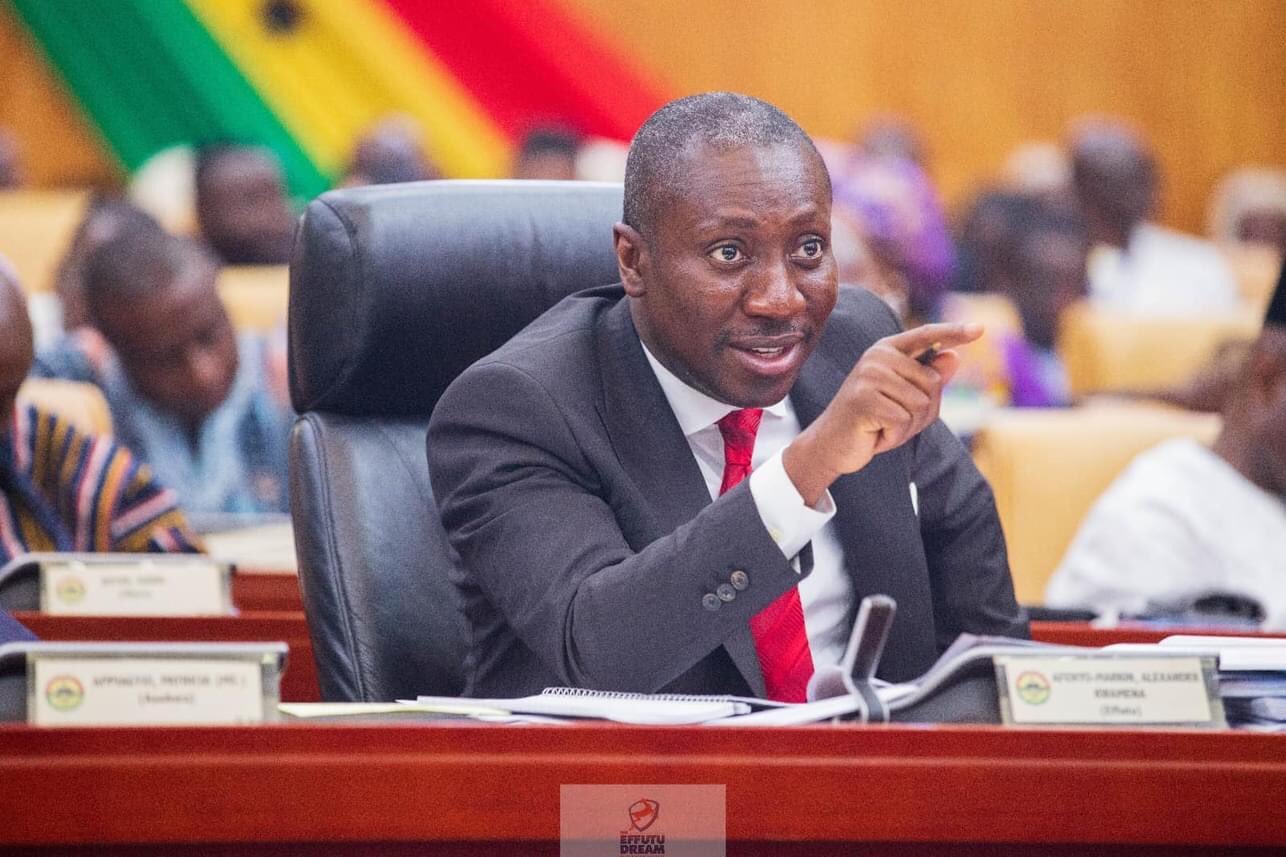
Minority Leader Alexander Afenyo-Markin has questioned the adequacy of incentives announced under the government’s 24-hour economy and New Economy agenda, arguing that high electricity costs remain a major obstacle to industrial growth.
He said the government’s ambition to encourage factories to operate around the clock must be backed by reforms in the energy sector, including preferential electricity tariffs and rebates for industrial operators.
Speaking to the media, the Effutu MP said the incentives announced by President John Dramani Mahama were insufficient to address the concerns of local manufacturers.
“What was announced today, it doesn’t address the concerns of Ghanaian industrialists or Ghanaian entrepreneurs,” he said.
Afenyo-Markin argued that businesses need reliable and affordable electricity to operate profitably, particularly those expected to run multiple shifts under the 24-hour economy policy.
“If you want factories to operate 24 hours, if you say you are creating a new economy, you need to reform your energy sector,” he said.
He called for preferential electricity rates and rebates to reduce the cost of production for industrial operators.
“There must be some preferential rates, some rebate in terms of tariffs that are paid by industry players,” he added.
The Minority Leader also raised concerns about illegal electricity connections, saying stronger enforcement could help reduce losses in the power sector and free up resources for infrastructure development.
Beyond electricity costs, he said local manufacturers importing raw materials and machinery also needed targeted incentives to support their operations.
“Those Ghanaian businesses who are importing raw materials for their factories, importing raw materials and importing machinery, they need to have incentives to attract them,” he said.
He further pointed to the high cost of locally produced rice compared with imported rice as an indication of policy challenges facing domestic producers.
“Again, today, rice, locally produced rice is more expensive than imported rice. Why is that? After paying duty, the imported rice is still cheaper,” he said.
He argued that the government must address such policy gaps if it expects local businesses to invest in manufacturing and expand production.