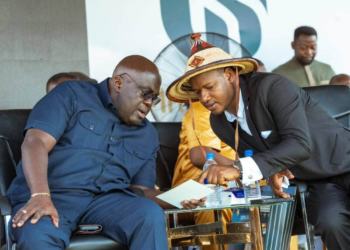























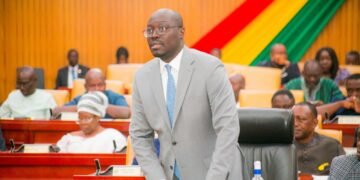
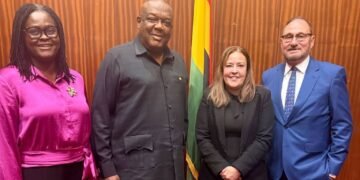



Chief of Staff to President John Dramani Mahama, Julius Debrah, has been credited with championing key local development initiatives, including the nationwide street naming exercise and the introduction of National Sanitation Day during his tenure as Minister for Local Government and Rural Development.
A profile highlighting his public service career describes his approach to leadership as one centred on visible development, captured in the principle: “Development must be seen, not said.”
Mr Debrah served as Minister for Local Government and Rural Development from 2014 to 2015, a period during which he was associated with efforts to improve community organisation, sanitation and local governance.
One of the initiatives highlighted was the National Street Naming Exercise, which sought to provide communities across the country with identifiable street names and signposts.
The programme was intended to improve navigation, make it easier for emergency services to locate homes, support business deliveries and strengthen town planning and property addressing.
The profile argues that the initiative went beyond the installation of street signs, describing it as an effort to give communities identifiable addresses and improve their organisation.
Mr Debrah is also credited with championing National Sanitation Day, a monthly exercise that mobilised citizens and prominent personalities, including the Asantehene, to clean streets, gutters and culverts.
The initiative sought to promote public participation in sanitation and encourage collective responsibility for maintaining cleaner communities.
Mr Debrah’s public service career has included positions as Eastern Regional Minister, Greater Accra Regional Minister and Minister for Local Government and Rural Development.
He currently serves as Chief of Staff to President John Dramani Mahama, having previously held the position during the President’s first administration in 2015 before returning to the role in 2025.
The profile describes his return to the position as a reflection of continuity and experience in government administration.
It also credits him with supporting accountability, good governance and discipline in the coordination of government business.
The account concludes by portraying Mr Debrah’s leadership as one demonstrated through practical development initiatives and sustained public service.