



















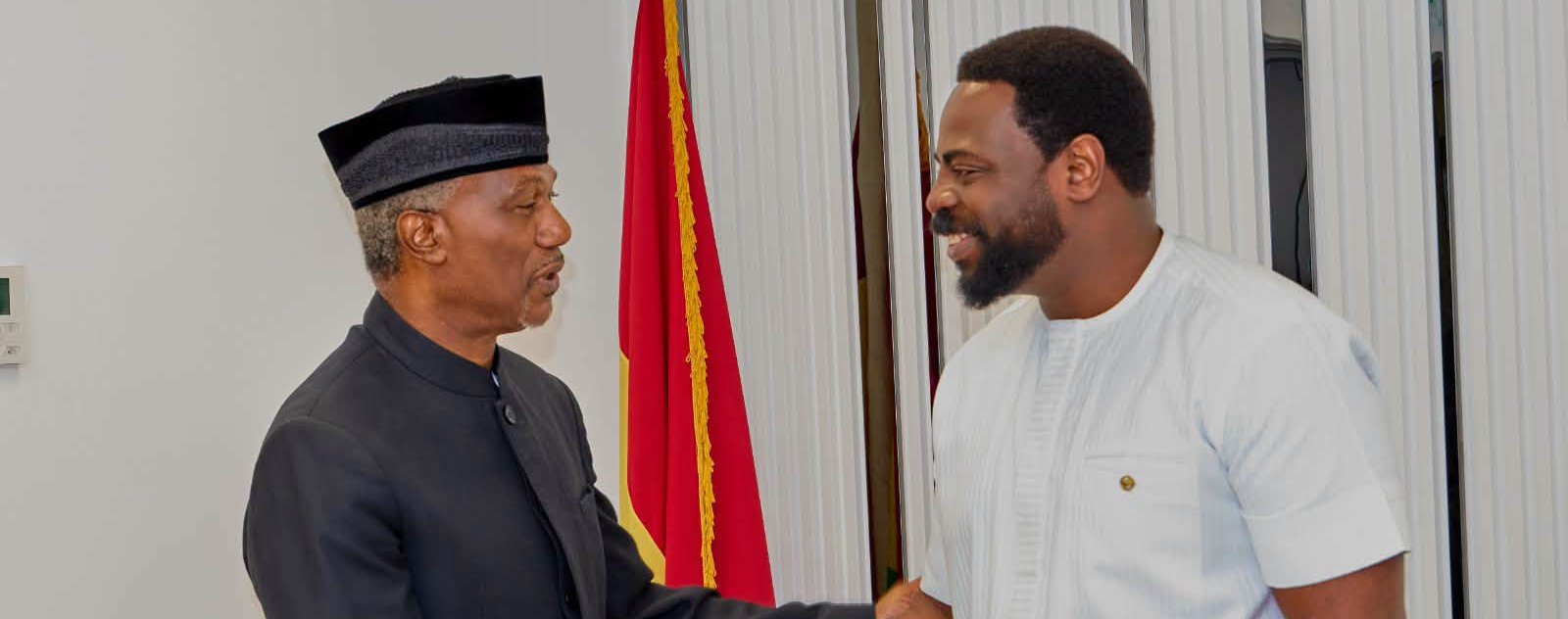
The National Health Insurance Authority (NHIA) has hosted Dr Erasmus Morah, Senior, Advisor to the Director-General of the Africa Centres for Disease Control and Prevention (Africa CDC), as part of a continental learning mission to examine Ghana’s experience in health financing and primary healthcare delivery.
Dr Morah visited the NHIA Head Office in Accra on Monday, November 2, 2026, under the Accra Reset framework.
Discussions focused on Ghana’s efforts to expand access to healthcare through the National Health Insurance Scheme (NHIS), challenges encountered in implementing the scheme and ongoing measures to make healthcare more affordable.
Welcoming the delegation on behalf of the NHIA Chief Executive, Dr Victor Asare Bampoe, the Deputy Chief Executive for Operations, Dr Senanu Kwesi Djokoto, expressed the Authority’s readiness to share lessons from more than two decades of implementing the NHIS.
The Director of Operations, Ms Mariam Musah, traced Ghana’s healthcare financing journey from the cash-and-carry system, under which patients paid directly for medical treatment, to the introduction of the NHIS in 2003.
She said active NHIS membership had exceeded 70 per cent of the population, with the Authority working towards increasing coverage to 80 per cent by the end of 2026.
Ms Musah also outlined the proposed Free Primary Health Care policy, which seeks to make essential healthcare services available at Community-based Health Planning and Services (CHPS) compounds and health centres, regardless of an individual’s NHIS membership status.
The Director of Strategic Health Purchasing, Dr Ruby Aileen Mensah Annan, discussed plans to support the proposed policy through improved healthcare provider payment systems and sustainable financing arrangements.
The Director of Membership and Regional Operations, Mr Sebastian Alagpulinsa, highlighted the role of community outreach programmes, mobile registration services, Ghanacard integration and digital platforms such as MyNHIS in expanding membership.
He also outlined ongoing efforts to extend coverage to underserved communities and vulnerable groups.
Dr Morah commended Ghana for its commitment to financing healthcare through domestic resources, noting that the country’s experience offered useful lessons for other African countries.
He stressed the importance of combining scientific innovation with political commitment, strong leadership and community participation to achieve meaningful improvements in healthcare delivery.
“Science must be backed by political will, strong leadership and community engagement to translate promising ideas into solutions that save lives,” he said.
Also present at the meeting were the Director of Research, Policy, Monitoring and Evaluation, Mr Suleymana Abass; Director of Anti-Fraud and Illegal Payments, Mr Isaac Akonde; and Deputy Director of Marketing and Branding, Angela Joyce Asiedu.
Dr Djokoto thanked Dr Morah for the visit and reaffirmed the NHIA’s commitment to sharing Ghana’s healthcare financing experience and collaborating with partners to advance universal health coverage across Africa.