
























Damang Gold Mine Limited says it has extracted approximately 11.1 million tonnes of fresh material since taking over operations in April 2026, insisting that active mining, rather than reliance on existing stockpiles, remains central to its operations.
The mine’s Manager in charge of Mining, Frank Dankyi Agyei, disclosed the figures during a public forum organised by Asempa FM to assess the company’s performance in its first six months under the new operator.
Mr Agyei said newly mined material accounted for 60 per cent of the ore currently being processed, while stockpiled material made up the remaining 40 per cent.
His disclosure was intended to address claims that the mine was relying largely on stockpiles accumulated before the transition in management.
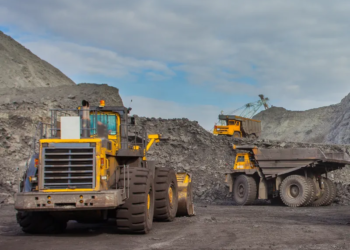
According to the mining manager, extraction is continuing across multiple pits, supported by excavators, haul trucks and other heavy equipment deployed to sustain production.
Figures presented by management show a steady increase in reported mining volumes since the company assumed operations.
The mine recorded more than 647,000 tonnes between April 19 and 30, followed by 1.4 million tonnes in May, 1.6 million tonnes in June, two million tonnes in July, 2.45 million tonnes in August and three million tonnes in September.
The monthly figures add up to approximately 11.1 million tonnes, with September recording the highest reported volume.
Mr Agyei said the deployment of equipment across the Amoanda and Juno pits demonstrated that the company was actively extracting fresh material rather than depending exclusively on ore mined before Engineers and Planners took over.
To support its operations, Damang has deployed at least nine excavators across the Amoanda and Juno pits, alongside an operating fleet of approximately 50 to 57 haul trucks, including Articulated Dump Trucks (ADTs) and Caterpillar 777 trucks.
At the Amoanda pits, two Liebherr 9400 excavators are being used for active mining, supported by a Hitachi EX2000 and a Kattega excavator.
The expanded Amoanda Pit is expected to have a strike length of approximately 1.8 kilometres.
At the Juno pits, the equipment includes 9350 excavators numbered 88 and 89, excavator 99, a Hitachi EX870 numbered 105, excavator 114 and a Pulse excavator numbered 83.
Management said the equipment deployment was intended to support fresh ore extraction and the movement of mined material to processing operations.
The presence of several excavators across the two pit areas also allows the company to sustain mining activities at multiple locations.
Mr Agyei further disclosed that 12 additional dump trucks previously used at Tarkwa Mine had been transferred to Damang for repairs before being deployed to support operations.
The additional trucks are expected to strengthen the mine’s haulage capacity and improve the transportation of ore and waste from active mining areas.
The company has also outlined plans to bring in more trucks as part of efforts to expand its operational capacity and sustain mining activity.
Management says the availability of excavators and haul trucks is critical to maintaining extraction volumes and increasing the supply of freshly mined material for processing.
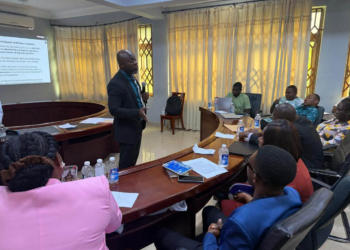
The disclosures were made during a public forum organised by Asempa FM to assess Damang Gold Mine Limited’s performance during its first six months under the new operator and provide residents of host communities with an opportunity to raise concerns.
Company officials used the engagement to brief residents on mining operations, equipment deployment and other developments since the takeover.
Damang Mine was formerly operated by Gold Fields Ghana Limited. Following the expiration of Gold Fields’ mining lease, the concession was subjected to a competitive tender process supervised by the Minerals Commission.
Engineers and Planners won the bid, and the mine was officially handed over on April 18, 2026, at a ceremony led by the Minister for Lands and Natural Resources, Emmanuel Armah-Kofi Buah.
Since assuming operations, the new management has sought to demonstrate that mining activities are being sustained through fresh extraction alongside the processing of material already stockpiled at the site.