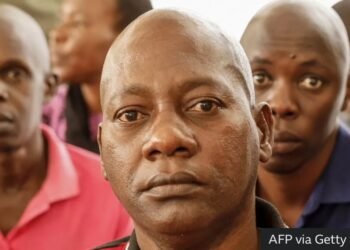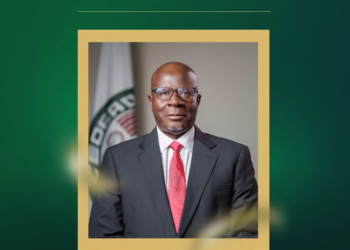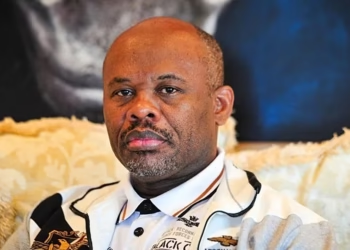










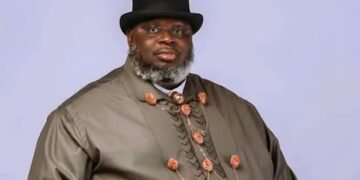



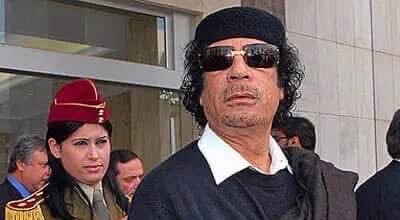
Former Member of Parliament and vetran journalist Ras Mubarak has criticised the 2011 NATO-led military intervention in Libya, arguing that the overthrow and killing of former Libyan leader Muammar Gaddafi contributed to the country’s prolonged instability and worsening insecurity in the Sahel.
In a statement marking 15 years since Gaddafi was killed on October 20, 2011, Mr Mubarak said the intervention, which was justified by Western powers as an effort to protect civilians, had failed to deliver lasting democracy and stability to Libya.
He argued that the collapse of Libya’s central government had created a power vacuum characterised by rival administrations, armed militias, foreign interference and competition over the country’s oil resources.
“Fifteen years on, the results are plain and brutal.
Libya is worse off by almost every measurable standard,” he said.
Mr Mubarak acknowledged that Gaddafi was not without flaws but maintained that the former leader had pursued an independent African development agenda, supported the African Union and advocated greater continental economic integration.
He said Gaddafi’s removal had undermined a vision of African self-determination and left Libya struggling with the consequences of political fragmentation.
The former MP also linked Libya’s post-2011 instability to the spread of weapons and armed groups across the Sahel, particularly in Mali, Niger and Burkina Faso.
According to him, the proliferation of weapons from Libyan state arsenals following the collapse of central authority contributed to the ability of extremist groups to challenge governments across the region.
Mr Mubarak argued that the insecurity confronting Sahelian countries should be examined partly in the context of the consequences of the Libyan intervention rather than treated solely as a result of local political and environmental challenges.
He criticised Western governments for what he described as a pattern in which interventions presented as humanitarian efforts were followed by prolonged instability, while the same countries later returned as security partners and economic stakeholders.
His comments form part of a broader critique of foreign military involvement in Africa and the continent’s dependence on external powers for security assistance.
Mr Mubarak called on African governments to pursue a practical continental strategy aimed at strengthening political independence, regional security and economic cooperation.
Among his proposals are prioritising the free movement of Africans across the continent, establishing stronger African mechanisms for resolving conflicts and reducing dependence on external military interventions.
He also called for greater investment in Africa’s industrial, military and diplomatic capabilities to enable countries to protect their interests and resist external pressure.
The former legislator further urged African countries to teach younger generations about the continent’s political history, including the overthrow of Ghana’s first President, Kwame Nkrumah, in 1966, the assassination of Burkina Faso’s former leader Thomas Sankara in 1987 and the killing of Congolese independence leader Patrice Lumumba in 1961.
He cited these events as examples of what he considers a recurring pattern of foreign interference and the undermining of African political sovereignty.
Gaddafi ruled Libya for more than four decades before being overthrown during the 2011 uprising, which developed into an armed conflict involving Libyan opposition forces and a NATO-led military campaign.
The intervention was authorised by United Nations Security Council Resolution 1973, which permitted measures to protect civilians and civilian-populated areas, including a no-fly zone.
NATO’s campaign played a significant role in the conflict that led to the collapse of Gaddafi’s government.
However, Libya subsequently experienced prolonged political divisions, competing centres of authority and the proliferation of armed groups.
The country’s instability also contributed to wider regional security concerns, including the movement of fighters and weapons across the Sahel, although the region’s conflicts have multiple interconnected causes.
Mr Mubarak said the lessons of Libya should prompt African leaders to strengthen continental cooperation and ensure that the continent’s resources and political decisions serve African interests.
“Until Africans organise around their own interests with the same ruthlessness that others organise around theirs, the pattern will repeat,” he said.