

























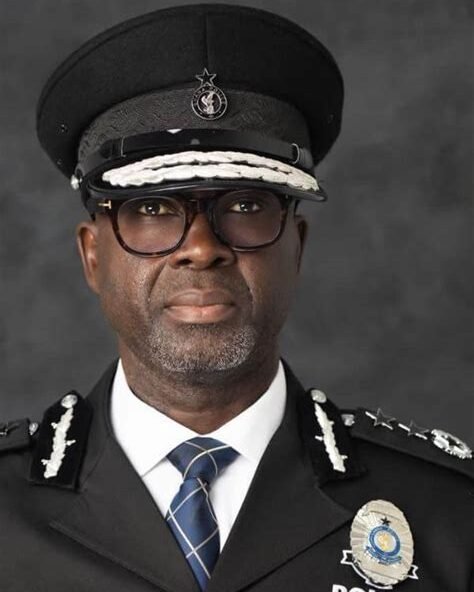
The National Security Coordinator, COP Abdul-Osman Razak, has warned that political vigilante groups in Ghana are changing their identities and moving their activities into less visible networks, including social media and encrypted communication platforms.
Speaking as the Guest Speaker at a National Policy Dialogue on the implementation of the Vigilantism and Related Offences Act, 2019 (Act 999), organised by Election Watch Ghana on Tuesday, August 25, 2026, COP Razak said the changing nature of political vigilantism required security agencies to adapt their strategies rather than assume the problem had been eliminated because traditional vigilante groups were no longer operating openly.
“We are very much aware that some groups are rebranding as internal security teams, volunteer task forces, or community security initiatives,” he said.
He added that the shift was also reflected in how such groups mobilise and communicate.
“Again, mobilisation has moved online on social media, encrypted chats, local disputes, private security arrangements, or other informal channels,” COP Razak said.
The National Security Coordinator cautioned against interpreting the reduced visibility of organised vigilante groups as evidence that the phenomenon had been completely eradicated.
“We must not mistake reduced visibility of these groups as complete eradication. A vigilante group is a vigilante group regardless of its name, uniform, or publicity,” he said.
His comments come in the context of Ghana’s efforts to address political vigilantism and election-related violence, which led to the passage of the Vigilantism and Related Offences Act, 2019 (Act 999).
The law, which received presidential assent on August 23, 2019, was enacted to address the formation and activities of vigilante groups, including political party vigilante groups and land guards.
COP Razak said that although Act 999 had helped reduce the open display of organised vigilante formations, the evolution of such groups meant that security agencies needed to remain proactive.
He also acknowledged challenges in enforcing the law, including limited prosecutions and delays in legal processes, and warned that inconsistent enforcement could weaken its deterrent effect.
The National Security Coordinator, therefore, called for Act 999 to be enforced consistently and without political favour.
He further urged security agencies to begin preventive measures well ahead of elections, arguing that the recruitment and mobilisation of young people into violent groups could begin months before polling.
He said intelligence mapping and stakeholder engagement should commence between 12 and 18 months before elections, followed by youth engagement and civic education between nine and 12 months before polling.
Active monitoring of political mobilisation, he added, should begin at least six months before elections to identify and disrupt emerging threats.
COP Razak made the remarks during the National Policy Dialogue organised by Election Watch Ghana to assess the implementation of Act 999 and its implications for national security and democratic governance.