























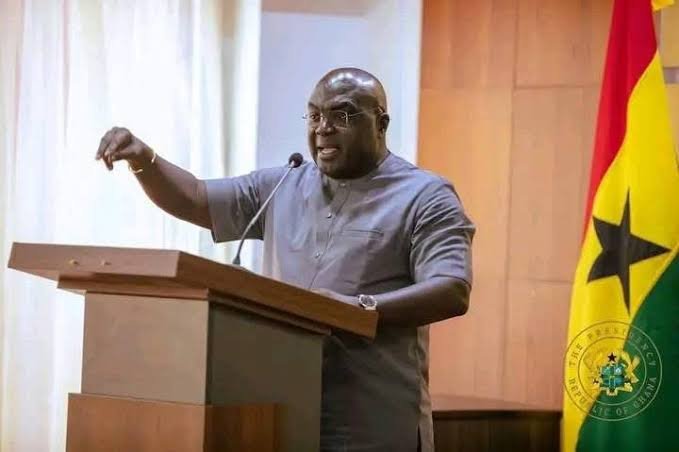
The Chief of Staff, Dr. Julius Debrah, has warned political actors against using force, weapons or physical intimidation in Ghana’s democratic process, stressing that political competition must be based on ideas, persuasion and the ballot.
Dr. Debrah made the remarks in an opening statement delivered on his behalf by Chairman Larry Gbevlo-Lartey at a National Policy Dialogue on the implementation of the Vigilantism and Related Offences Act, 2019 (Act 999), organised by Election Watch Ghana.
He said the dialogue came at a crucial time for Ghana’s peace, security and democratic development and provided an opportunity for stakeholders to examine the effectiveness of Act 999 and the challenges affecting its implementation.
According to Dr. Debrah, the enactment of Act 999 was a response to growing threats to Ghana’s constitutional order and the emergence and proliferation of political vigilante groups.
He said the law sent a strong message that the state would not tolerate organised intimidation or parallel security structures.
“The announcement of 9-9-9 was a resounding statement that the state would not tolerate higher security structures or organised intimidation of political parties,” he said.
Dr. Debrah urged participants to approach the dialogue as an opportunity to strengthen Ghana’s democratic system rather than as a platform for political recrimination.
“A law on Cuba is not only as strong as its political and political institutions, but it is institutional and formal, and it attains its entire public confidence,” he said.
He stressed that respect for the rule of law was central to the survival of Ghana’s democratic system.
“Democratic governance flourishes only where the rule of law prevails, and where political competition is conducted through ideas, persuasion, and ballot papers, never through force, weapons, or physical intimidation,” Dr. Debrah stated.
The Chief of Staff called on participants to examine both the successes and shortcomings of Act 999, including the operational, legal and institutional challenges that continue to affect its implementation.
“First, we must be willing to examine the successes achieved under the relativism and related offensive acts. 2019, 9-9-9, and the operational, legal, or institutional bottlenecks that persist,” he said.
He also cautioned against viewing political vigilantism as a problem affecting only one political party, saying its consequences extend to the entire country.
“Next, the democratism is a threat to the entire Republic, not just a single political party. Our analysis must therefore build the long-term stability of Ghana above any short-term partisan interest,” he stated.
Dr. Debrah further urged stakeholders to move beyond identifying challenges and develop practical measures to strengthen Ghana’s democratic institutions and security architecture.
“Furthermore, our goal today must go beyond diagnosing threats and challenges. We must formulate concrete, trackable courses of action in the recommendations that we make for the resilience of our democracy, our security apparatus, the judiciary, political parties, and civil society in the face of the threat,” he said.
He said Ghana’s democratic reputation had been built over several decades and must be protected through sustained commitment.
“Ghana’s standing as a beacon of democratic stability in Africa was built through decades of deliberate efforts, institutional maturity, and the collective wisdom of our people. Protecting that legacy requires constant vigilance and institutional courage,” Dr. Debrah said.
The National Policy Dialogue brought together security officials, political actors, academics, legal practitioners, civil society representatives and other stakeholders to assess the implementation of Act 999 and its implications for national security and democratic governance.