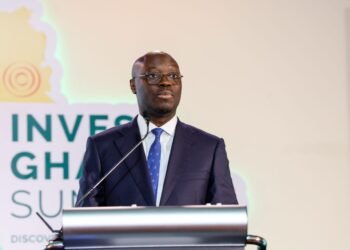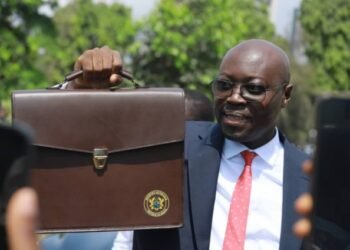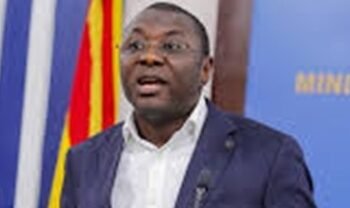















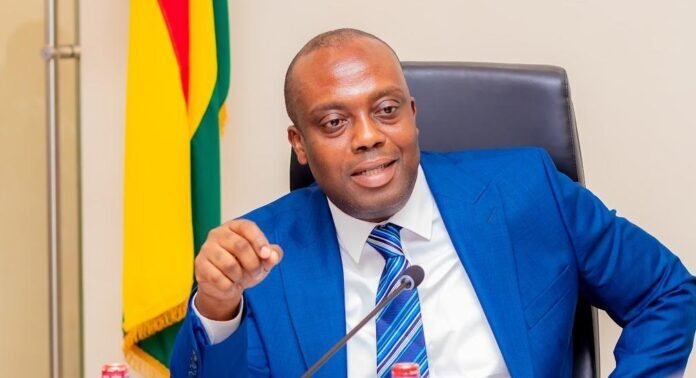
Deputy Finance Minister Thomas Nyarko Ampem has described Ghana’s 2027 budget as a social contract between the government and the Ghanaian people, urging Parliament to subject it to thorough scrutiny to ensure accountability and effective implementation.
Speaking at a post-budget workshop for Members of Parliament, Mr. Ampem said Parliament had a constitutional responsibility to examine the government’s financial proposals, approve their financing and hold the government accountable for delivering on its commitments.
“Honourable members, the 2027 budget is not just a statement of government’s intentions, but it is a contract with the Ghanaian people,” he stated.
He welcomed parliamentary scrutiny, describing it as an opportunity to strengthen the budget through informed, constructive and rigorous engagements.
Mr. Ampem outlined the government’s economic priorities, explaining that the focus had shifted from restoring economic stability to promoting production, creating jobs and improving prosperity.
He summarised the government’s economic direction in three phases, stating; “In 2025, we restored stability. In 2026, we demonstrated resilience. And in 2027, our task is to convert stability into production, jobs and prosperity.”
The Deputy Finance Minister pointed to key economic indicators as evidence of the country’s improving economic conditions.
According to him, Ghana’s economy grew by 6.2 per cent in the first half of 2026, exceeding the annual growth target of 4.8 per cent.
He further disclosed that inflation had declined to 5.5 per cent in October 2026, while gross international reserves reached US$12.1 billion by the end of September, equivalent to 4.5 months of import cover.
On fiscal performance, Mr. Ampem said the government had also strengthened fiscal discipline, with the primary surplus reaching 1.4 per cent of Gross Domestic Product (GDP) at the end of October 2026.
He added that public debt had declined to 47.5 per cent of GDP.
“These statistics show an economy that is more stable, more resilient and better positioned to support investment,” he said.
Mr. Ampem maintained that the 2027 budget would build on the economic progress recorded in previous years, with an emphasis on translating macroeconomic stability into tangible economic opportunities for Ghanaians.