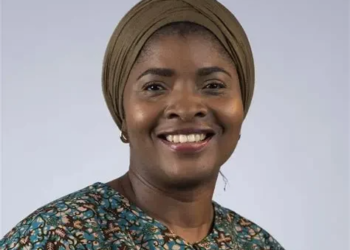

















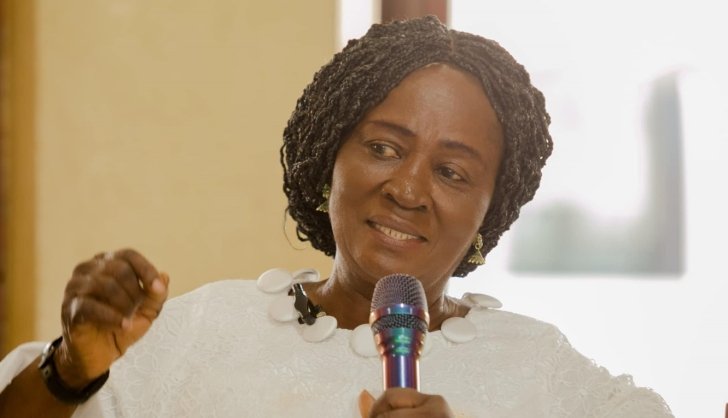
Vice President Professor Naana Jane Opoku-Agyemang has called for global climate arrangements to recognise the different economic circumstances and development priorities of countries in the Global South.
She said developing countries must have a stronger voice in shaping international policies that affect their economic growth, climate response efforts and the livelihoods of their populations.
The Vice President made the call on Saturday, October 17, 2026, when she delivered the opening address at the 2026 Global South Academic Forum in Shanghai, China, held under the theme “Global South Political Parties, Governance and Modernisation.”
Professor Opoku-Agyemang argued that countries across Africa, Asia, Latin America and the Caribbean should move beyond implementing decisions shaped by powerful nations and take a more active role in determining global priorities.
She said, “In my view, the Global South should not respond by withdrawing from multilateralism. They should demand better multilateralism, more representation in international institutions, a global financial system that supports development without perpetuating vulnerability, and climate arrangements that recognise our shared responsibilities and different circumstances.”
The Vice President noted that countries in the Global South account for a substantial share of the world’s population, economic activity and natural resources, yet their influence in international institutions remains a concern.
She maintained that global decision-making structures must better reflect present-day realities and provide developing nations with meaningful opportunities to shape policies affecting their economies and populations.
According to her, international cooperation should not require countries to abandon their individual development priorities or adopt identical approaches to governance and economic transformation.
“Our different histories and circumstances require solutions that reflect our realities,” she stated.
Beyond climate policy, Professor Opoku-Agyemang called for reforms to the international financial system to support development without increasing the economic vulnerabilities of developing countries.
She also advocated stronger representation for the Global South in international institutions and greater participation in decisions affecting the global economy.
The Vice President encouraged developing countries to strengthen cooperation among themselves, particularly in research, education, technology and innovation.
She highlighted the growing influence of artificial intelligence and other emerging technologies, stressing the importance of collaboration among universities and research institutions to develop solutions suited to local needs.
Professor Opoku-Agyemang also underscored the importance of learning from the development experiences of other countries without assuming that every nation must follow the same political or economic model.
She pointed to China’s experience in long-term planning, industrialisation and institutional coordination as areas from which other developing countries could draw lessons.
She further called on political parties, governments, universities and other institutions to strengthen accountability, improve policy development and build the capacity to respond to changing social and economic conditions.