
















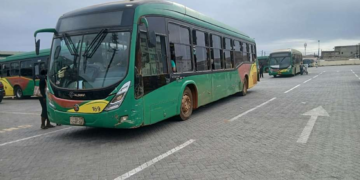







The National Association of Concern Clergy (NACOC) has thrown its support behind the Government of Ghana’s call to prohibit preaching and other forms of religious solicitation in moving vehicles, citing concerns about road safety and the protection of human life.
In a press statement issued in Accra on Monday, October 12, 2026, the association said the proposed measure was necessary to prevent distractions that could endanger drivers, passengers and other road users.
“We the National Association of Concern Clergy (NACOC) wishes to express its full support for the Government of Ghana’s call to prohibit preaching and other forms of religious solicitation in vehicles while they are in motion,” the statement said.
The association stressed that religious activities must be conducted in ways that do not compromise public safety, even when the intentions behind them are sincere.
NACOC acknowledged the commitment of pastors, evangelists and other Christian ministers who preach in buses, trotros and other forms of public transport to reach people outside traditional church settings.
However, it warned that preaching involving loud speaking, vigorous gestures, movement within vehicles or pressure on drivers and passengers could create potentially dangerous distractions.
“Human life must come before every other consideration,” the association stated, arguing that preventive measures should be taken before avoidable accidents occur.
It also cited Proverbs 22:3 to support its position, highlighting the importance of foresight and taking reasonable steps to prevent danger.
The association maintained that supporting restrictions on preaching in moving vehicles should not be interpreted as opposition to Christianity or religious freedom.
NACOC encouraged Christian ministers to continue spreading the Gospel through alternative platforms, including church services, community gatherings, public evangelism programmes, radio, television and digital media.
“The Gospel does not lose its power because it is preached at a safer time or in a more appropriate setting,” the statement said.
It further urged government, transport authorities, road safety agencies, transport unions and religious organisations to work together to ensure that any restrictions are clearly communicated and fairly implemented.
The association also called for engagement with religious leaders to prevent unnecessary confrontation and ensure that enforcement remains focused on public safety.
The statement was signed by Rev. Osahene Kwame Sefa Frimpong, Secretary-General of NACOC.
NACOC concluded by urging the clergy to combine their religious commitment with wisdom and responsibility, stating: “Let us preach with conviction, serve with humility, and act with wisdom. Above all, let us remember that the Gospel must be shared in ways that honour God and protect human life.”