


























The Republic of Korea is supporting Ghana with a five-year heritage conservation project aimed at protecting some of the country’s historic forts and castles from the growing threats posed by climate change.
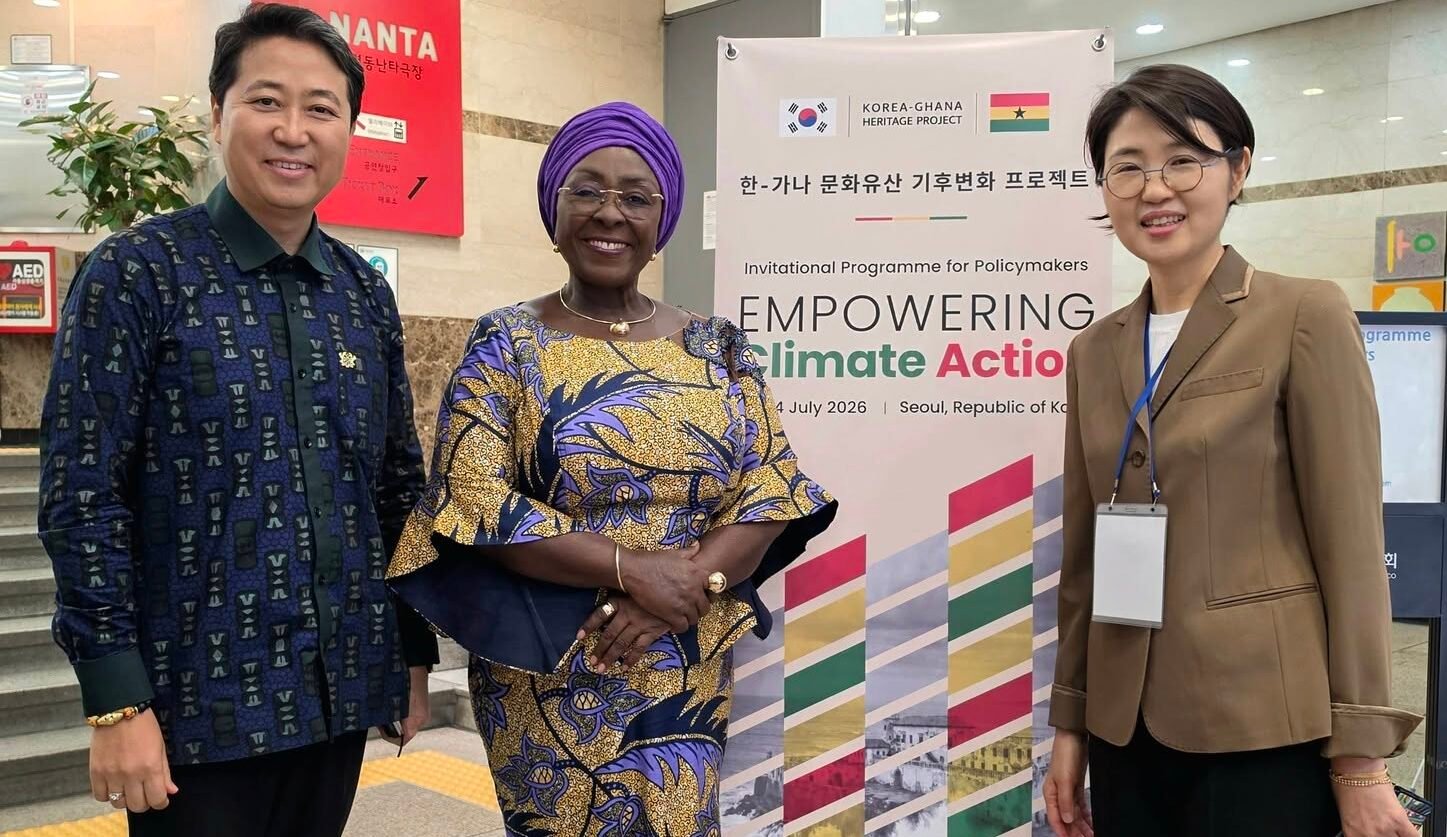
The Korea–Ghana Heritage Project on Climate Change and the Forts and Castles of Ghana will run from 2026 to 2030 and is being implemented with support from the Korea Heritage Service and the Korean National Commission for UNESCO.
The project follows the participation of Ghana’s Minister for Tourism, Culture and Creative Arts, Abla Dzifa Gomashie, in the 48th Session of the UNESCO World Heritage Committee in Busan, after which she travelled to Seoul for engagements with the Korean National Commission for UNESCO.
The initiative will support the preservation and restoration of six historic forts and castles in Ghana, while introducing modern technologies and systems to strengthen heritage management.
Among the interventions are 3D documentation, climate-risk mapping, monitoring systems, technical equipment and capacity-building for Ghanaian heritage professionals.
The project is expected to strengthen Ghana’s ability to protect its historic sites against the effects of climate change, including coastal erosion, rising sea levels, flooding and salt-induced deterioration.
Ghana’s forts and castles are considered important sites of historical memory, linking the country and the wider African continent to the history of the African diaspora and the transatlantic slave trade.
The increasing impact of climate change on the coastal heritage sites, however, has raised concerns about their long-term preservation and the need for innovative conservation measures.
The engagement between Ghanaian and Korean officials has therefore been described as a significant step towards addressing these challenges through international cooperation and technical expertise.
The Korean support is also expected to strengthen knowledge transfer and equip Ghanaian heritage professionals with modern tools and skills to monitor and preserve vulnerable heritage sites.
The partnership has been framed as one based on mutual respect and shared responsibility, rather than a traditional donor-recipient relationship.
The initiative underscores the growing cooperation between Ghana and South Korea in heritage preservation and reflects a broader effort to ensure that Ghana’s historic sites are protected for future generations.
The project is expected to demonstrate how shared history can provide a foundation for international partnerships focused on protecting cultural heritage and building a shared future.