






















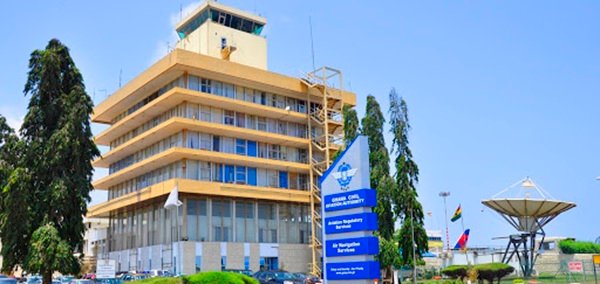
The Ghana Civil Aviation Authority (GCAA) has rejected allegations by the Ghana Air Traffic Safety Electronics Association (GhATSEA) of unfair labour practices, intimidation, coercion and victimisation involving the Authority’s Director-General, Rev. Stephen Wilfred Arthur.
In a statement issued in Accra on Wednesday, September 2, 2026, the GCAA also denied claims that National Security personnel were used to intimidate staff, describing their presence at the Authority’s installations as a necessary security measure to protect critical aviation infrastructure.
The Authority said it had referred GhATSEA’s most recent intended industrial action to the National Labour Commission (NLC), which, after hearing both parties on January 14, 2026, ruled that the proposed strike was illegal on three grounds.
According to the GCAA, the NLC determined that GhATSEA, being an Association rather than a certified trade union, lacked the legal capacity under the Labour Act, 2003 (Act 651), to declare a strike or negotiate conditions of service.
The Commission also found the strike notice procedurally defective and said the proposed action was prohibited under Regulations 20(e) and (h) of L.I. 1833.
The GCAA said the NLC subsequently advised GhATSEA to pursue its grievances through the procedures outlined in the Collective Bargaining Agreement, call off the intended strike immediately and formally present its concerns to management for resolution.
However, the Authority alleged that despite the NLC’s ruling, GhATSEA’s leadership instructed members to proceed with the industrial action and, among other directives, not to attend to faults or handle equipment in Communication, Navigation and Surveillance (CNS) equipment rooms at Accra, Kumasi, Tamale and Sunyani.
The GCAA further alleged that members were instructed to inform others that the safety of Ghana’s airspace could not be guaranteed.
The Authority said it considered the situation a serious threat because of the critical role CNS systems play in aviation safety and flight operations.
It explained that the deployment of National Security personnel to its installations was therefore intended to protect critical infrastructure and prevent what it described as a potential act of sabotage that could have endangered passengers, crew and aircraft.
The GCAA also claimed that management, led by the Director-General and supported by National Security personnel stationed at the Accra International Airport, foiled what it described as an attempted sabotage involving the GhATSEA President between 11:30 p.m. on January 14 and 4:30 a.m. on January 15, 2026.
The Authority maintained that the security intervention should not be interpreted as intimidation, harassment or victimisation of GhATSEA members.
It also rejected suggestions that the Director-General had embarked on a campaign of coercion, intimidation or victimisation, stressing that management’s actions were guided by its statutory responsibility to safeguard Ghana’s civil aviation system.
The GCAA said it respected employees’ legitimate rights to organise and raise workplace concerns through lawful and recognised mechanisms and remained committed to dialogue and resolving grievances through appropriate channels.
However, it cautioned that the exercise of labour rights must not compromise critical aviation infrastructure or put the safety of passengers, crew and aircraft at risk.
The Authority added that disciplinary measures taken against staff who violate applicable rules and regulations should not be characterised as coercive, unfair labour practices, victimisation or intimidation.
The GCAA assured the travelling public that it would continue to take all necessary and lawful measures to protect Ghana’s airspace and aviation infrastructure.