



























A proposed National Petroleum Authority (NPA) Bill currently before Parliament has sparked concerns over the future of Bulk Oil Storage and Transportation Company (BOST) Energies, particularly its role in operating inland petroleum storage and distribution facilities.
In an analysis titled “NPA Bill 2026: Will Parliament Save or Sink BOST Energies?”, Emmanuel Duah, Executive Director of Radiant Media and Intelligence Hub, argues that the proposed legislation could weaken BOST’s financial position if certain provisions are passed without amendment.
The Bill, which was laid before Parliament on Thursday, November 19, 2026, by the Minister for Energy and Green Transition, Dr John Abdulai Jinapor, seeks to replace the National Petroleum Authority Act, 2005 (Act 691).
It has undergone its First Reading and has been referred to Parliament’s Energy Committee for detailed consideration and a report.
It has not yet been passed into law and must go through the remaining parliamentary stages, including Second Reading, consideration and Third Reading.
According to Duah, the introduction of the Bill interrupted the second day of debate on the 2027 Budget, with the Minority raising procedural objections.
However, Speaker of Parliament Alban Bagbin overruled the objection and allowed the Bill to be laid.
Dr Jinapor has reportedly explained that the legislation was inherited from the previous administration and had undergone extensive stakeholder consultations.
The proposed legislation is intended to update the regulatory framework for Ghana’s downstream petroleum sector in response to changes in the industry, including the growing number of refineries, increasing fuel consumption, changing demand patterns and the expanding role of renewable energy.
Among its key provisions are measures to strengthen the NPA’s licensing, enforcement and coordination responsibilities, as well as introduce administrative and criminal penalties for regulatory breaches.
The Bill also proposes three funds to replace the existing Unified Petroleum Pricing Fund (UPPF).
The proposed Distribution Fund, under Clauses 25 to 40, is intended to support the transportation of petroleum products from refineries and bulk supply points to depots, ensuring regular supplies across the country.
The Infrastructure Fund, covered under Clauses 42 to 58, would finance the construction and maintenance of petroleum distribution infrastructure, including storage facilities, refineries, transportation systems and strategic fuel reserves.
The third, the LPG Promotion Fund, under Clauses 59 to 75, is intended to promote liquefied petroleum gas (LPG), liquefied natural gas (LNG), compressed natural gas (CNG), biofuel blends, hydrogen and the cylinder recirculation model.
Another major provision is Clause 109, which introduces penalties for constructing petroleum infrastructure without an NPA permit.
The proposed penalties include fines ranging from 20,000 to 50,000 penalty units, imprisonment for between two and five years, or both.
The Bill also provides for the publication of licence issuances, suspensions and revocations on the NPA’s website within 30 days.
Bulk consumers would be required to obtain licences and would not be permitted to resell petroleum products.
It further proposes a Petroleum Downstream Tribunal to provide a multi-stage dispute resolution mechanism for industry-related disagreements.
Duah identifies Clause 103 as one of the most contentious provisions, arguing that it could open inland petroleum storage and trans-shipment operations to private operators, potentially affecting BOST’s established role in the sector.
The Alliance for Accountable Governance (AFAG), in a statement issued on November 17, described the Bill as a “Trojan Horse” that could weaken BOST.
AFAG reportedly warned that the existing arrangement under which BOST operates depot networks across various demand zones could be brought to an end under the proposed legislation.
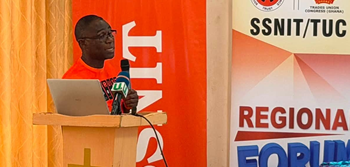
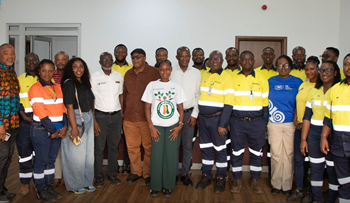
The General Transport, Petroleum and Chemical Workers’ Union (GTPCWU) of the Trades Union Congress has also threatened a nationwide strike if the Bill is passed in its current form.
The union has raised concerns that Clause 103 could undermine BOST Energies by allowing private operators to enter the inland petroleum storage and trans-shipment business.
In September, the Institute for Economic Research and Public Policy also called for the withdrawal of the Bill for a comprehensive stakeholder review, warning of possible implications for BOST’s finances and employment.
Dr John Jinapor has engaged various stakeholders following the concerns surrounding the proposed legislation.
According to Duah’s account, the Minister met civil society organisations on Monday, November 23, and also held discussions with the Chamber of Bulk Oil Distributors (CBOD), BOST Energies and the NPA.
The Minister reportedly pledged to safeguard the interests of relevant institutions, while the Energy Ministry has maintained that Clause 103 could be amended without withdrawing the entire Bill.
The Ministry has also indicated that BOST’s institutional interests would be protected.
In his assessment, Duah argues that the proposed legislation presents Parliament with an opportunity to formally establish in law the exclusive role of BOST in operating inland depots, following the policy direction under the zonalisation arrangement.
He maintains that such an arrangement would be consistent with the institutional responsibilities assigned to entities such as GRIDCo and Ghana Gas.
However, he questions the rationale for introducing a Distribution Fund, which incorporates the UPPF and Petroleum Distribution Margin (PDM), if the broader objective of the legislation is to achieve full deregulation of the downstream petroleum sector.
Duah warns that if Clause 103 is passed without amendment, BOST could lose its exclusive position in inland petroleum storage, which he describes as a significant source of internally generated revenue.
He argues that revenue from the depot operations helps the company maintain its infrastructure and sustain its workforce without depending on additional government support through an increase in the BOST margin.
On the other hand, he believes that amending Clause 103 to protect BOST’s exclusive operatorship of inland depots would enable the company to continue operating, maintaining, modernising and expanding the country’s strategic fuel infrastructure network.
He further argues that such an arrangement could reduce the need for an increased margin funded by taxpayers.
Duah also cited a reported statement by Dr Jinapor to BOST Board Chairman Moses Bukari Mabengba that the company must modernise but cannot rely solely on internally generated funds to achieve that objective.