













US judge on Wednesday blocked enforcement of US president’s second executive order after Supreme Court rejected his initial eff
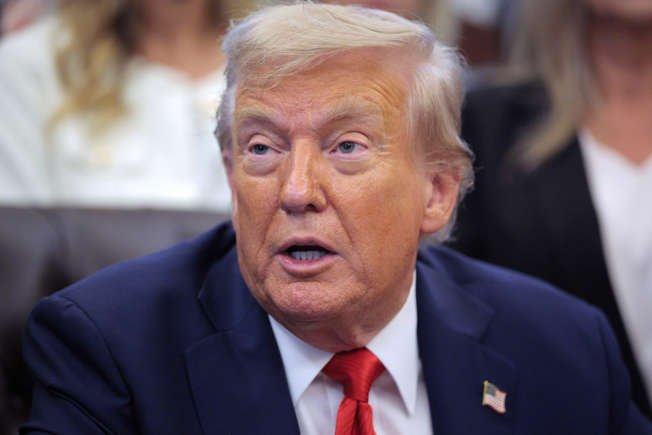
A federal judge on Wednesday blocked US President Donald Trump’s latest executive order aimed at restricting birthright citizenship, dealing another setback to his ongoing effort to redefine what it means to be born an American.
“Enough is enough,” said Cody Wofsy, deputy director of the American Civil Liberties Union’s Immigrants’ Rights Project. “The Supreme Court has twice rejected efforts to gut birthright citizenship, in 1898 and again earlier this year.
“Third time is not the charm, and the president needs to accept that birthright citizenship is the law of the land.”
Do you have questions about the biggest topics and trends from around the world? Get the answers with SCMP Knowledge, our new platform of curated content with explainers, FAQs, analyses and infographics brought to you by our award-winning team.
Limiting birthright citizenship has been a cornerstone of Trump’s second-term agenda as part of his aggressive immigration agenda, and he has sought to curtail it in multiple ways since returning to office, including in a previous executive order the US Supreme Court struck down earlier this year.
Trump signed the initial executive order on his first day back in office in 2025.
That order directed federal agencies not to recognise the citizenship of children born in the US to parents who were undocumented or present on temporary visas.
The Supreme Court ruled 6-3 against him in Trump vs Barbara in June, holding that children born in the US to parents who are unlawfully or temporarily present are citizens at birth under the 14th Amendment.
Following his Supreme Court loss, Trump issued another executive order in August that sought to expand the categories of children who the government says are not entitled to birthright citizenship.
Among those targeted were children whose parents worked for foreign governments or certain international organisations, as well as children born through commercial birth tourism and surrogacy arrangements.
In response, the American Civil Liberties Union and other advocacy groups filed a lawsuit, Nathan vs Trump, in September on behalf of those who would be subject to the new executive order, leading to Wednesday’s preliminary decision.
In his preliminary injunction on the second executive order on Wednesday, US District Judge Christopher Cooper in Washington said that “Barbara’s ink had scarcely dried when the President issued a second executive order”.
Cooper noted that the Supreme Court had already recognised that these children are US citizens.
“As the Supreme Court has made clear, however, the president cannot carve out new exceptions to birthright citizenship for children born within the United States and subject to its laws,” wrote Cooper.
The judge also highlighted that the practice of birth tourism violates US law, “under which ‘obtaining US citizenship for a child’ is an impermissible basis for a tourist visa”.
Trump has often taken advantage of the courts’ slow pace to impose “facts on the ground”, even if there is a high likelihood his administration’s actions will be overruled.
In the months since the Supreme Court ruling, the Trump administration has increasingly focused on birth tourism, particularly cases involving Chinese nationals.
“I would like to congratulate President Xi and the Great Country of China on their massive Birthright Citizenship WIN! President DONALD J. TRUMP,” Trump wrote on social media after the Supreme Court verdict.
While birth tourism exists, available statistics indicate the practice is very rare.
Cooper is not the only judge to block the second executive order.
In September, US District Judge Deborah Boardman in Maryland issued a preliminary injunction at the request of immigrant rights advocates, noting that the president’s order was “almost certainly unconstitutional”.