





















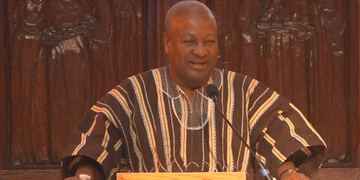





Archbishop Charles Agyinasare has urged Ghanaian journalists, broadcasters, bloggers, content creators and social media commentators to use their platforms responsibly and ensure that their communication informs, educates and entertains rather than insults or humiliates people.
He said journalism and public communication carry a tremendous responsibility because communicators influence what society discusses and how people understand one another.
Archbishop Agyinasare made the call in a sermon delivered on Sunday, September 4, 2026, on the theme of responsible speech, warning against the growing use of insults, ridicule, threats and unverified information in public discourse.
He noted that while journalism has traditionally been understood to serve the functions of informing, educating and entertaining, the growing influence of social media has made responsible communication even more important.
“Am I informing—or inflaming? Am I educating—or humiliating? Am I entertaining—or degrading?” he urged journalists, broadcasters, bloggers, content creators and social media commentators to ask in the course of their duty, and challenged them to examine the impact of their words before publishing or broadcasting them.
He further urged media practitioners to verify information before disseminating it, particularly in an era where allegations can rapidly spread through social media.
“Have I verified this—or am I merely repeating it?” he asked, stressing that communicators should not become distributors of information that has not been established as true.
According to him, public communicators must also distinguish between legitimate criticism and personal attacks, urging journalists to focus on issues rather than attacking the dignity of individuals.
“Am I criticising the issue—or attacking human dignity with insults?” he asked.
The Archbishop said disagreement should not become an excuse for disrespect, noting that people could criticise wrongdoing without insulting or dehumanising those involved.
He said communicators with large audiences have an even greater responsibility because their words can influence thousands or millions of people.
“A person speaking to ten people must watch his words. A person speaking to ten thousand must watch them even more carefully. And someone whose words can reach millions must understand that a microphone magnifies both wisdom and foolishness,” he said.
Archbishop Agyinasare also cautioned political leaders and other influential personalities against normalising insults, saying their conduct could shape the tone of national conversation.
“When leaders normalise insults, supporters may imitate them. When leaders demonstrate restraint, disagreement can remain vigorous without becoming dehumanising,” he said.
He encouraged journalists and other public communicators to use their platforms to promote truth, dignity and constructive public discussion.
The Archbishop emphasised that responsible communication did not mean avoiding strong criticism or becoming timid. Rather, he said people could be firm and passionate without becoming abusive.
“You can expose corruption without insulting people’s humanity. You can oppose an idea without destroying the person holding it. You can criticise a leader without threatening them,” he said.
He urged the public to think carefully before speaking, posting, forwarding or responding in anger, and to consider whether their words were true, necessary, gracious and edifying.
“Before you forward—verify. Before you post in anger—pause,” he advised.
Quoting Proverbs 18:21, which states that “death and life are in the power of the tongue,” Archbishop Agyinasare said words could either damage people and relationships or restore hope and dignity.
He concluded by calling for a change in the language used in homes, churches, politics, traditional and mainstream media, as well as on social media.
“We can disagree without disrespect. We can criticise without contempt. We can correct without cruelty. We can speak truth without abandoning grace,” he said.