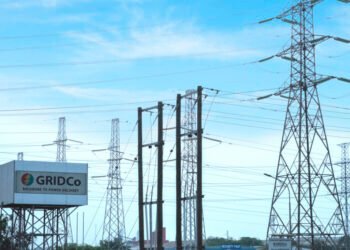




























The General Transport, Petroleum and Chemical Workers’ Union (GTPCWU) of the Trades Union Congress (TUC), Ghana, has threatened a nationwide strike if Parliament passes the National Petroleum Authority (NPA) Bill, 2026, in its current form.
The Union says it will mobilise petroleum workers across the country for industrial action if its concerns over provisions that could remove the exclusive inland depot mandate of BOST Energies Limited (BOSTenergies) are not addressed.
In a press release issued in Accra on Monday, November 23, 2026, the Union identified Clause 103 of the proposed legislation as its main concern.
The clause seeks to open the development, operation and maintenance of inland depots to private operators, a move the Union believes could undermine BOSTenergies’ national role and Ghana’s energy security.
The GTPCWU stressed that it was not opposed to private-sector participation in the downstream petroleum industry.
Rather, it supports a partnership arrangement between private operators and BOSTenergies under the Public-Private Partnership Act, 2020 (Act 1039).
The Union said it had engaged the Presidency, the Ministry of Energy and Green Transition and Parliament on the matter, including submitting memoranda and specific proposals for amendments to the contested provisions.
It noted that President John Dramani Mahama granted its representatives an audience, while a meeting with the Energy Minister on August 26, 2026, resulted in a request for the Union to submit precise drafting proposals.
According to the statement, those proposals were submitted on August 31, 2026, followed by further stakeholder engagements convened by the Minister.
However, the Union said the final report on the engagements had not been shared with stakeholders and the Bill had been resubmitted to Parliament without the changes it had proposed.
It is therefore calling on the Ministry to publish and submit to Parliament the impact assessment underpinning the proposed changes, particularly an assessment of their implications for BOSTenergies’ financial and operational viability.
The Union warned that opening inland depot operations to private competitors could threaten jobs, public investment and the reliability of petroleum distribution, particularly to northern Ghana.
It said BOSTenergies increased its permanent workforce from 440 in 2024 to 743 by November 2025, creating 303 additional permanent, unionised jobs.
The GTPCWU fears that if private depots divert significant volumes from the national network, BOSTenergies could be forced to reduce its workforce by almost half.
It also expressed concern that billions of cedis in public funds and sovereign-backed debt invested in depots, pipelines and terminals could be put at risk if the infrastructure becomes underutilised.
On fuel pricing, the Union argued that the existing zonalisation policy uses throughput across the national network to help keep the cost of the National Strategic Fuel Reserve low.
It claimed that without the arrangement, fully funding the reserve could increase the BOST margin from GH¢0.12 to approximately GH¢0.56 per litre, representing an increase of more than 360 per cent.
The Union further warned that private operators could prioritise more profitable southern routes, potentially affecting the reliable supply of petroleum products to northern and other less profitable areas.
It also raised concerns about workers’ rights, arguing that the expansion of private depot operations could create a two-tier workforce, particularly as some private operators in the sector have resisted unionisation.
The GTPCWU argued that the proposed legislation would expose BOSTenergies to competition without granting the State-owned company equivalent commercial flexibility.
It said BOSTenergies was currently restricted to selling its products to Bulk Import, Distribution and Export Companies (BIDECs), which could then resell to smaller BIDECs and Oil Marketing Companies.
The Union is consequently calling for BOSTenergies to be allowed to sell directly to Oil Marketing Companies.
It also wants the company’s restriction to two laycans, or import cargo windows, per month, to be reviewed, arguing that the limitation affects its ability to generate sufficient volumes to sustain its infrastructure.
The Union rejected suggestions that the BOST margin gives the company an unfair advantage, explaining that the margin is provided under the National Petroleum Authority (Prescribed Petroleum Pricing Formula) Regulations, 2012 (L.I. 2186).
According to the statement, the margin supports the operation, maintenance, upgrading and expansion of BOSTenergies’ storage terminals and approximately 350 kilometres of pipelines.
The network runs from Tema through Accra Plains and Akosombo to Buipe, with another pipeline extending to Bolgatanga.
It plays a role in transporting petroleum products to the northern part of the country.
The Union maintained that the network was open to all licensed suppliers and that the margin was necessary to sustain infrastructure serving the wider downstream petroleum sector.
The GTPCWU also questioned the policy direction of the Bill, citing a 2025 company profile of The Quantum Terminals Group, which includes Sage Trading Group, a BIDEC, and Cardinal Petroleum.
The profile, according to the Union, lists a proposed 130,000-tonne Kumasi Oil Facility at New Koforidua near Ejisu and indicates that approval processes have commenced.
The Union expressed concern about the development, arguing that the proposed facility could advance private inland depot interests before Parliament had approved the legislative provisions that would permit such operations.
It also questioned the NPA’s regulatory approach, noting that while the Bill would reduce BOSTenergies’ role, the Authority would retain responsibility for administering the Unified Petroleum Price Fund and its account.
The Union further cited the annual licence fee of US$100,000 and a variable charge of US$5 per metric tonne imposed on Bulk Distribution Companies, arguing that the fees raised questions about the consistency of the NPA’s approach to regulation.
The statement also referenced concerns raised by the Institute for Economic Research and Public Policy (IERPP), which has called for the Bill to be withdrawn for review.
The institute reportedly warned that the proposed changes could weaken BOSTenergies and put close to half of its workforce at risk.
The Union said it had written to the President, the Minister for Energy and Green Transition and Parliament’s Committee on Public Administration and State Interests, outlining five demands.
These include revising Clause 103 to preserve BOSTenergies’ exclusive mandate over inland depots and their interconnecting infrastructure; releasing the final stakeholder engagement report; and granting BOSTenergies greater commercial flexibility, including permission to sell directly to Oil Marketing Companies.
It is also demanding that no approval be granted for private inland depots, including the proposed Kumasi Oil Facility, until the concerns raised are resolved.
The fifth demand is for the Ministry’s impact assessment on the proposed policy to be published and submitted to Parliament.
The GTPCWU called on Parliament to reconsider the proposed changes before approving the Bill and urged President Mahama to support unionised workers and State-owned enterprises.
The Union said BOSTenergies had contributed to the Government’s 24-Hour Economy programme through the creation of permanent, unionised jobs and should not have its national role transferred to private interests.
It warned that if its concerns remained unresolved and the Bill proceeded in its current form, it would mobilise workers at BOSTenergies and across the downstream petroleum sector for a nationwide strike, with dates to be announced.
The statement was signed by Bernard Owusu, National Chairman, and Francis Sallah, Deputy General Secretary of the GTPCWU.