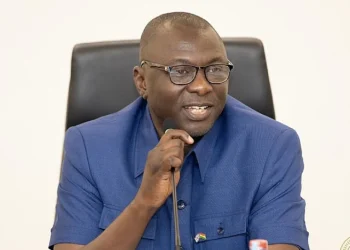

























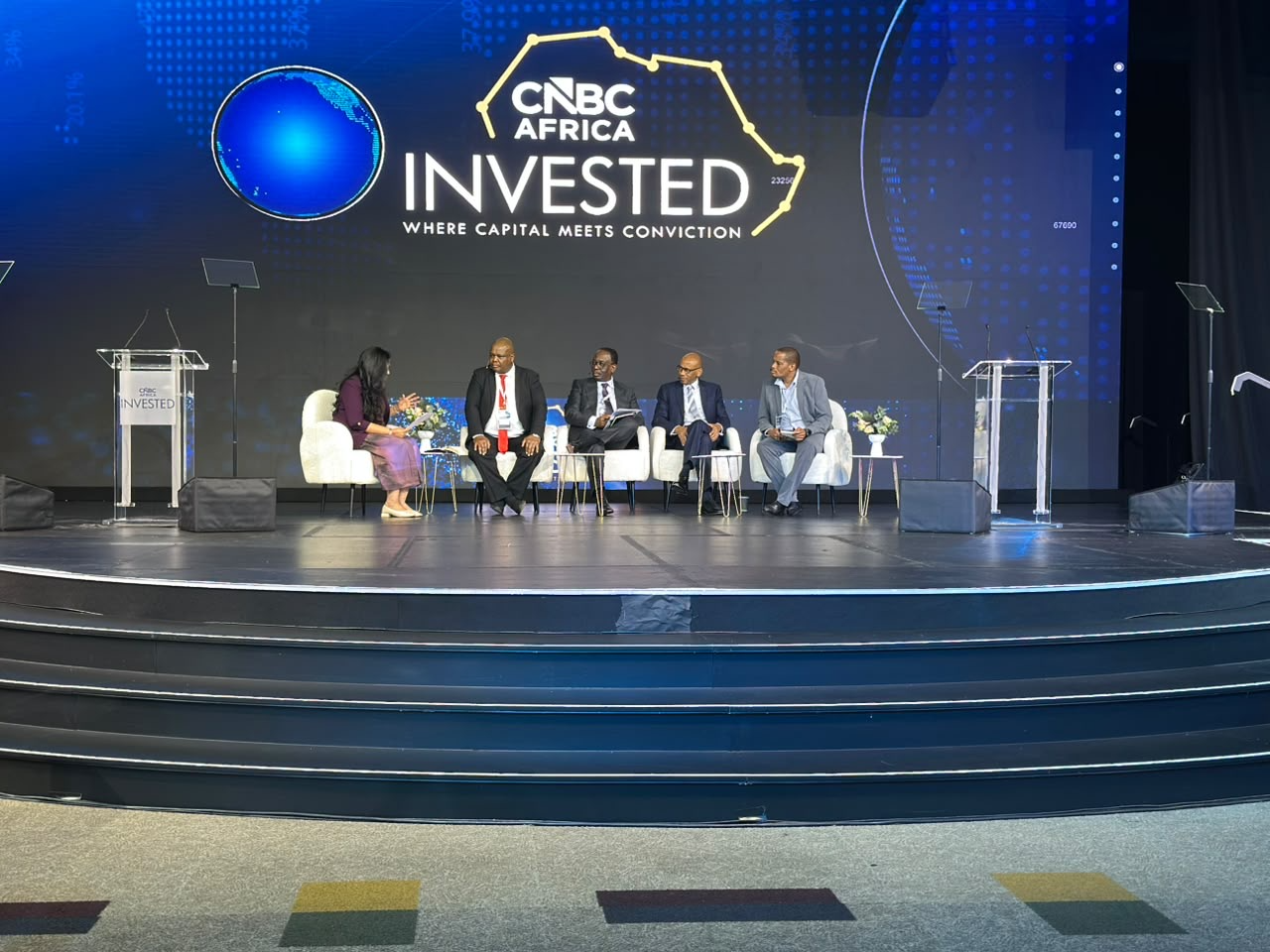
KGL Group Executive Chairman, Alex Apau Dadey, has called for deliberate efforts to build large, globally competitive and trans-generational African businesses, saying such enterprises are critical to the continent’s long-term economic transformation.
Speaking at CNBC Africa’s inaugural INVESTED 2026 Forum in Gauteng, South Africa, Mr Dadey said Africa must move beyond celebrating the establishment and growth of Small and Medium-Sized Enterprises (SMEs) and create an enabling environment for businesses to scale into large corporations and conglomerates.
“One thing that I’m also very passionate about, as you mentioned, is building trans-generational African champions.
Because I believe that that’s the anchor on which Africa can develop,” he said.
He acknowledged the important role of SMEs in economic development but argued that African economies must support businesses through successive stages of growth, from Small Enterprises to medium-sized businesses and eventually large corporations capable of competing internationally.
According to him, more African-owned companies must be empowered to expand through improvements in access to capital, policy, infrastructure, corporate governance and business strategy.
“Africa has many entrepreneurs who start successful businesses, but relatively few companies grow into large, globally competitive African-owned corporations.
What we need is a change in terms of capital, policy, infrastructure, governance and business strategy to enable more African companies to scale up,” he observed.
Mr Dadey made the remarks during a panel discussion titled “Gauteng as Africa’s Business Bridge: Infrastructure, Logistics and the Race to Remain Competitive”.
The session examined Gauteng’s position as a major economic centre and gateway for investment, trade, industrial development and regional integration.
It was moderated by Renuka Methil, Managing Editor of FORBES AFRICA, and featured Jacob Mamabolo, MEC for the Gauteng Department of Infrastructure Development; Teddy Daka, Chief Executive Officer of Zutari; and Mpho Kubelo, Chief Risk Officer of the Industrial Development Corporation (IDC).
On regional economic integration, Mr Dadey highlighted opportunities for stronger commercial relations between Ghana and South Africa, noting that both countries could benefit from sharing markets, expertise, technology and infrastructure.
He observed that although Ghana hosts the Secretariat of the African Continental Free Trade Area (AfCFTA), business environments differ across African countries, making practical approaches to cross-border trade and collaboration essential.
He therefore challenged businesses and policymakers to explore partnerships between Ghanaian and South African companies to develop stronger regional value chains and unlock opportunities across the continent.
Drawing on his business experience, Mr Dadey recounted how he and his team built KGL into one of Ghana’s major businesses by revenue after he relocated permanently to the country approximately 11 years ago.
He cited the application of digital technology to Ghana’s lottery industry as an example of how innovation can modernise traditional sectors, improve operational efficiency and create opportunities for expansion.
He said KGL’s technology-driven operations had extended beyond Ghana into Côte d’Ivoire and other African markets, demonstrating the potential for African businesses to export their expertise, technology and business models across national borders.
He suggested that the experience could provide useful lessons for South African businesses and institutions seeking to modernise traditional industries and strengthen their digital ecosystems.
Mr Dadey also called for a broader understanding of public-private partnerships, arguing that collaboration between government and businesses should extend beyond commercially driven infrastructure projects to include social development initiatives.
He cited KGL’s investments in healthcare infrastructure, education, scholarships and other community-based programmes as examples of how private-sector institutions could complement government efforts.
“We don’t talk about public-private partnership in community development only as a commercial arrangement.
When we talk about public-private partnership, it shouldn’t be limited to fully commercial activities,” he said.
He explained that businesses could contribute to national development by supporting hospitals, schools, scholarships and other interventions that directly improve people’s lives.
Mr Dadey’s participation highlighted the potential role of African-owned businesses in driving enterprise growth, technological innovation, regional integration and community development.
CNBC Africa’s INVESTED 2026 is a pan-African investment platform that brings together global investors, policymakers and business leaders to explore opportunities in Africa’s economic and technological transformation.
The inaugural forum, hosted in Gauteng, South Africa, is anchored in the Gauteng City Region and aligned with the province’s Growing Gauteng Together 2030 (GGT2030) agenda, which seeks to position the province as a strategic gateway for trade, investment, innovation and continental business collaboration.