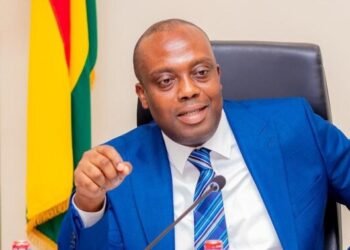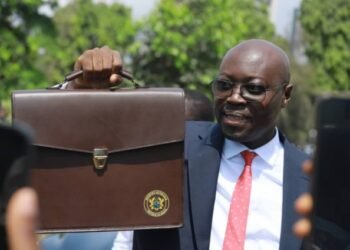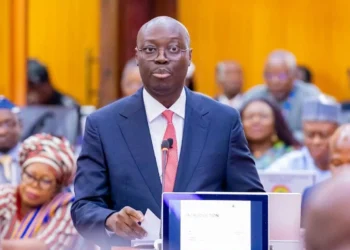

















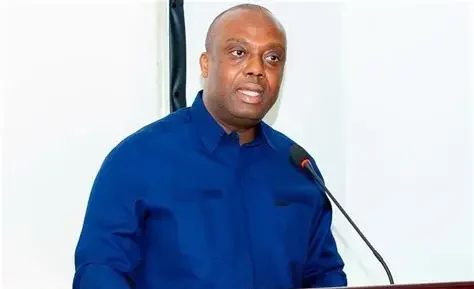
Deputy Finance Minister Thomas Nyarko Ampem has said the government’s 2027 budget is designed to move Ghana beyond macroeconomic stability towards increased production, job creation and improved household incomes.
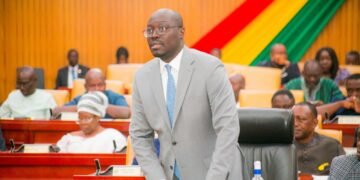
Speaking at a post-budget workshop for Members of Parliament, Mr. Ampem stressed that economic stability alone was insufficient if it did not translate into tangible improvements in the lives of Ghanaians.
Referencing comments by Dr. Ato Forson, he stated; “Macroeconomic stability is not our destination, it is the foundation. A stable economy that does not create jobs or improve household incomes is an unfinished recovery.”
He explained that the 2027 budget seeks to address this challenge by building an economy capable of producing more locally, adding value to raw materials and creating sustainable employment opportunities.
“Our ambition is to build a new economy that produces more of what Ghana consumes, processes more of what Ghana produces, exports more value and creates sustainable jobs,” he said.
Mr. Ampem outlined the government’s key macroeconomic targets for 2027, indicating that real Gross Domestic Product (GDP) growth is projected at a minimum of 5.2 per cent, while non-oil GDP growth is expected to reach at least 5.7 per cent.
He added that inflation is expected to remain within the target band of 8 per cent, plus or minus 2 percentage points.
The government is also targeting a primary surplus of 0.5 per cent of GDP on a commitment basis, alongside gross international reserves sufficient to cover at least six months of imports.
According to the Deputy Finance Minister, the targets are intended to maintain economic stability while creating the fiscal space required to support productive investments.
He emphasised that Ghana must adopt a responsible approach to economic transformation rather than relying excessively on borrowing or spending cuts.
“Our guiding principle is that we cannot borrow our way to prosperity, neither can we cut our way to transformation. We must invest responsibly, produce competitively and grow sustainably,” he stated.
Mr. Ampem maintained that the 2027 budget represents an important step towards building a productive economy, strengthening local industries, expanding exports and creating sustainable jobs.