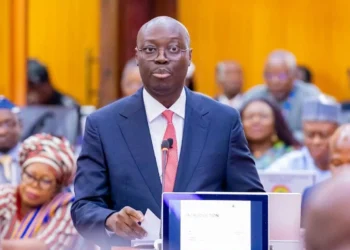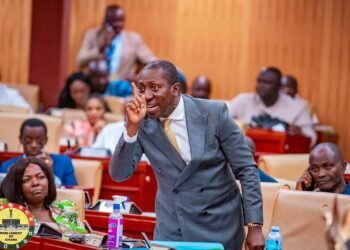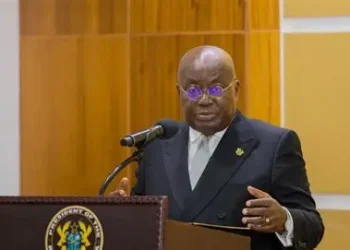
























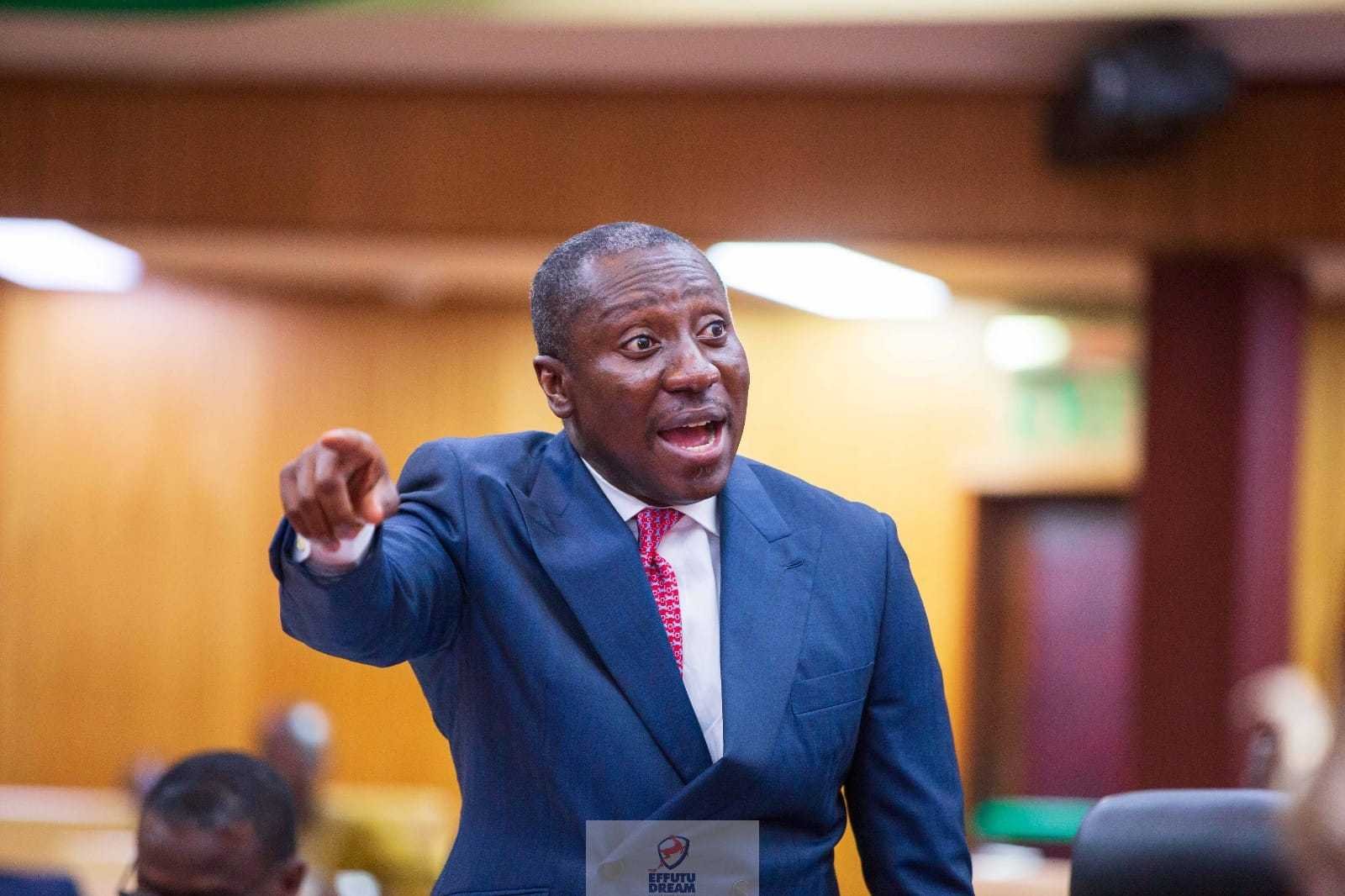
Minority Leader Alexander Afenyo-Markin has accused the governing National Democratic Congress (NDC) of abandoning its promise to establish a Women’s Bank, following the government’s failure to mention the initiative in the 2027 Budget Statement.
He said the omission raised questions about the government’s commitment to providing financial support to women and traders, particularly those who were expecting access to affordable loans to expand their businesses.
Speaking to journalists after Finance Minister Dr Cassiel Ato Forson presented the 2027 Budget to Parliament on Thursday, November 12, Mr Afenyo-Markin said the proposed bank had featured in previous budget statements but was conspicuously absent from this year’s presentation.
“Where is the Women’s Bank? They did not even talk about it,” he questioned.
He recalled that the government had indicated in both the 2025 and 2026 budgets that it would establish the bank, making its omission from the latest budget a source of concern.
“Meanwhile, in the 2025 Budget, they said they were going to establish a Women’s Bank. In 2026, they said the same thing. But in 2027, they were quiet. The Minister was silent. So it means that is another scam,” he said.
The Minority Leader argued that the NDC had failed to deliver on its promises to women and traders, including its commitment to introduce the 24-Hour Economy and establish a financial institution that would improve access to credit.
Beyond the Women’s Bank, Mr Afenyo-Markin criticised the government’s economic performance, describing the 2027 Budget as a “paper economy” that did not reflect the financial difficulties facing ordinary Ghanaians.
He pointed to persistent high food prices at major markets, including Makola, Kejetia, Agbogbloshie, Kotokoraba and Kumasi Asafo, arguing that many households continued to struggle to afford basic food items.
“The reality is that prices of foodstuffs remain high and Ghanaians cannot afford them,” he said.
He also questioned the government’s support for local farmers, citing the rising cost of locally produced food such as rice, maize, sorghum and yam.
On employment, Mr Afenyo-Markin challenged the government to demonstrate how its economic policies were translating into jobs, particularly for young people.
He further demanded clarity on the proposed $10 billion New Economy programme, questioning how much of the amount would be available for implementation in 2027 and the specific projects expected to benefit from the investment.
He also raised concerns about the government’s Big Push infrastructure programme, claiming that its financial commitment had been reduced from $30 billion to $14 billion.
The Minority Leader said the opposition would undertake a detailed examination of the budget and present its full assessment during the parliamentary debate.
He maintained that economic stability and government announcements would mean little to citizens if they continued to experience hardship.
“What they came to do was to subject us to another round of slogans and no jobs. Stability on paper, hardship in our pockets,” he said.