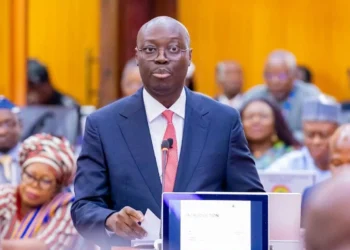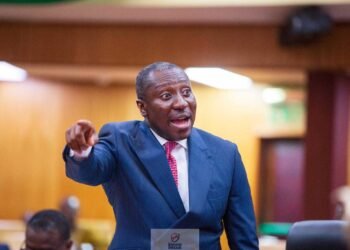


















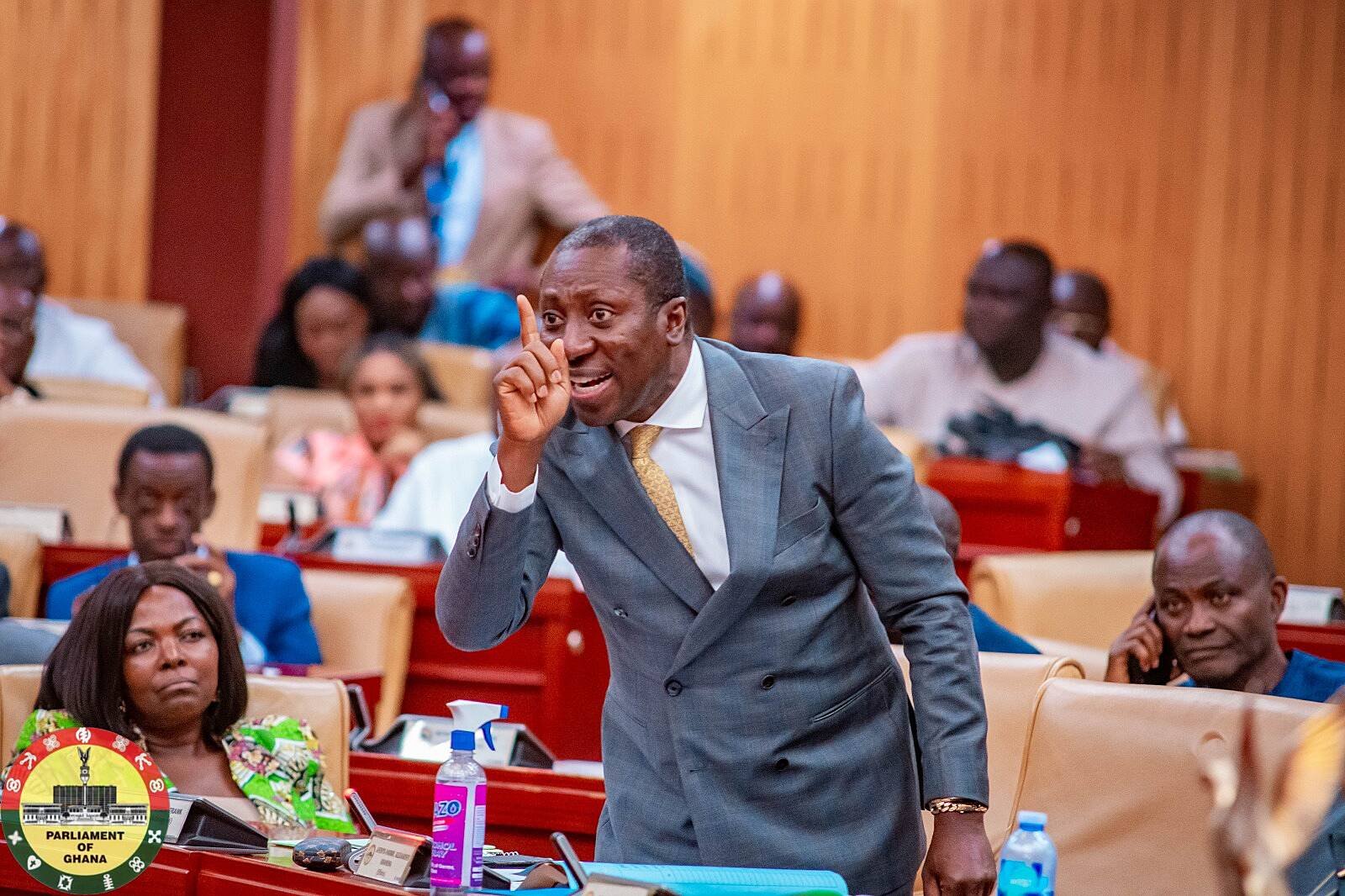
Minority Leader Alexander Afenyo-Markin has challenged the government to demonstrate how its economic policies are improving the lives of Ghanaians, insisting that economic statistics alone cannot address the country’s unemployment challenges.
He said the government had failed to provide clear evidence of jobs created under its administration, arguing that employment opportunities should be the main measure of its economic performance.
Speaking at a post-budget press conference in Parliament on Thursday, November 12, Mr Afenyo-Markin questioned the government’s emphasis on economic indicators and its New Economy agenda.
“They haven’t been able to tell us how many jobs they have created. Ghanaians want jobs, jobs, jobs. We are not interested in data. We are not interested in a paper economy. We are not interested in what they call a New Economy,” he said.
The Minority Leader also raised concerns about government expenditure, arguing that positive economic figures would have little meaning if they were not translated into tangible benefits for citizens.
He further accused the governing National Democratic Congress (NDC) of failing to fulfil some of its campaign promises, particularly the proposed establishment of a bank to provide financial support to women and traders.
The initiative was expected to provide access to loans to help beneficiaries expand their businesses, but Mr Afenyo-Markin questioned the government’s progress in delivering on the commitment.
He also cited the 24-hour economy initiative as another campaign promise whose implementation, in his view, had yet to produce the expected results.
His criticism followed the presentation of the 2027 Budget Statement by Finance Minister Dr Cassiel Ato Forson on Thursday, November 12.
Presenting the budget, Dr Forson said the government would assess economic growth based on its ability to generate employment and improve incomes.
“We will judge growth by the jobs and income it creates,” the Finance Minister said.
Dr Forson also assured Parliament that the government would maintain fiscal discipline and protect the country’s economic recovery.
“Government will preserve stability. Government support to the private sector will be transparent. We will protect the recovery with fiscal discipline,” he stated.
He acknowledged, however, that despite the country’s economic gains, more work was needed to build resilience into the economy.
“We [Ghana] have grown but we have not built enough resilience into that growth,” he added.
Meanwhile, ahead of the budget presentation, Minister of Government Communications Felix Kwakye Ofosu defended the New Economy agenda, describing it as a government programme aimed at transforming the economy and creating employment opportunities over the next four years.
He said the 24-hour economy initiative was designed to encourage private sector participation through incentives that would support business expansion and job creation.
“It is not business as usual; it creates jobs for the youth; it is a government programme intended to transform the economy over the next four years,” he told TV3.
Mr Kwakye Ofosu acknowledged that the programme had not yet reached its full scale but maintained that substantial work had gone into its implementation.