













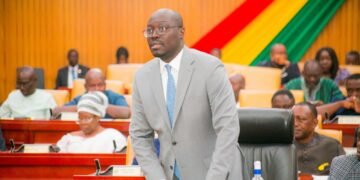


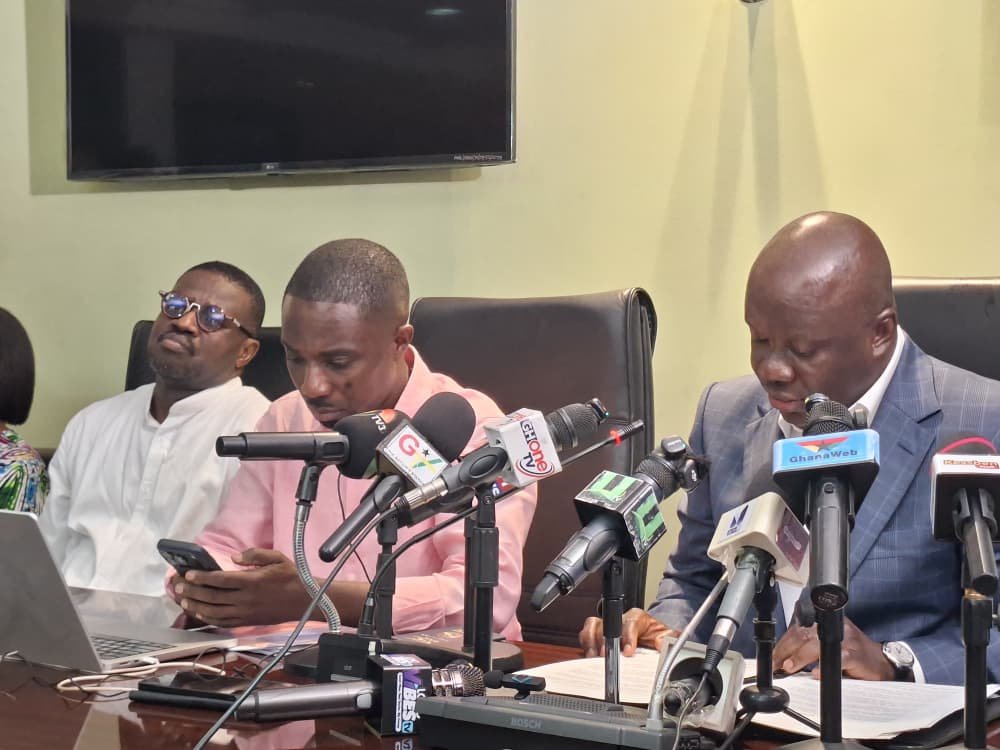
The Minority Caucus in Parliament is set to file a motion seeking the establishment of an ad- hoc committee to investigate allegations of the sale and irregular issuance of Ghanaian diplomatic and service passports.
The Minority made the announcement at a press conference on Sunday, November 8, 2026, describing the allegations as a matter of national importance with implications for Ghana’s international reputation and the integrity of official travel documents.
According to the Caucus, it has obtained documents suggesting that some individuals who allegedly did not qualify for diplomatic or service passports were presented as public officials to secure approval for the documents.
The Minority alleged that officials of the Ministry of Foreign Affairs and the Passport Office were linked to a travel and tour business through which paying customers were assisted to obtain the special passports to facilitate international travel, particularly to Europe.
It identified Ibrahim Wallee as the person managing the alleged travel and tour business in Ghana and Bright Yeboah Owusu as his agent based in Europe.
The Caucus further alleged that applicants were assigned official positions and designations they did not hold, including some positions it claimed did not exist.
It also alleged that some personnel of the Ministry of Foreign Affairs assisted passport holders through airport processes to reduce scrutiny by immigration officers.
To support its call for an investigation, the Minority displayed copies of approval letters issued in the name of the Minister for Foreign Affairs, Samuel Okudzeto Ablakwa, and signed by the Ministry’s Chief Director, Ambassador Khadija Iddrisu, on behalf of the Minister.
One letter, dated June 1, 2026, reportedly approved service passports for individuals presented as officials of the Greater Accra Regional Coordinating Council.
The Minority drew attention to the name Amoh Boadi, who was described in the letter as Deputy Director of Audit Services.
It said the same name appeared in another approval letter dated June 4, 2026, but was this time described as Deputy District Coordinating Director of the Akrofuom District Assembly.
The Caucus questioned how the same individual could have been presented under two different positions at separate public institutions within three days.
It also presented other approval letters dated June 5, August 6 and August 7, 2026, involving individuals described as officials of the Ghana Technical and Vocational Education and Training Service, the National Disaster Management Organisation and the Fisheries Commission.
The Minority claimed that its checks suggested that some of the individuals did not work at the institutions or hold the positions attributed to them.
It further said it had sighted copies of diplomatic and service passports allegedly issued based on the questionable representations, as well as bank deposit receipts and mobile money transaction records said to relate to payments for the documents and associated travel arrangements.
The Caucus claimed that about 300 Ghanaians had travelled to Europe and other destinations using passports allegedly obtained through the arrangement.
It also recounted claims from some passport applicants that they paid money but were later left without assistance when they attempted to travel, while others allegedly succeeded in travelling with assistance from officials and the agents involved.
The proposed motion is expected to seek a review of all approvals and issuances of diplomatic and service passports from January 7, 2025, up to the date the motion is adopted, with access to earlier records where necessary.
The Minority wants the proposed committee to examine passport applications, institutional recommendations, approval letters, issuance and collection records, payment records and relevant communications.
It also wants electronic records examined to establish who processed and approved applications and whether any information was subsequently altered.
The Caucus said the Minister for Foreign Affairs, the Ministry’s Chief Director, the interdicted Director of Passports, Yahaya Amantana Mahama, the identified agents, relevant passport and immigration officers, and individuals who obtained the passports should be available to assist the inquiry.
It said the committee should establish the extent of any wrongdoing, identify those responsible and recommend appropriate disciplinary action, recovery of money or referral for criminal investigations where warranted.
The Minority cited Article 103 of the 1992 Constitution, which provides for parliamentary committees to investigate the activities and administration of ministries and departments.
The Caucus also raised concerns about an internal investigation reportedly established by the Ministry of Foreign Affairs under the chairmanship of Ambassador Alexander Grant Ntrakwa.
While acknowledging the existence of the committee, the Minority argued that an internal inquiry could not replace independent parliamentary oversight, particularly because the allegations concerned officials and processes within the Ministry.
It further questioned the independence of the internal investigation and alleged that members of the committee had been instructed not to comment publicly on the matter.
The Minority maintained that Parliament must be allowed to conduct its own inquiry, adding that the findings of the Ministry’s internal committee could support, rather than prevent, the parliamentary investigation.
The Minority appealed to members of the Majority Caucus to support the proposed motion, stressing that backing an investigation would not amount to accepting the allegations as proven.
It said the inquiry would provide an opportunity for all persons concerned to present their accounts and for the documents and transactions to be examined.
The Caucus warned that the alleged misuse of diplomatic and service passports could undermine foreign governments’ confidence in Ghanaian official travel documents.
It said it would pursue all lawful avenues to establish the facts, protect the country’s international reputation and ensure accountability if wrongdoing was proven.