
























The International Perspective for Policy & Governance (IPPG) has called on the government to ensure greater transparency and rigorous policy scrutiny of the proposed 2,000-megawatt (MW) nuclear power project under discussion between Ghana and Russia.
The organisation said the scale, complexity and financial implications of the proposed project required a clear financing framework, appropriate technology selection and demonstrable institutional readiness before major commitments were undertaken.
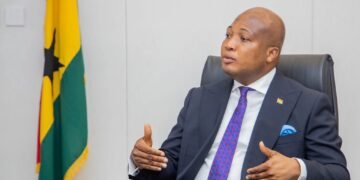
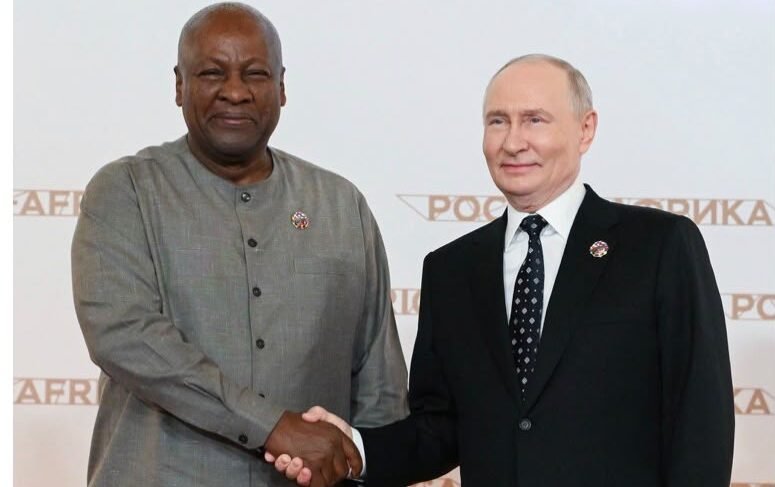
The call follows an announcement by Foreign Affairs Minister Samuel Okudzeto Ablakwa on October 31, following President John Dramani Mahama’s engagement with Russian President Vladimir Putin at the recently concluded Russia-Africa Summit.
The proposed partnership marks a significant development in Ghana’s pursuit of nuclear power and builds on earlier engagements between the government and Russia’s state-owned nuclear corporation, Rosatom, on nuclear cooperation.
While acknowledging the potential role of nuclear energy in diversifying Ghana’s electricity generation mix and strengthening long-term energy security, IPPG maintained that the project must be subjected to careful assessment.
“A commitment of this magnitude must be assessed not merely in terms of installed generation capacity, but against its economic viability, fiscal implications, and consistency with Ghana’s long-term electricity demand and energy planning priorities,” the organisation stated.
It said a key consideration should be the financing structure underpinning the project, including the respective obligations of the Ghanaian and Russian parties, the allocation of construction and operational risks, and the extent of any sovereign guarantees or other government-backed financial commitments.
“Given the capital-intensive nature of a 2000 MW nuclear power development, these arrangements will have significant implications for Ghana’s public finances, electricity tariffs, and long-term fiscal exposure,” IPPG cautioned.
The organisation also raised questions about the reactor technology and project configuration being considered, particularly their suitability for Ghana’s electricity system, associated grid integration requirements and how the proposed Russian partnership relates to the country’s existing nuclear vendor engagements and technology assessment processes.
On institutional preparedness, IPPG stressed that nuclear power development required sustained progress across regulatory oversight, nuclear safety, human resource development, grid infrastructure and the broader institutional arrangements necessary to support project implementation.
It further insisted that the proposed partnership must be anchored in Ghana’s established nuclear power development framework, as coordinated by the Ghana Nuclear Power Programme, and aligned with the relevant milestones of the International Atomic Energy Agency’s nuclear infrastructure development approach.
IPPG maintained that “the strategic merit of the proposed partnership will ultimately be determined by its ability to deliver reliable and affordable electricity without creating disproportionate fiscal liabilities or compromising established regulatory and project development processes.”
The organisation consequently called on the government to engage relevant stakeholders to develop a comprehensive framework outlining the status and scope of the proposed agreement, financing and risk-sharing arrangements, technology selection process and anticipated implementation pathway.